Antique Turkish Oushak
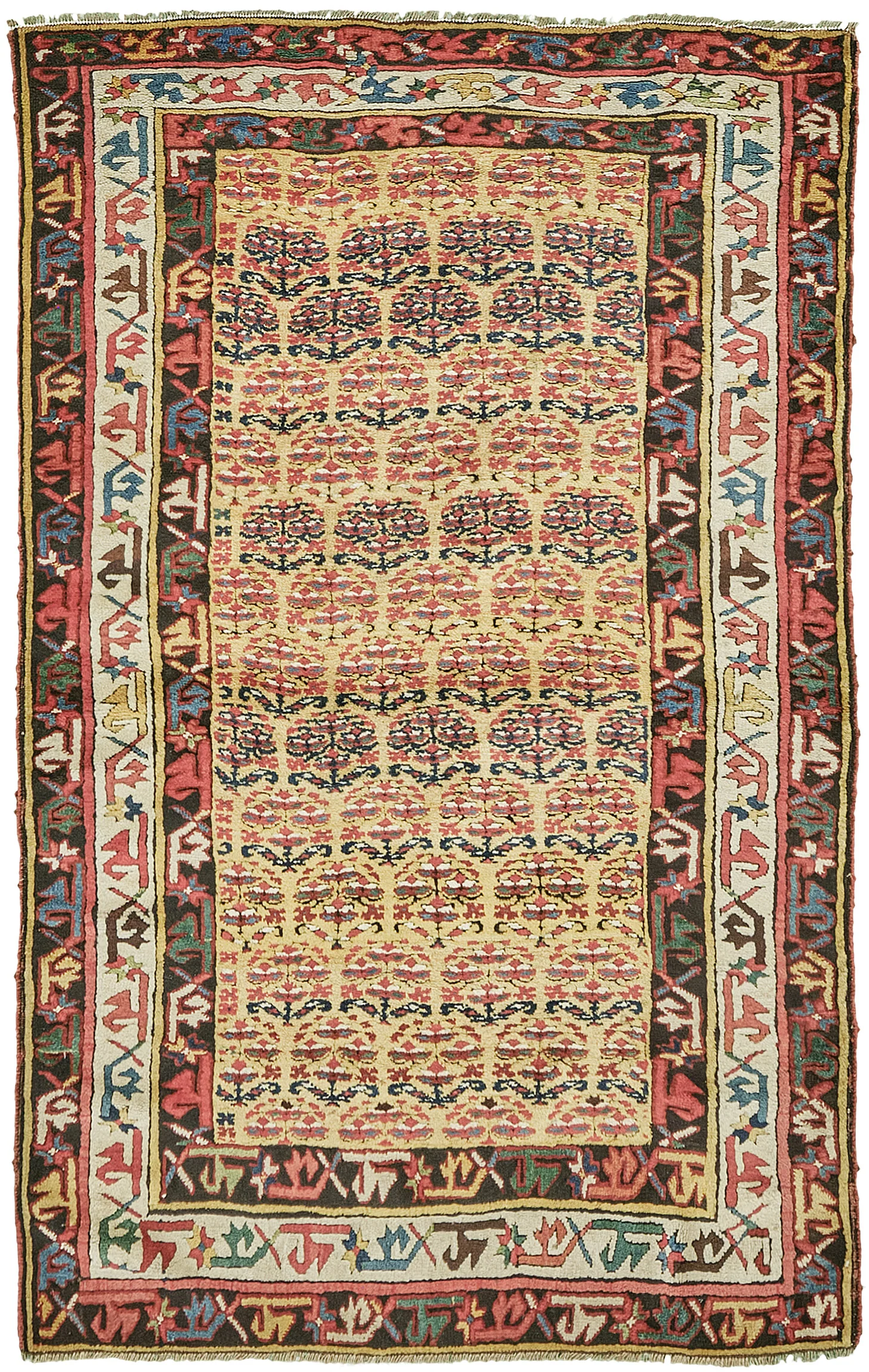
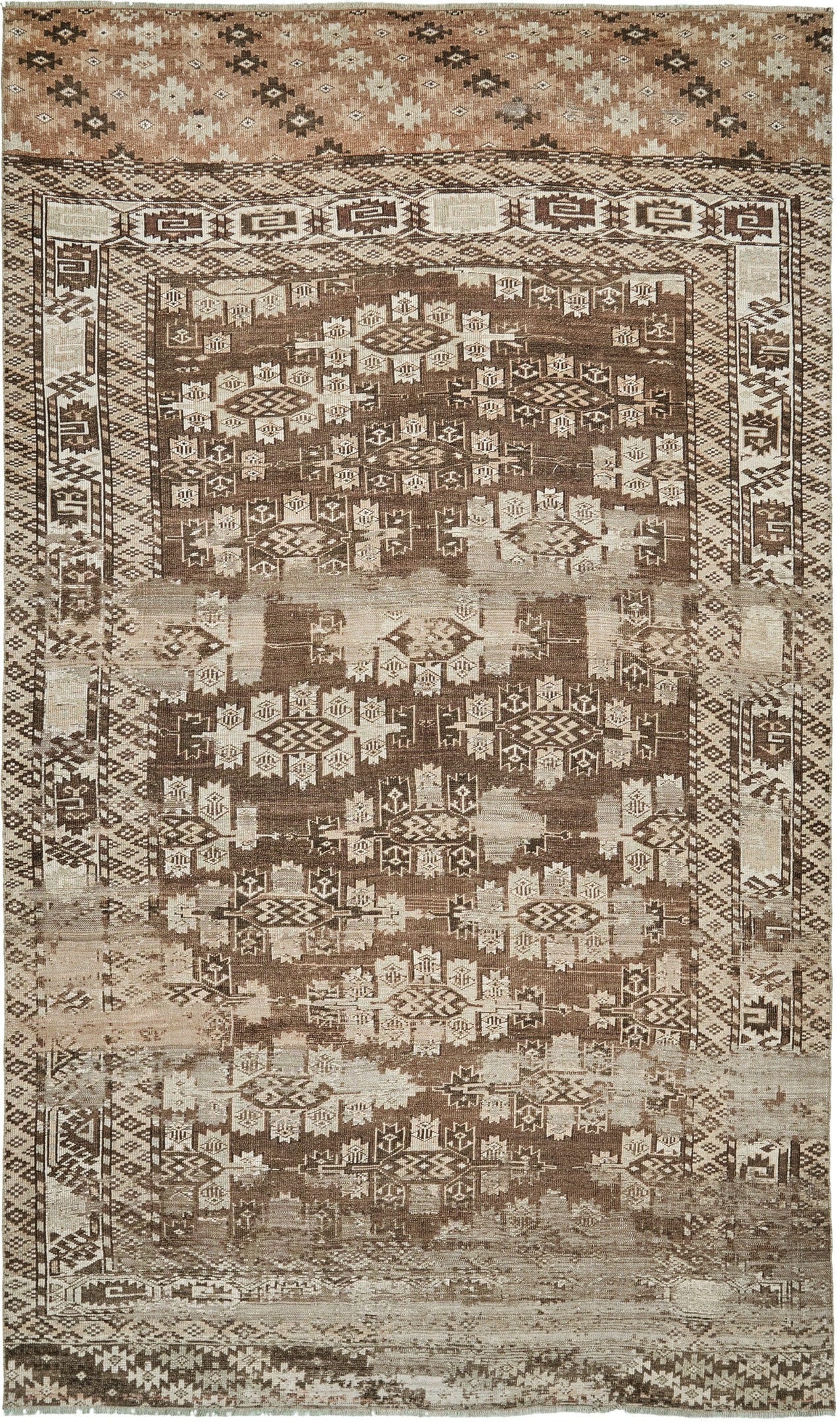
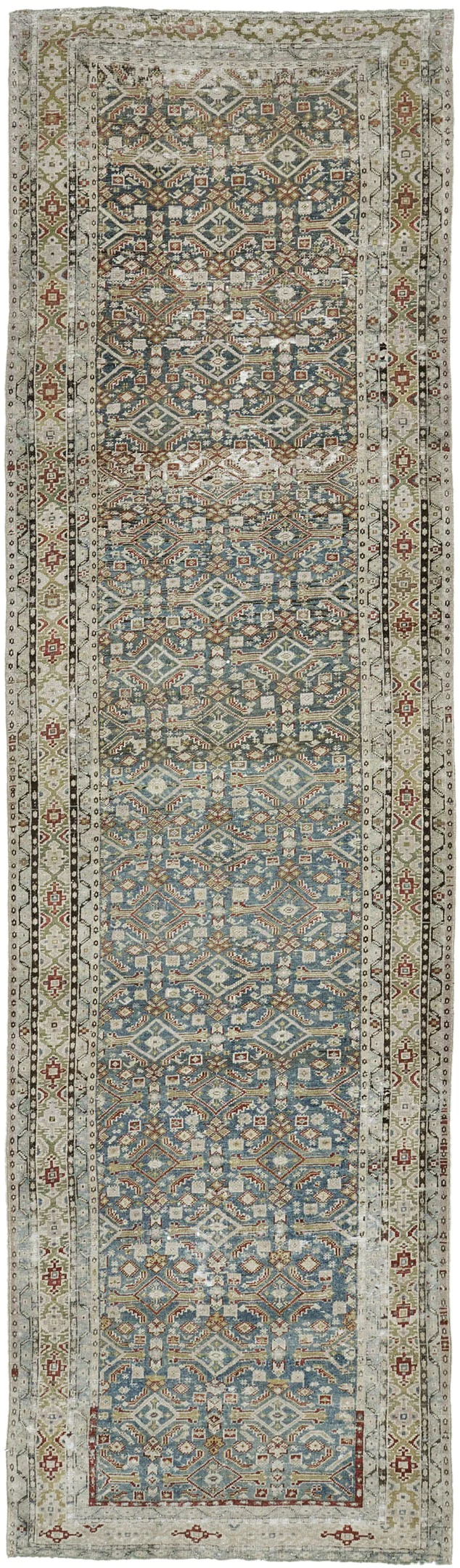
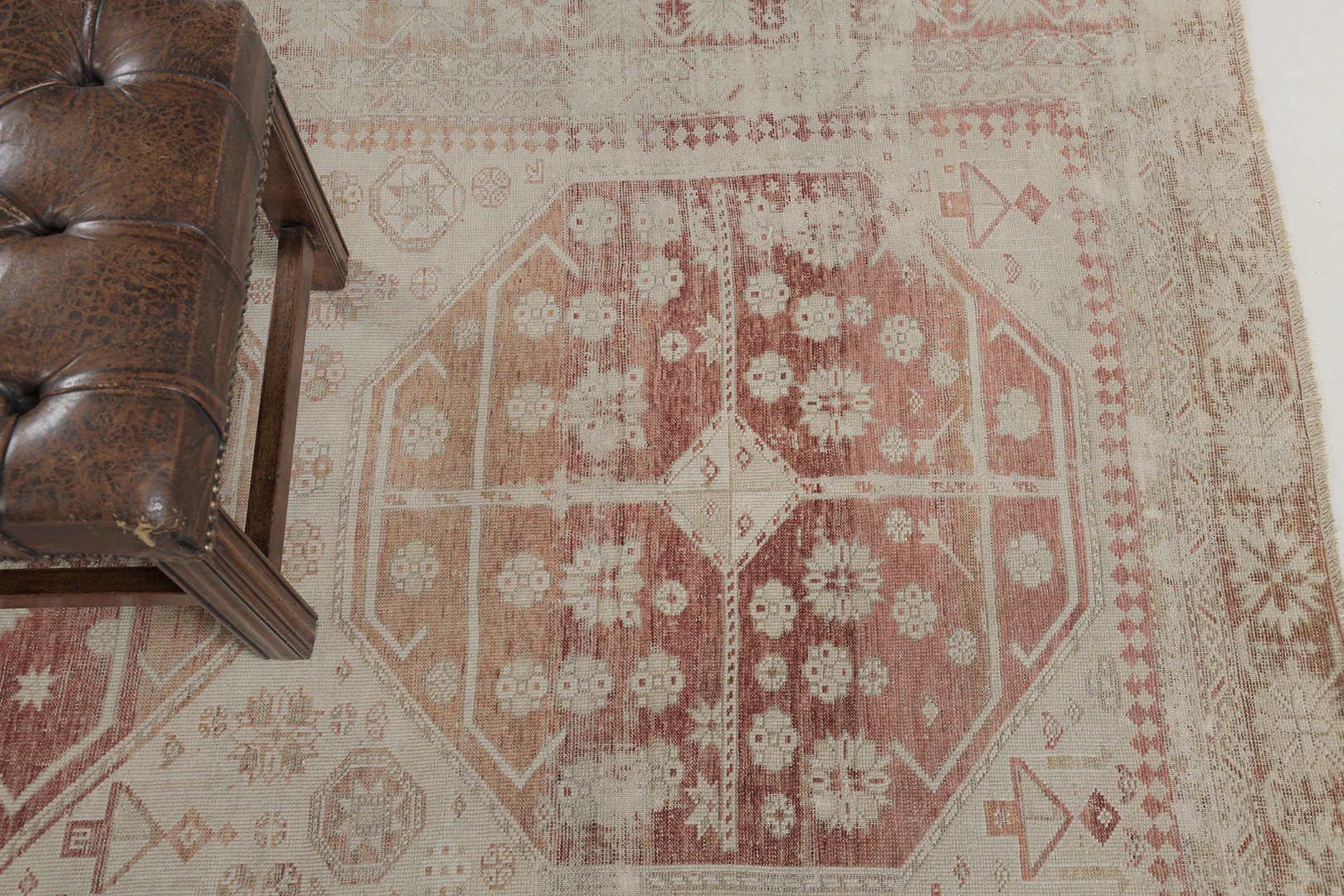
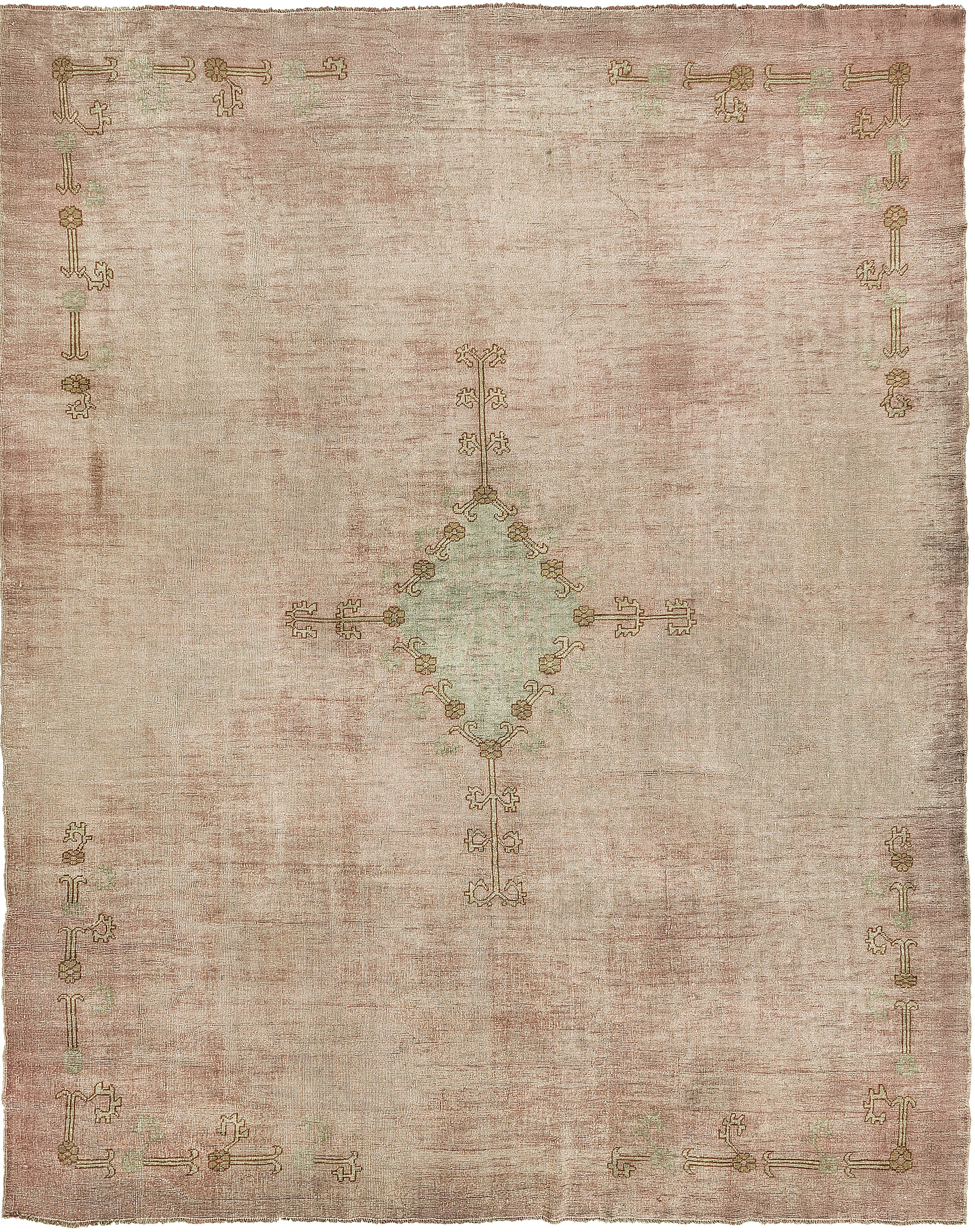
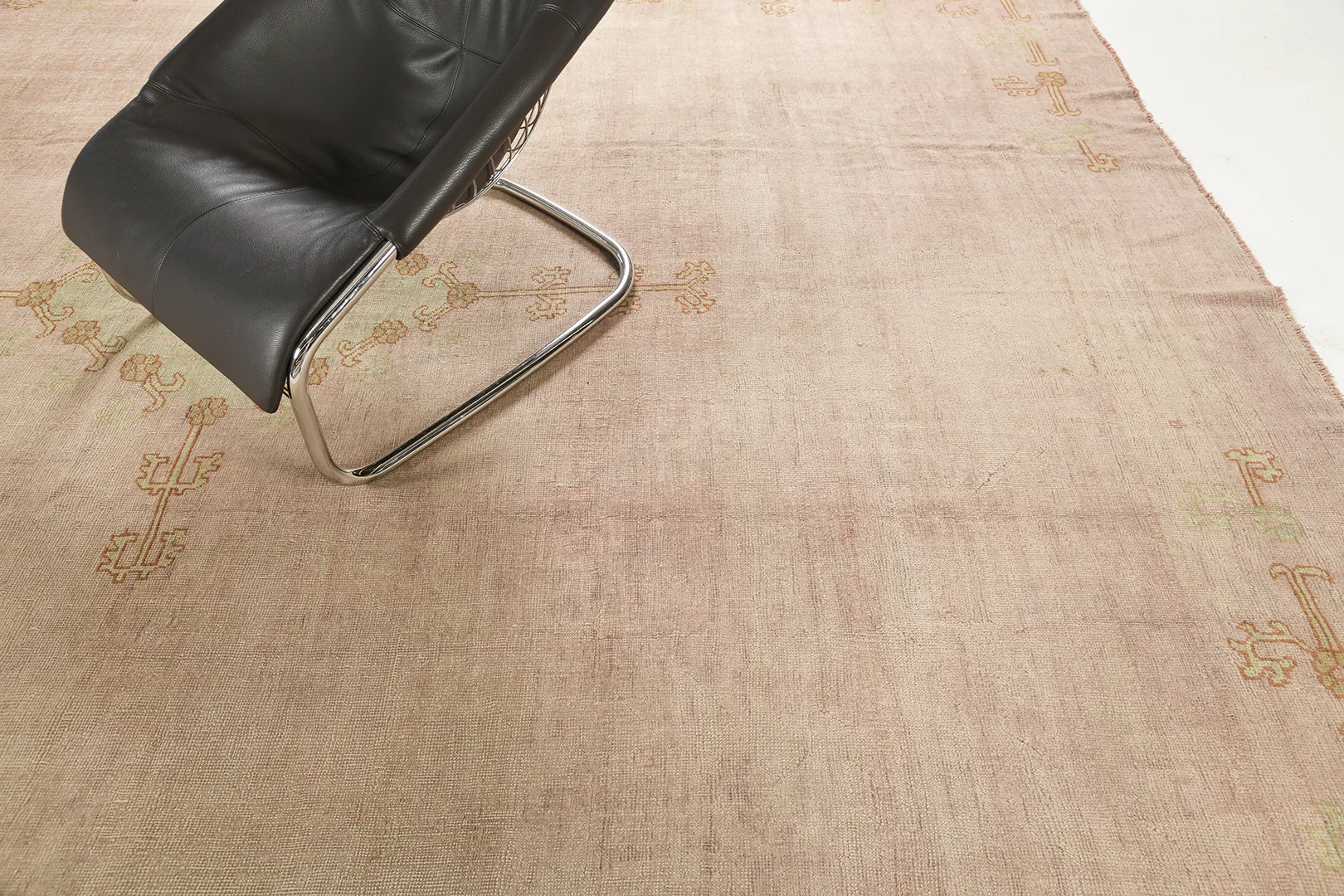
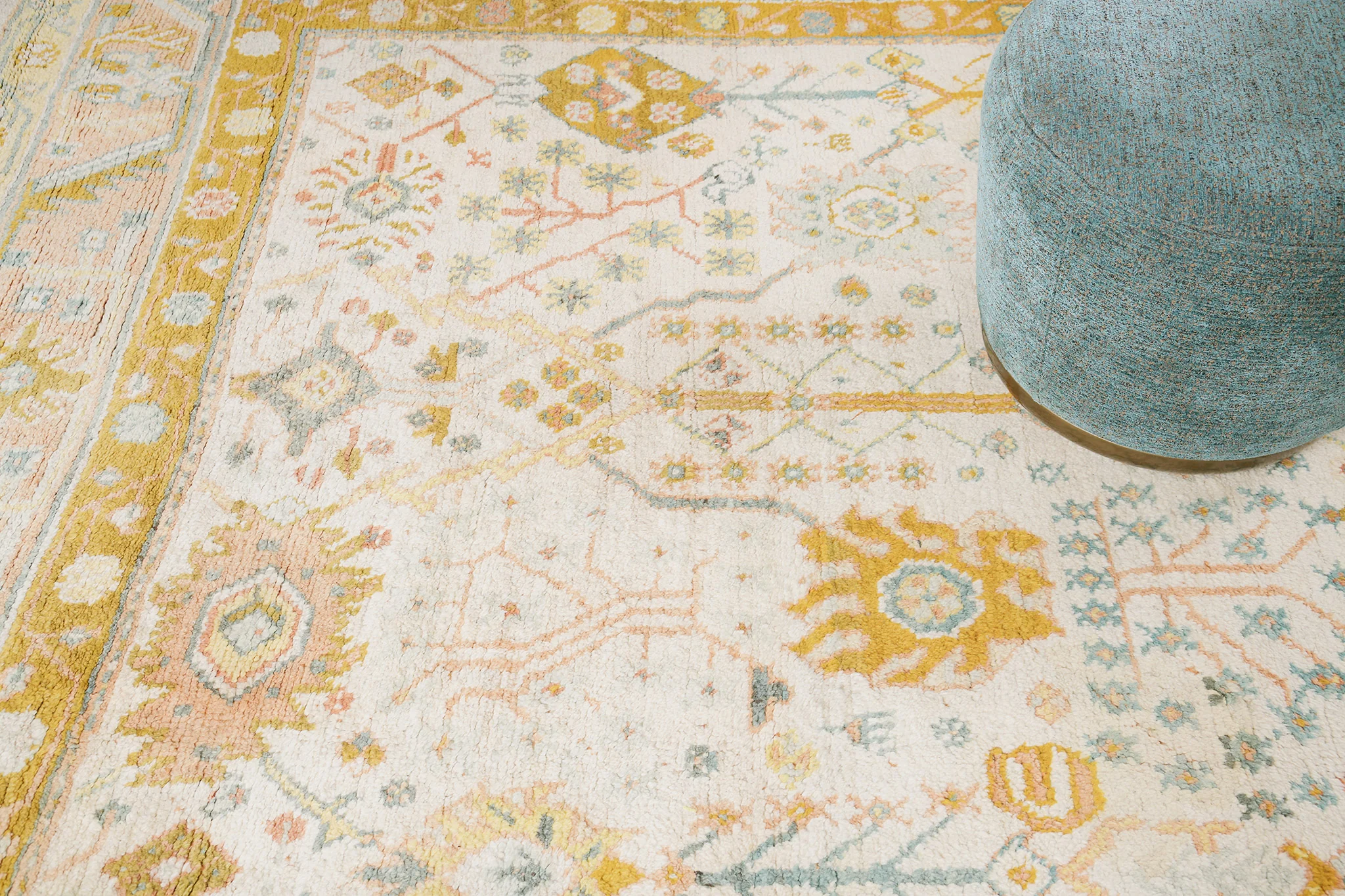
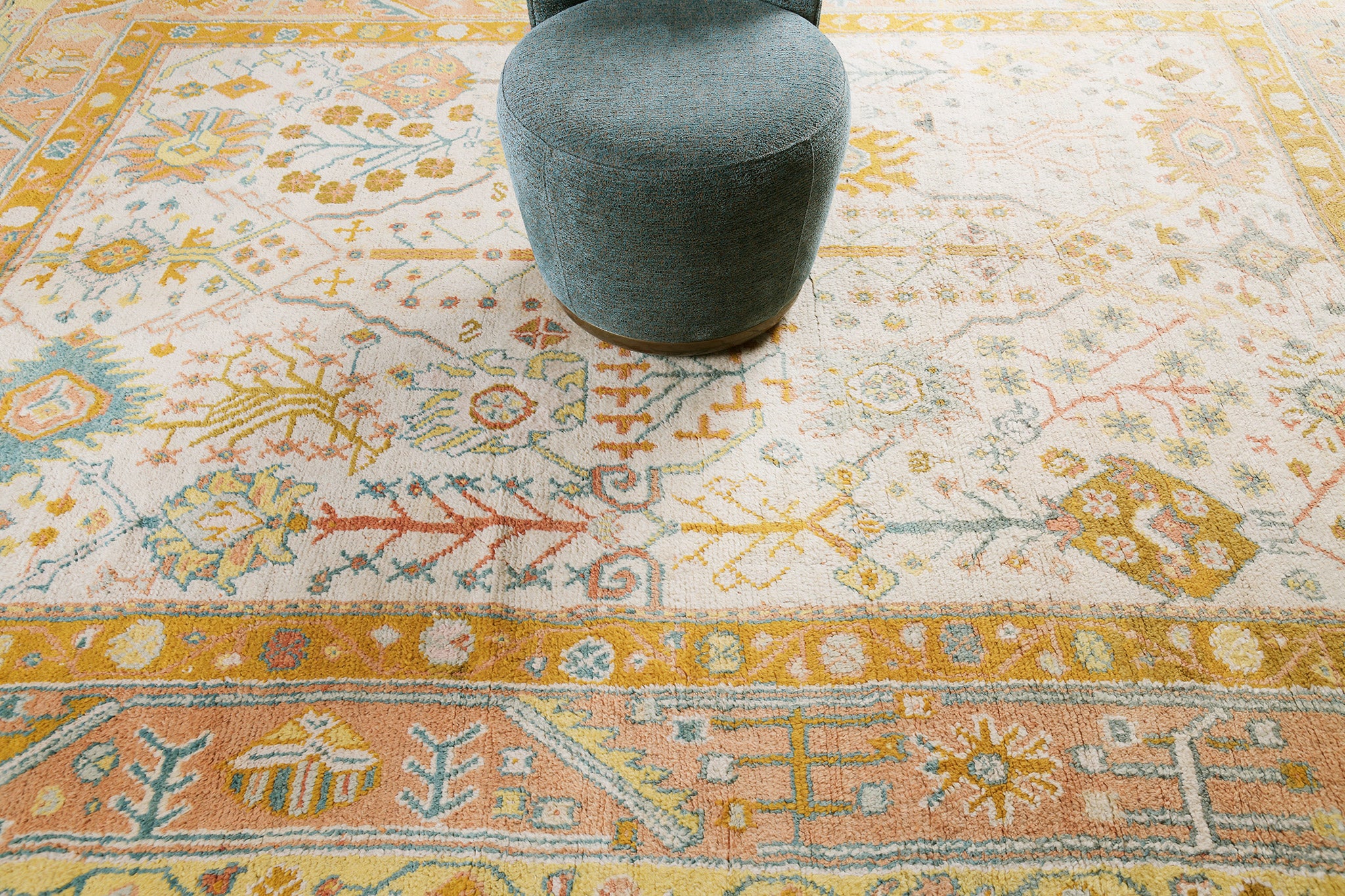
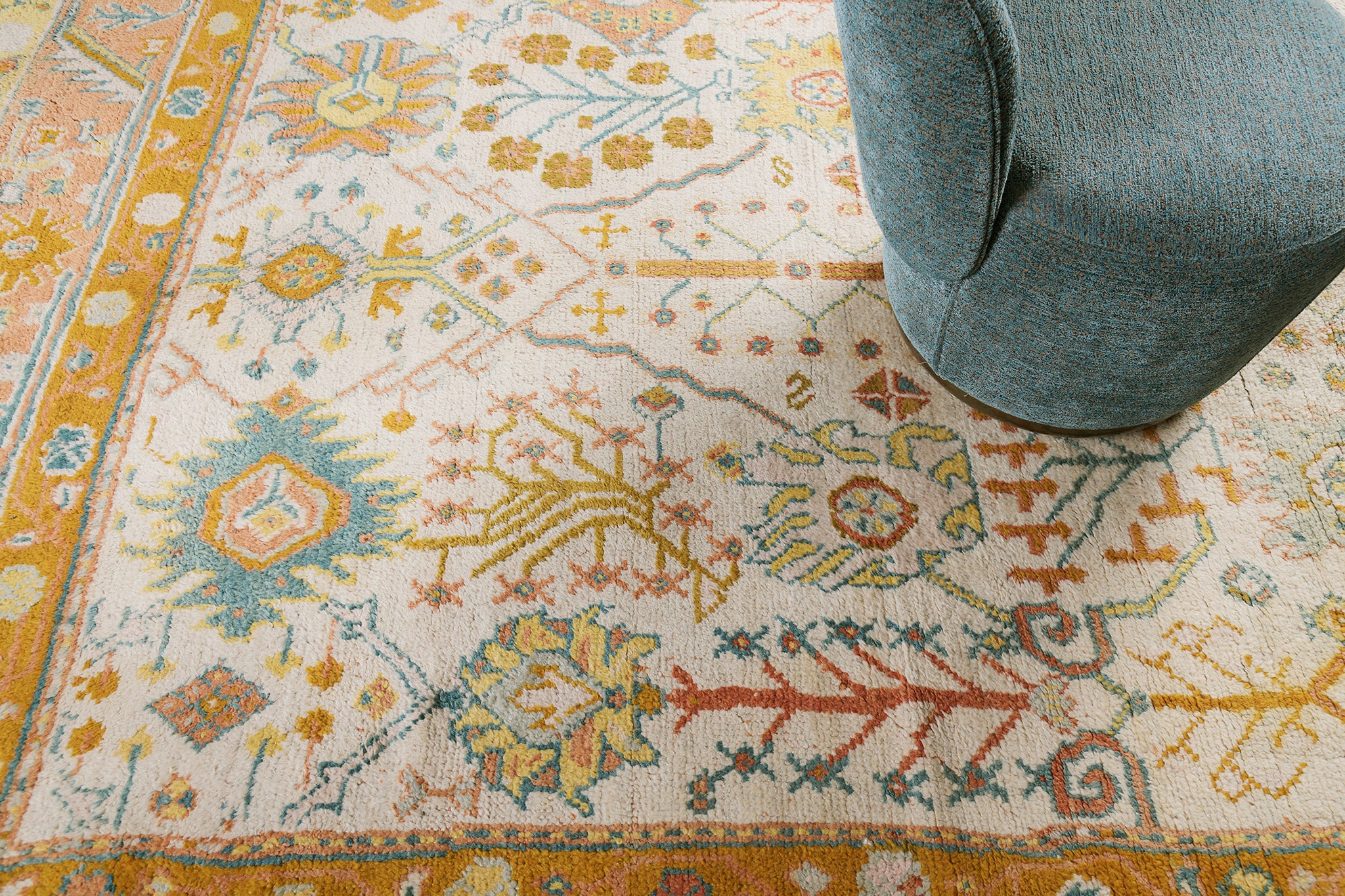
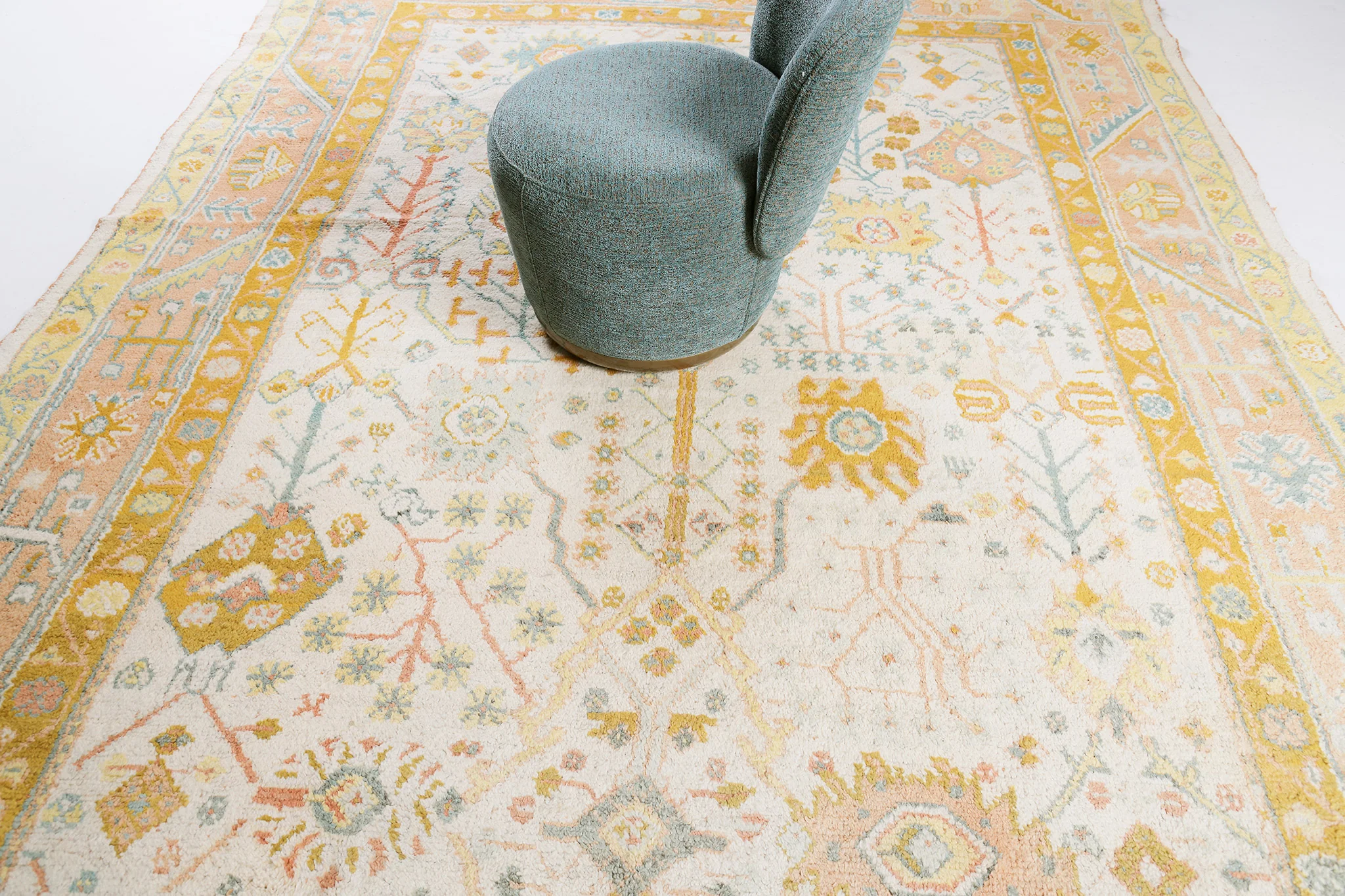
This antique rug emerges from the sampler tradition of 18th-century Anatolian workshops, where young weavers demonstrated their mastery through encyclopedic displays of regional motifs. Hand-knotted with lustrous wool on cotton foundations, the composition presents a botanical lexicon across an ivory field—stylized trees, palmettes, and geometric florals rendered in the warm palette of natural dyes. Madder root produces the coral tones, while walnut hulls and iron create the deeper browns that anchor scattered diamond medallions and cruciform patterns.
The generous saffron border frames this textile anthology with reciprocal guard bands, each containing its own vocabulary of tribal symbols. Ottoman court influence mingles with village vernacular in motifs that span centuries of weaving knowledge, from Caucasian star forms to Persian garden elements. The natural abrash creates subtle color variations that speak to the hand-dyeing process, while areas of gentle wear reveal the cotton foundation beneath.
Such samplers served both pedagogical and ceremonial functions, preserving design heritage while showcasing technical prowess. The density of symbolic content—from protective amulets to fertility motifs—transforms this antique rug into a cultural document, representing the intersection of domestic craft and artistic tradition that defined Anatolian textile production.
Discover more Modern Turkish Rugs and Oushak Rugs.
Product Information
Product Information
Shipping & Returns
Shipping & Returns


Antique Turkish Oushak
Antique Turkish Oushak
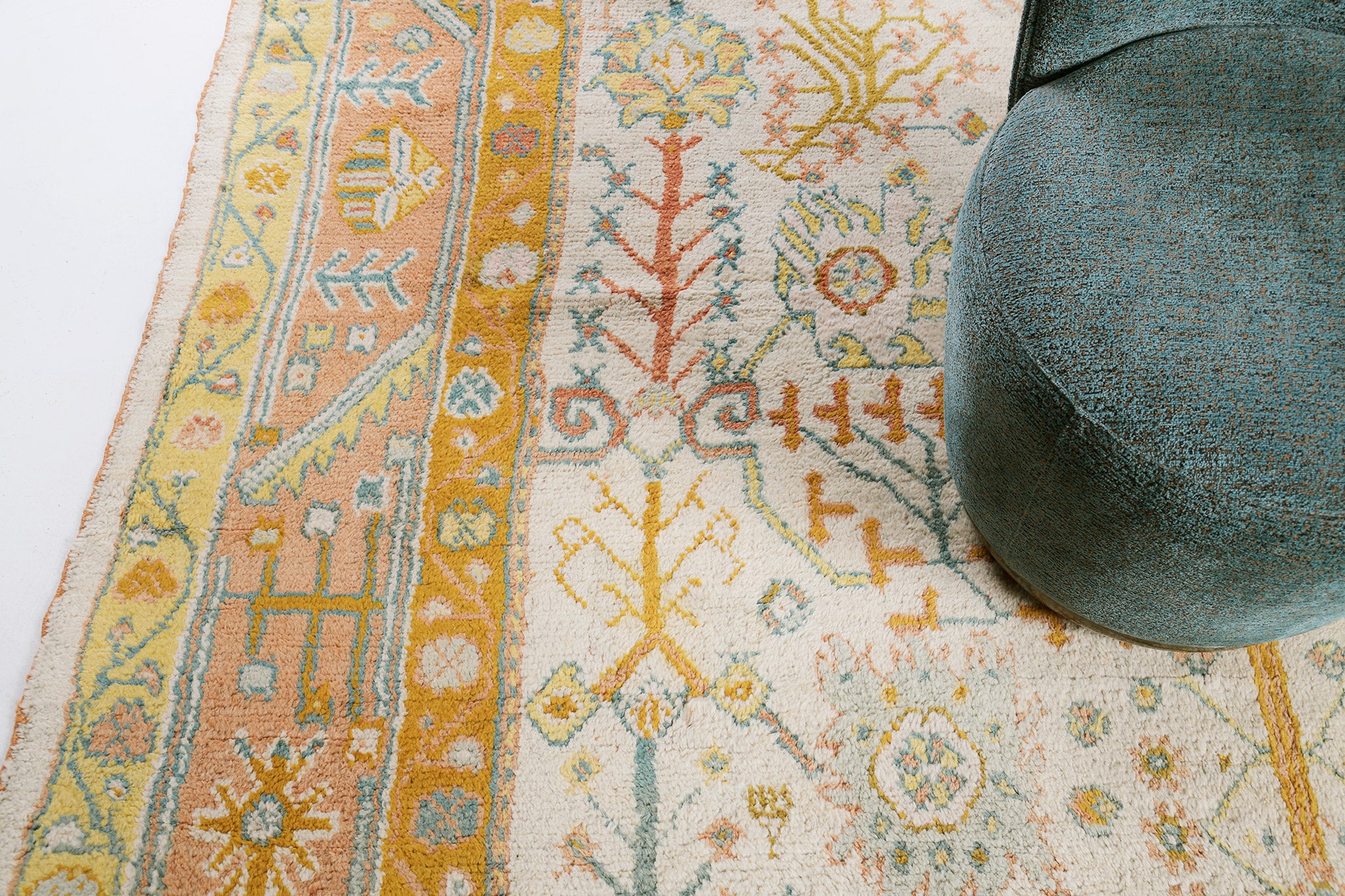
This antique rug emerges from the sampler tradition of 18th-century Anatolian workshops, where young weavers demonstrated their mastery through encyclopedic displays of regional motifs. Hand-knotted with lustrous wool on cotton foundations, the composition presents a botanical lexicon across an ivory field—stylized trees, palmettes, and geometric florals rendered in the warm palette of natural dyes. Madder root produces the coral tones, while walnut hulls and iron create the deeper browns that anchor scattered diamond medallions and cruciform patterns.
The generous saffron border frames this textile anthology with reciprocal guard bands, each containing its own vocabulary of tribal symbols. Ottoman court influence mingles with village vernacular in motifs that span centuries of weaving knowledge, from Caucasian star forms to Persian garden elements. The natural abrash creates subtle color variations that speak to the hand-dyeing process, while areas of gentle wear reveal the cotton foundation beneath.
Such samplers served both pedagogical and ceremonial functions, preserving design heritage while showcasing technical prowess. The density of symbolic content—from protective amulets to fertility motifs—transforms this antique rug into a cultural document, representing the intersection of domestic craft and artistic tradition that defined Anatolian textile production.
Discover more Modern Turkish Rugs and Oushak Rugs.
$26,000.00
Antique Turkish Oushak—
$26,000.00
Product Information
Product Information
Shipping & Returns
Shipping & Returns
Description
This antique rug emerges from the sampler tradition of 18th-century Anatolian workshops, where young weavers demonstrated their mastery through encyclopedic displays of regional motifs. Hand-knotted with lustrous wool on cotton foundations, the composition presents a botanical lexicon across an ivory field—stylized trees, palmettes, and geometric florals rendered in the warm palette of natural dyes. Madder root produces the coral tones, while walnut hulls and iron create the deeper browns that anchor scattered diamond medallions and cruciform patterns.
The generous saffron border frames this textile anthology with reciprocal guard bands, each containing its own vocabulary of tribal symbols. Ottoman court influence mingles with village vernacular in motifs that span centuries of weaving knowledge, from Caucasian star forms to Persian garden elements. The natural abrash creates subtle color variations that speak to the hand-dyeing process, while areas of gentle wear reveal the cotton foundation beneath.
Such samplers served both pedagogical and ceremonial functions, preserving design heritage while showcasing technical prowess. The density of symbolic content—from protective amulets to fertility motifs—transforms this antique rug into a cultural document, representing the intersection of domestic craft and artistic tradition that defined Anatolian textile production.
Discover more Modern Turkish Rugs and Oushak Rugs.