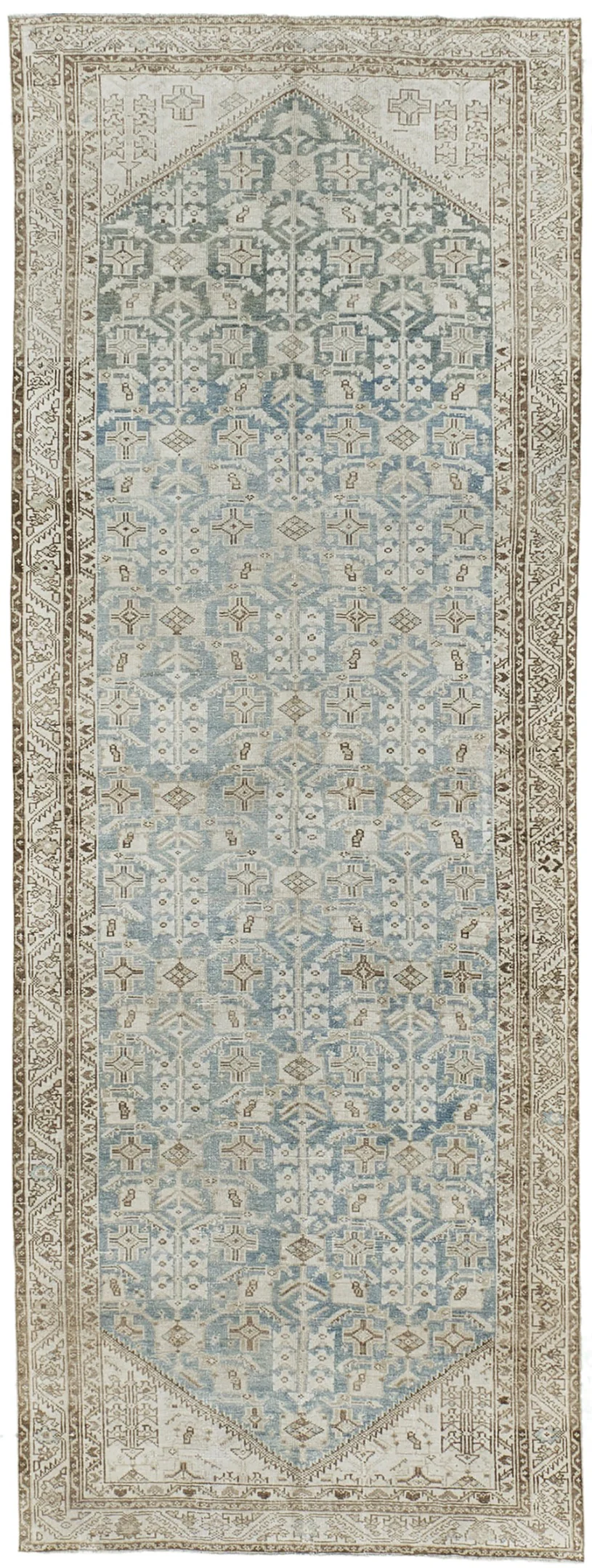
Antique Persian Duz Kilim Flat Weave Runner
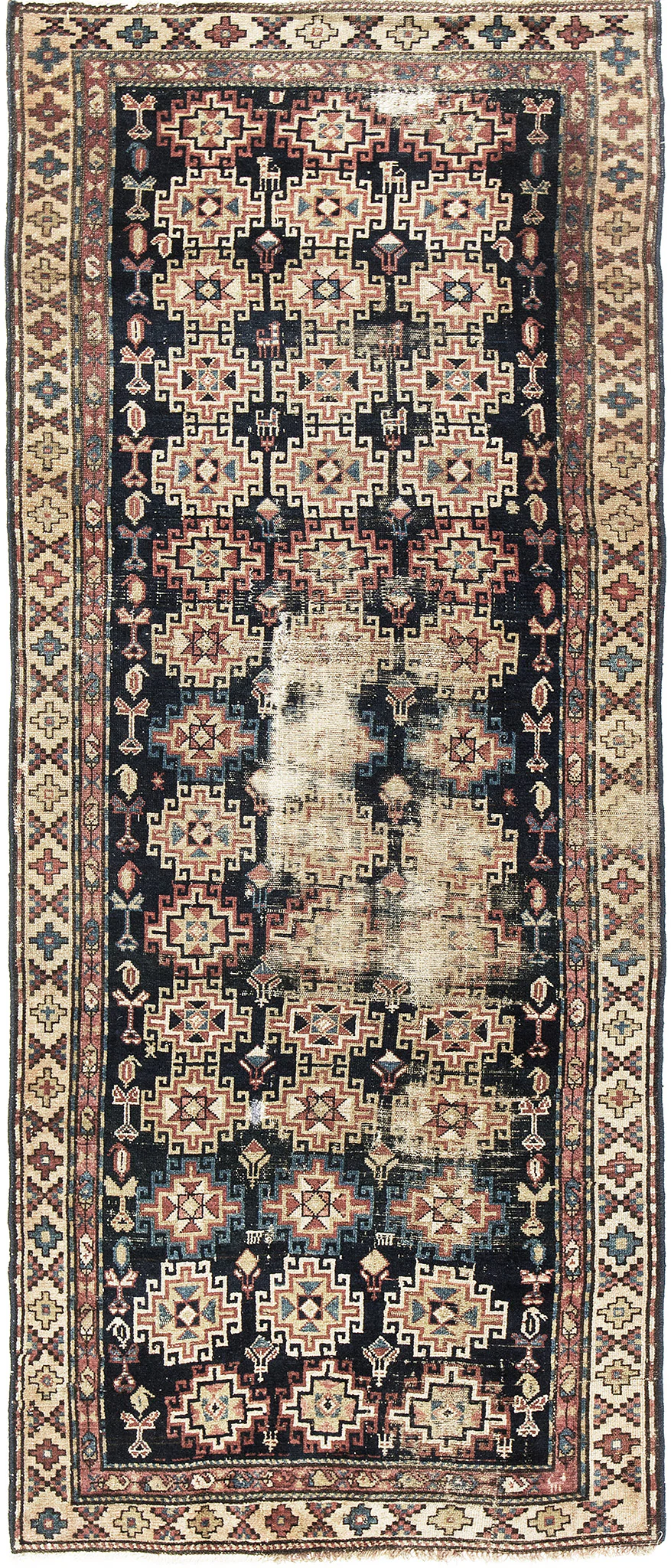
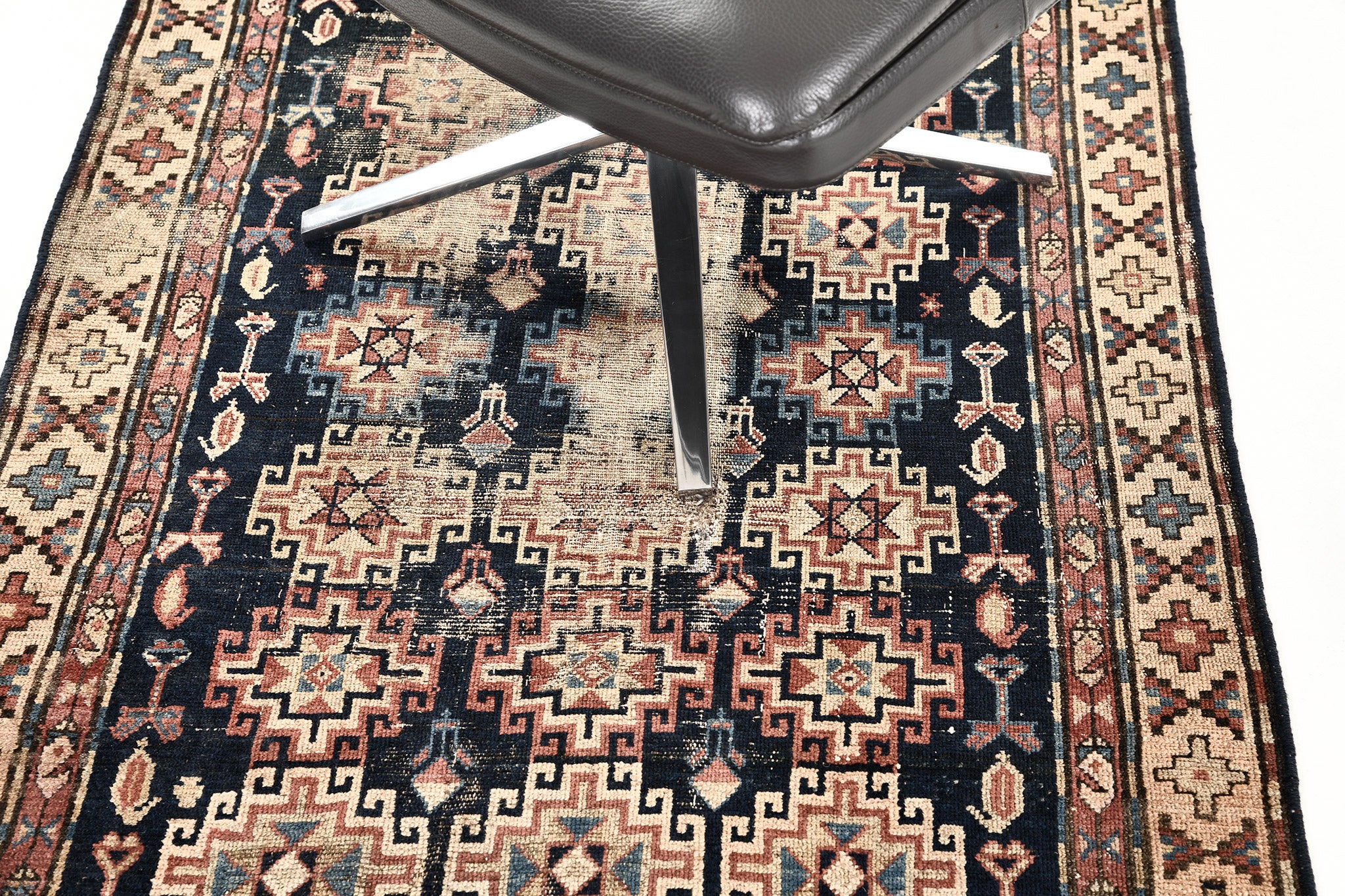
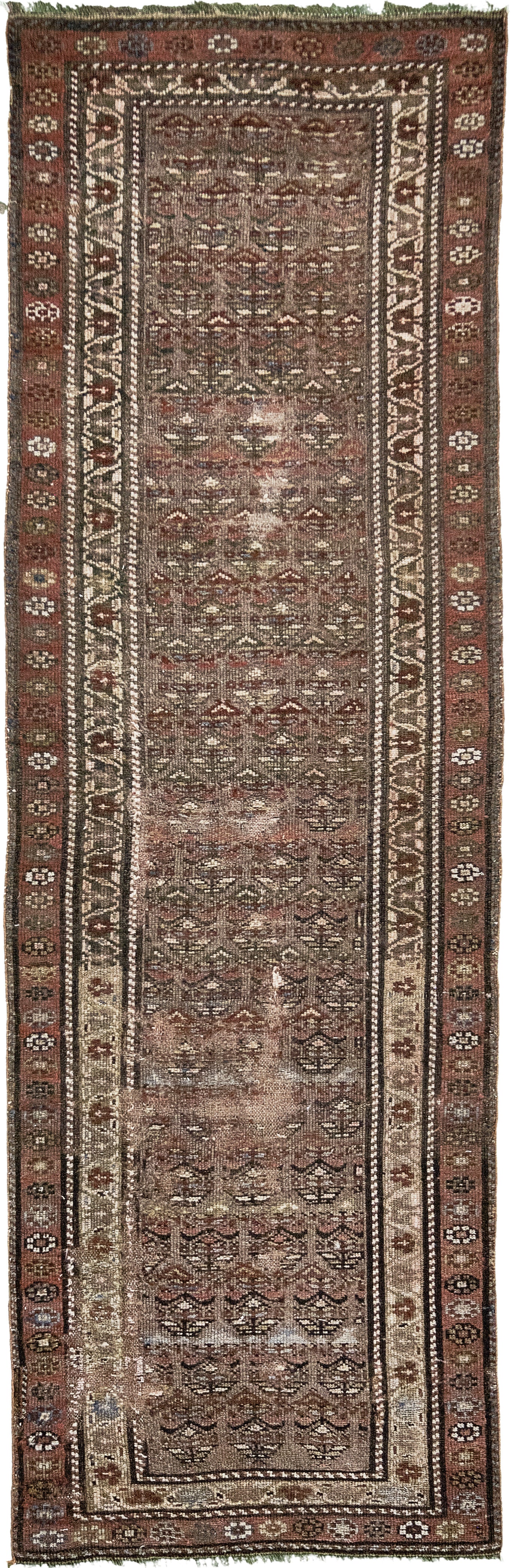
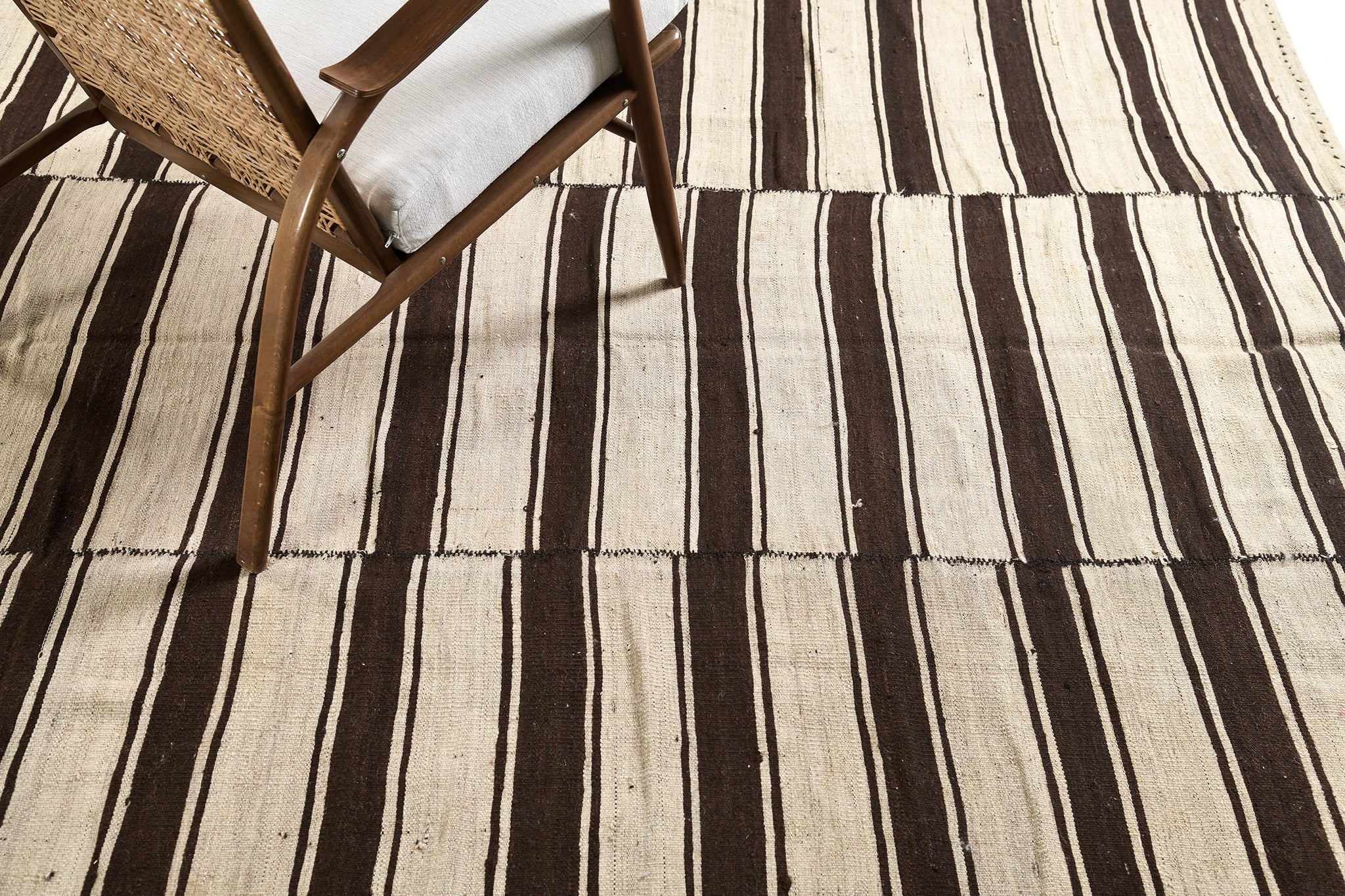
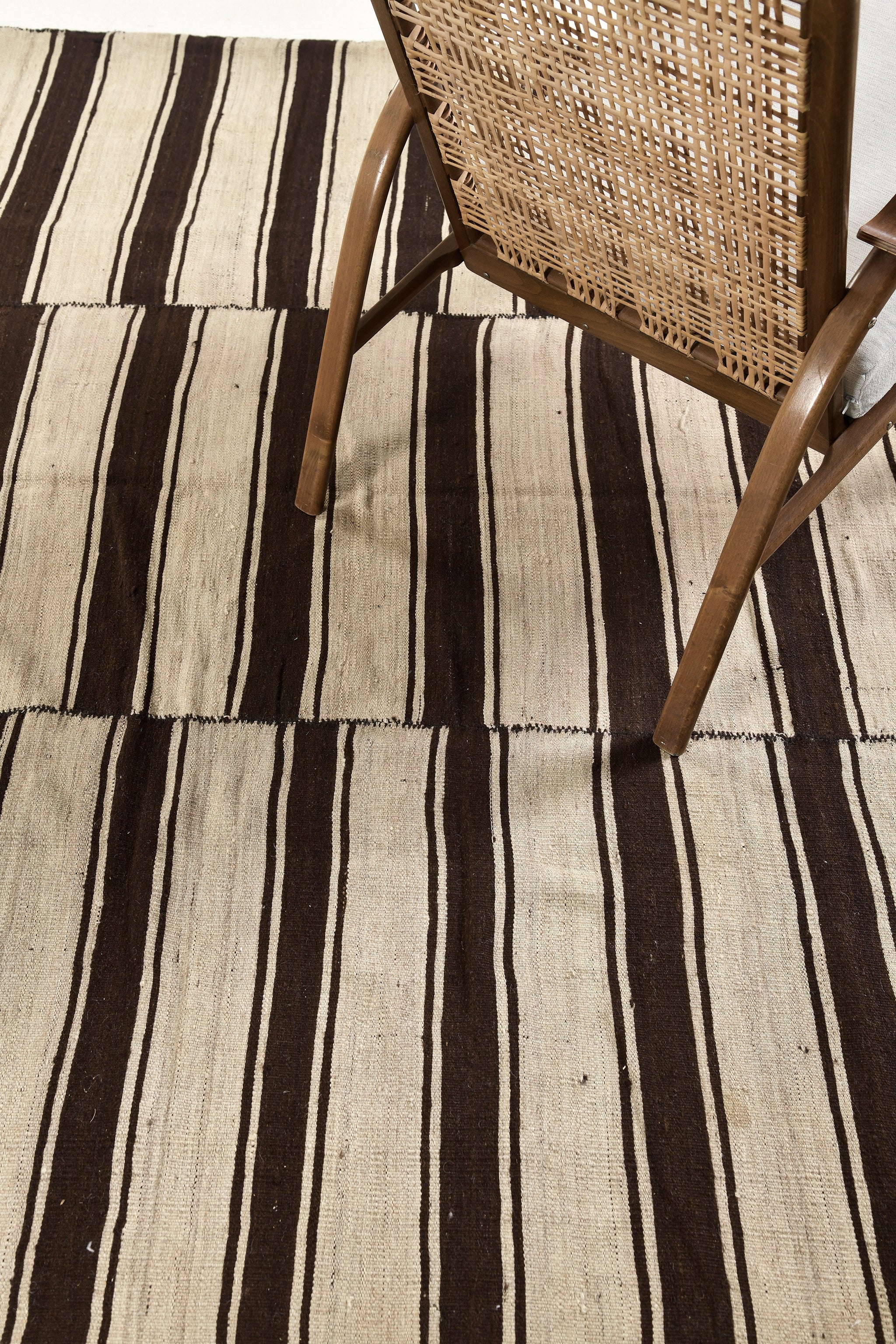
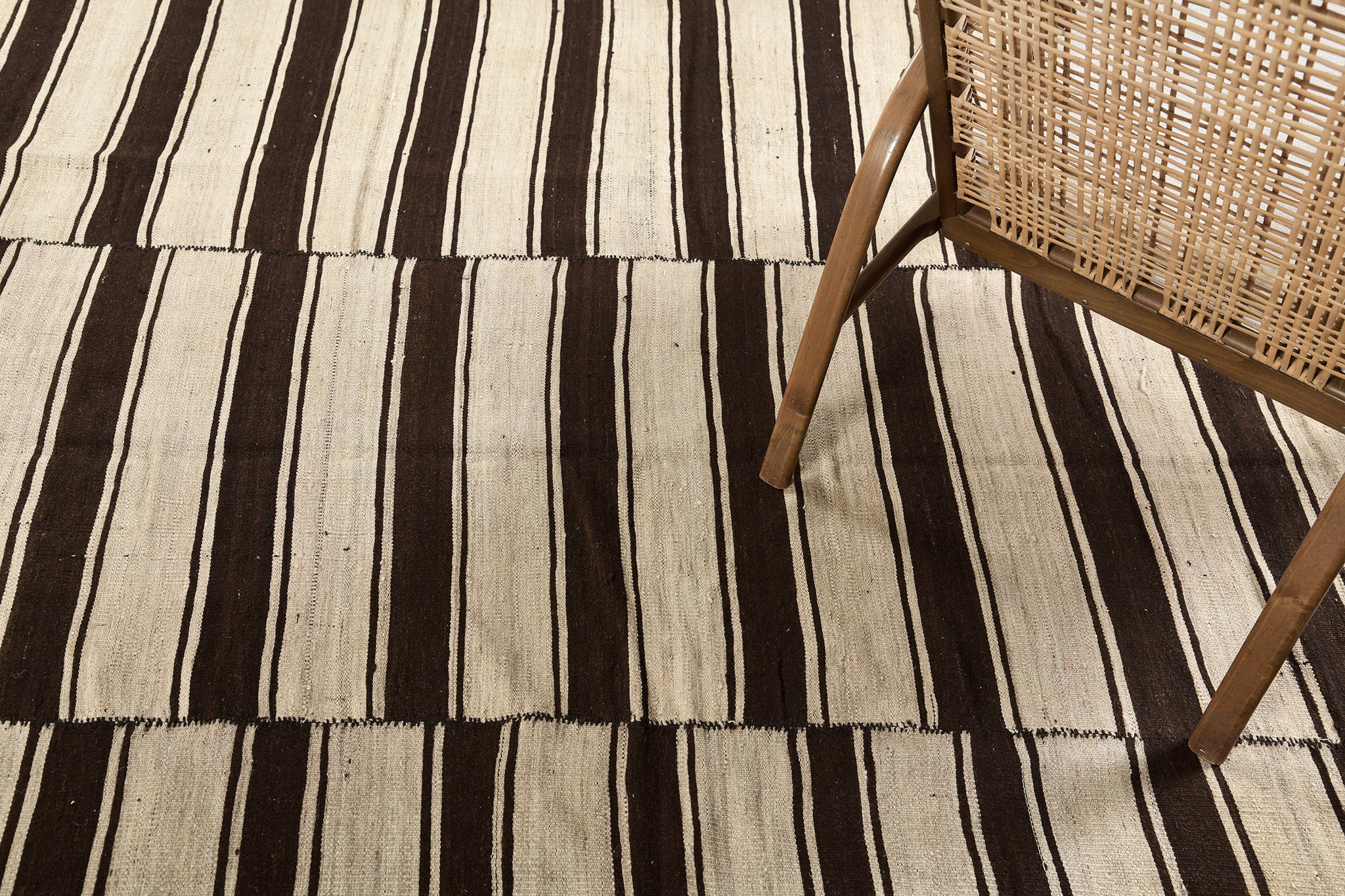
This antique rug demonstrates the geometric sensibilities of mid-20th-century Anatolian village workshops, where weavers employed hand-knotted techniques to create textiles for daily use rather than commercial export. The composition alternates between horizontal bands of dark brown and cream, each section filled with parallel lines that create subtle optical movement across the field. Natural dyes derived from walnut hulls and undyed wool produce the restrained palette, while hand-spun materials contribute to the irregular line quality that distinguishes village production from urban workshop precision.
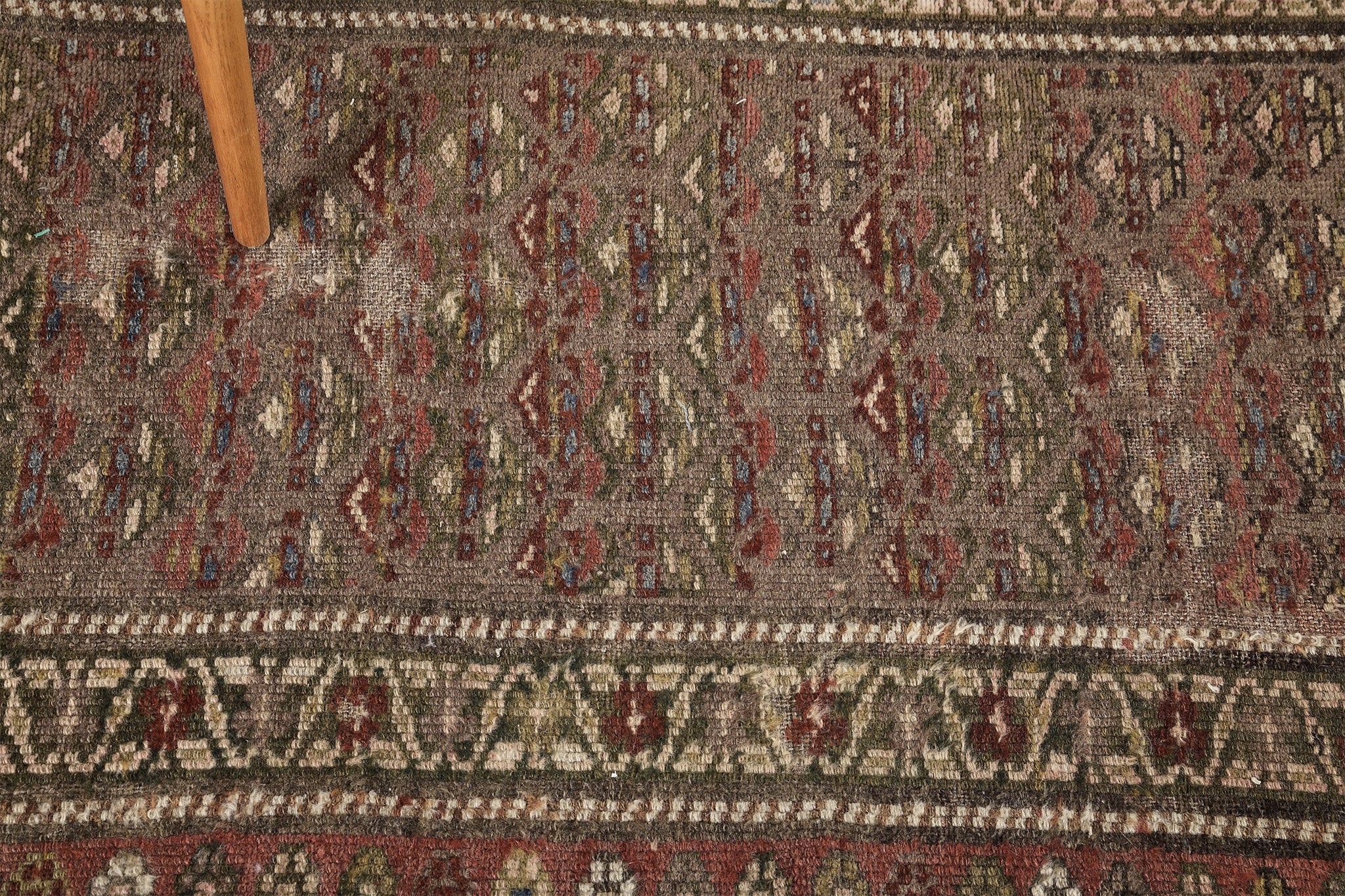
The textile reflects a period when Anatolian weavers simplified traditional motifs into essential geometric forms, responding to both material constraints and evolving aesthetic preferences in rural communities. Each band maintains its own rhythm of line weight and spacing, suggesting the weaver's improvisational approach within established structural parameters. The abrash variations in the brown sections reveal the natural dye process, where slight color shifts occurred during different dye baths. This represents authentic village weaving practice, where technical irregularities became integral to the design character rather than flaws to be corrected.
Discover more Kilim Rugs
Product Information
Product Information
Shipping & Returns
Shipping & Returns


Antique Persian Duz Kilim Flat Weave Runner
Antique Persian Duz Kilim Flat Weave Runner
This antique rug demonstrates the geometric sensibilities of mid-20th-century Anatolian village workshops, where weavers employed hand-knotted techniques to create textiles for daily use rather than commercial export. The composition alternates between horizontal bands of dark brown and cream, each section filled with parallel lines that create subtle optical movement across the field. Natural dyes derived from walnut hulls and undyed wool produce the restrained palette, while hand-spun materials contribute to the irregular line quality that distinguishes village production from urban workshop precision.
The textile reflects a period when Anatolian weavers simplified traditional motifs into essential geometric forms, responding to both material constraints and evolving aesthetic preferences in rural communities. Each band maintains its own rhythm of line weight and spacing, suggesting the weaver's improvisational approach within established structural parameters. The abrash variations in the brown sections reveal the natural dye process, where slight color shifts occurred during different dye baths. This represents authentic village weaving practice, where technical irregularities became integral to the design character rather than flaws to be corrected.
Discover more Kilim Rugs
$1,890.00
Original: $6,300.00
-70%Antique Persian Duz Kilim Flat Weave Runner—
$6,300.00
$1,890.00Product Information
Product Information
Shipping & Returns
Shipping & Returns
Description
This antique rug demonstrates the geometric sensibilities of mid-20th-century Anatolian village workshops, where weavers employed hand-knotted techniques to create textiles for daily use rather than commercial export. The composition alternates between horizontal bands of dark brown and cream, each section filled with parallel lines that create subtle optical movement across the field. Natural dyes derived from walnut hulls and undyed wool produce the restrained palette, while hand-spun materials contribute to the irregular line quality that distinguishes village production from urban workshop precision.
The textile reflects a period when Anatolian weavers simplified traditional motifs into essential geometric forms, responding to both material constraints and evolving aesthetic preferences in rural communities. Each band maintains its own rhythm of line weight and spacing, suggesting the weaver's improvisational approach within established structural parameters. The abrash variations in the brown sections reveal the natural dye process, where slight color shifts occurred during different dye baths. This represents authentic village weaving practice, where technical irregularities became integral to the design character rather than flaws to be corrected.
Discover more Kilim Rugs