Antique Persian Mahal 30021
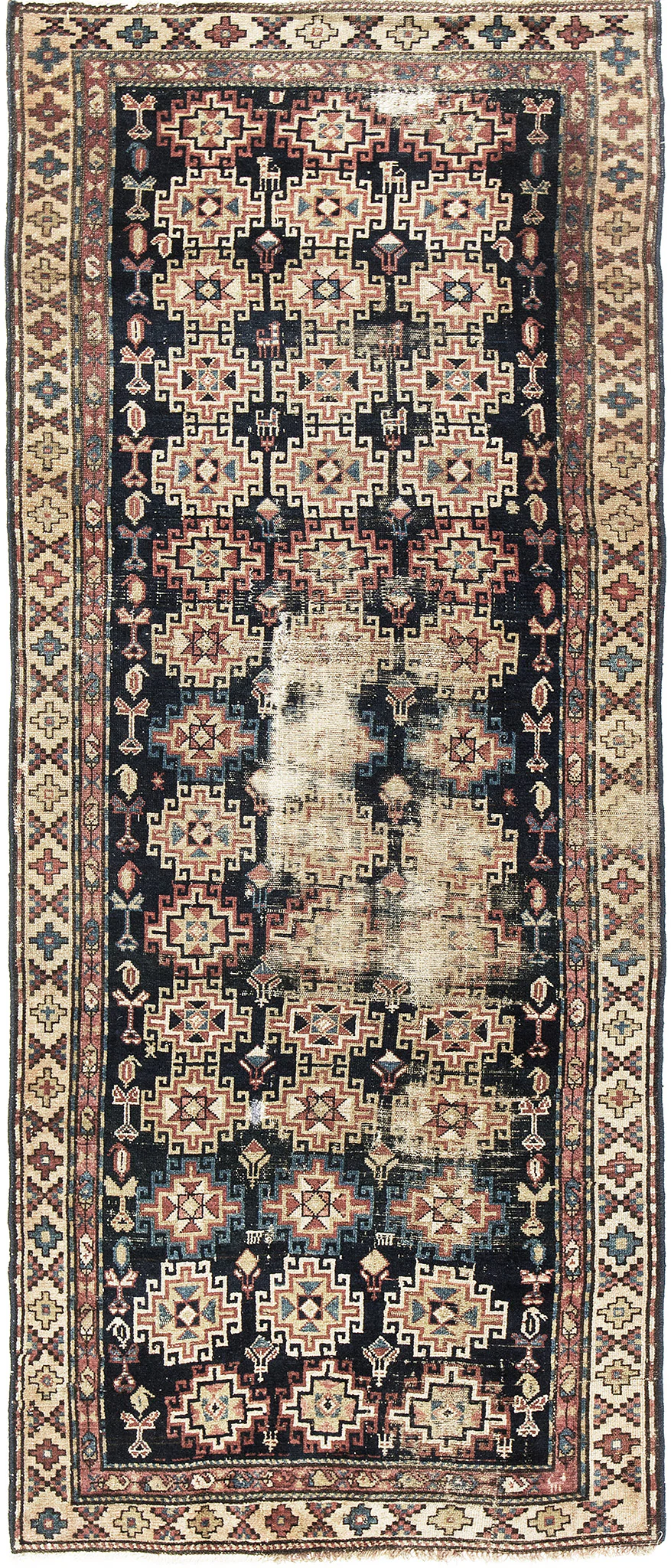
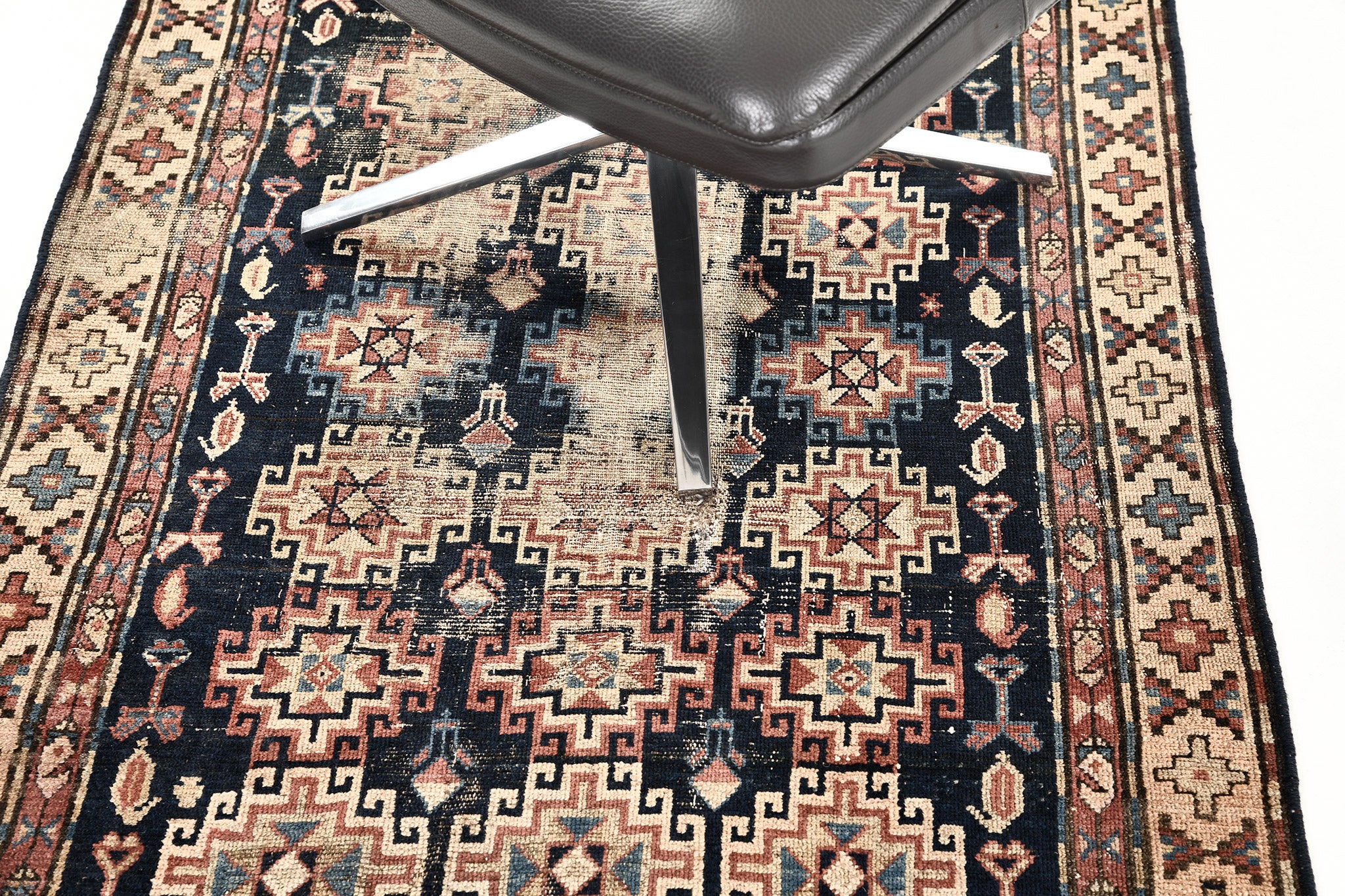
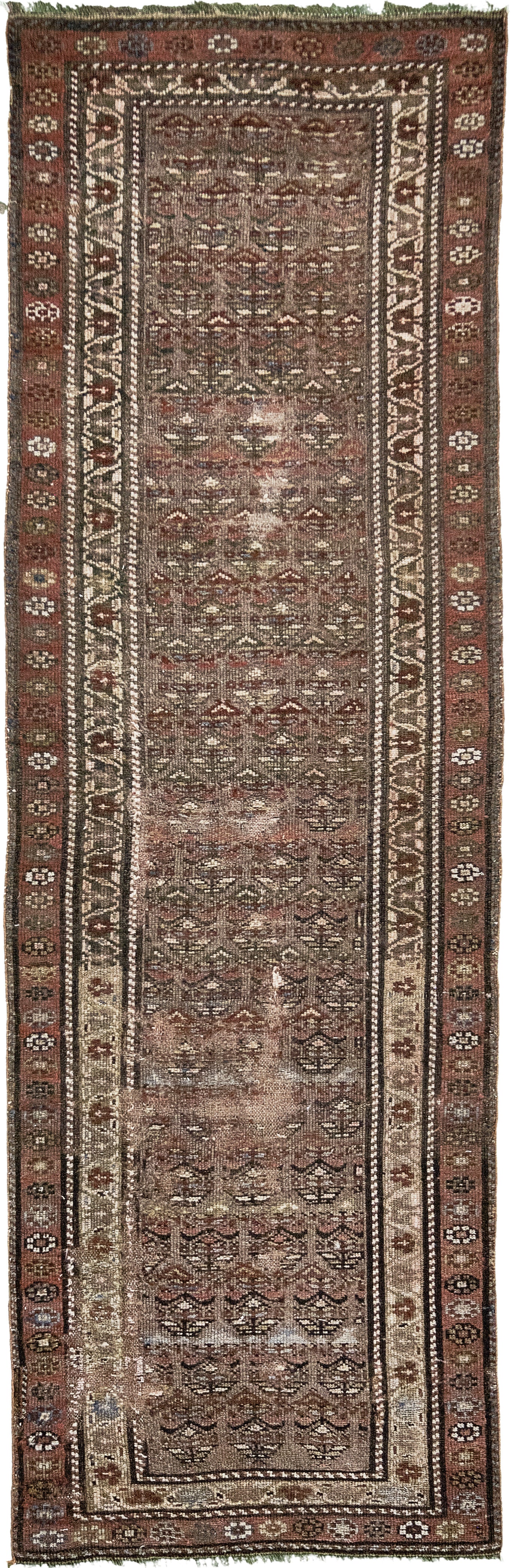
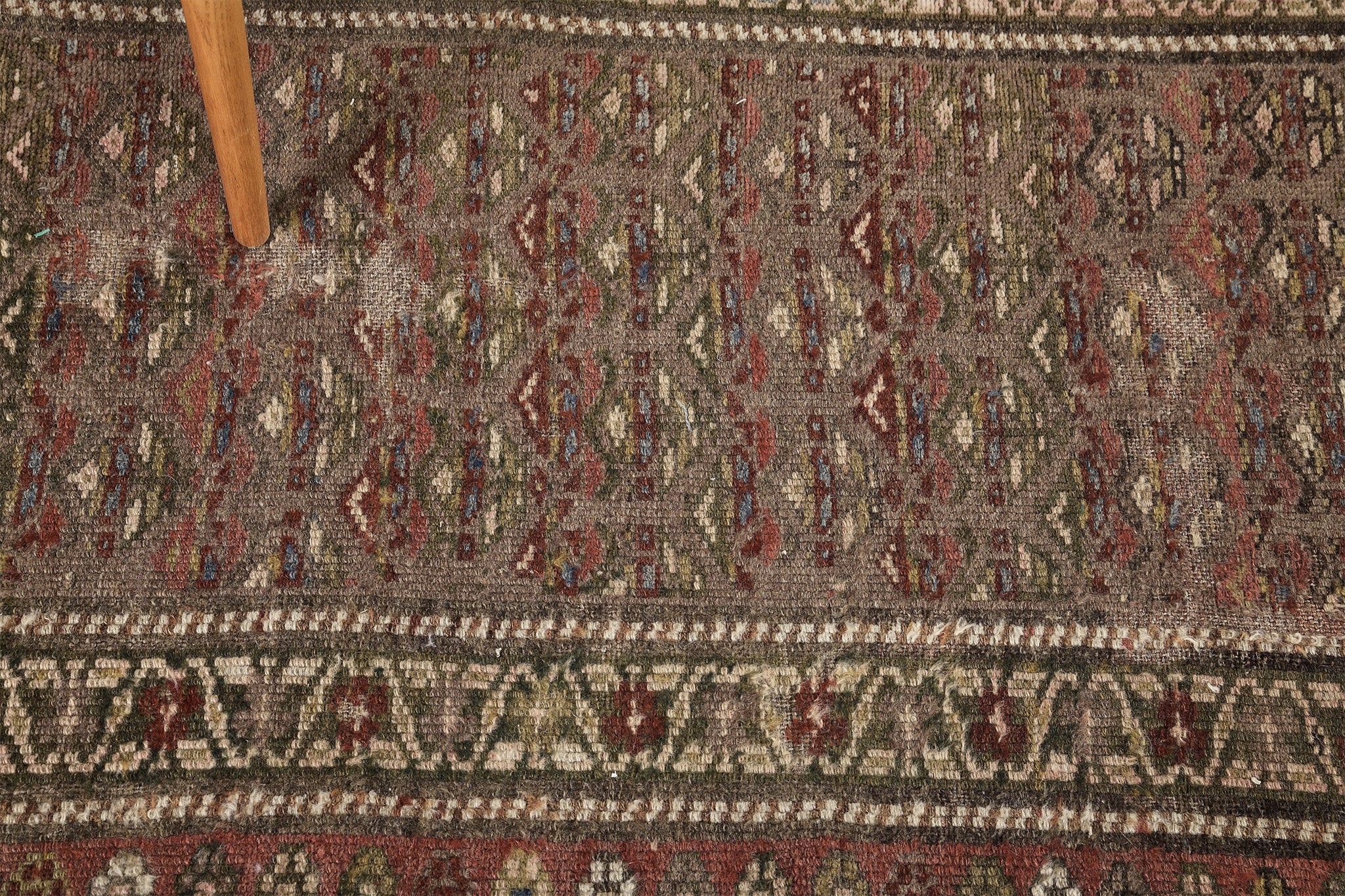
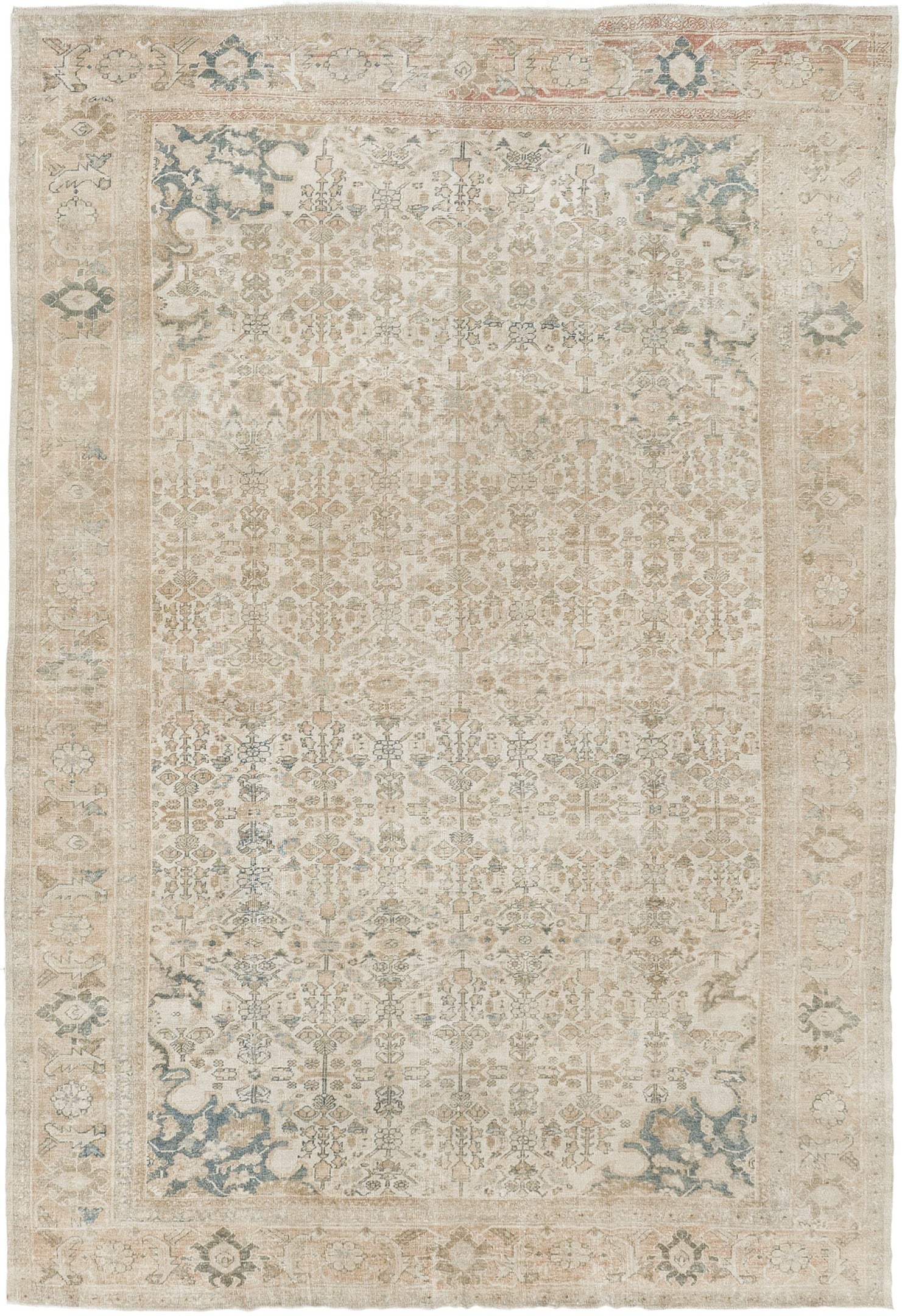
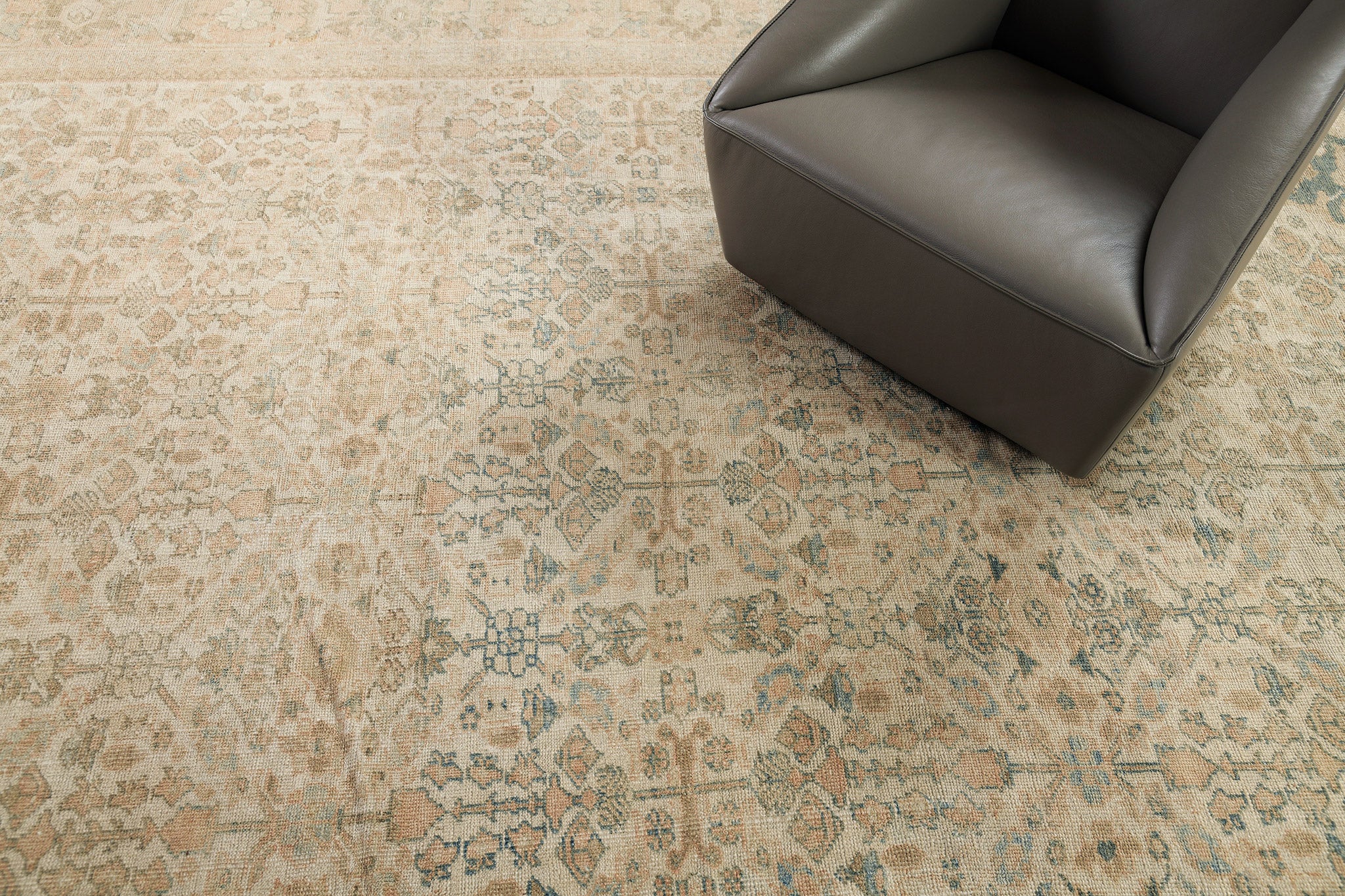
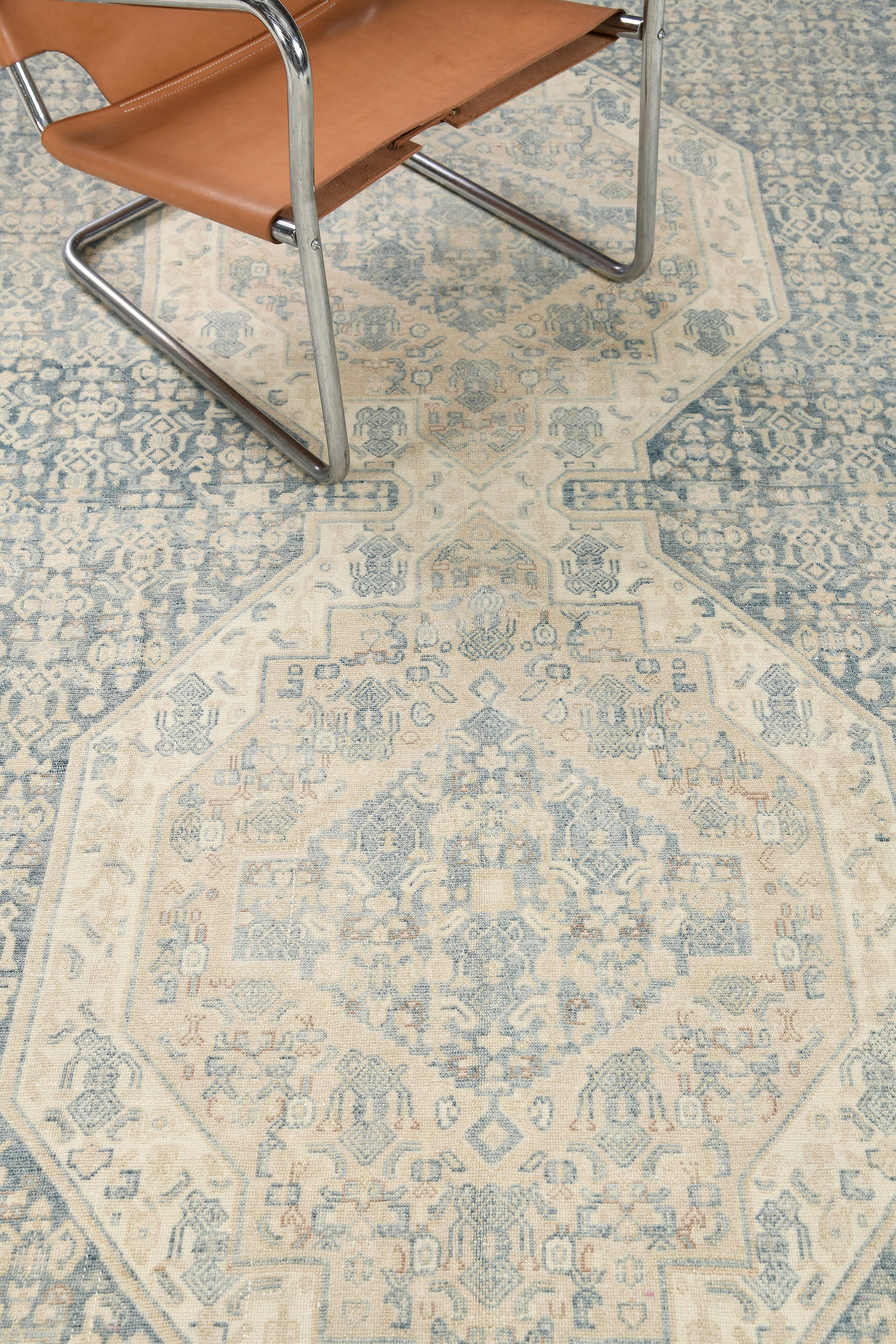
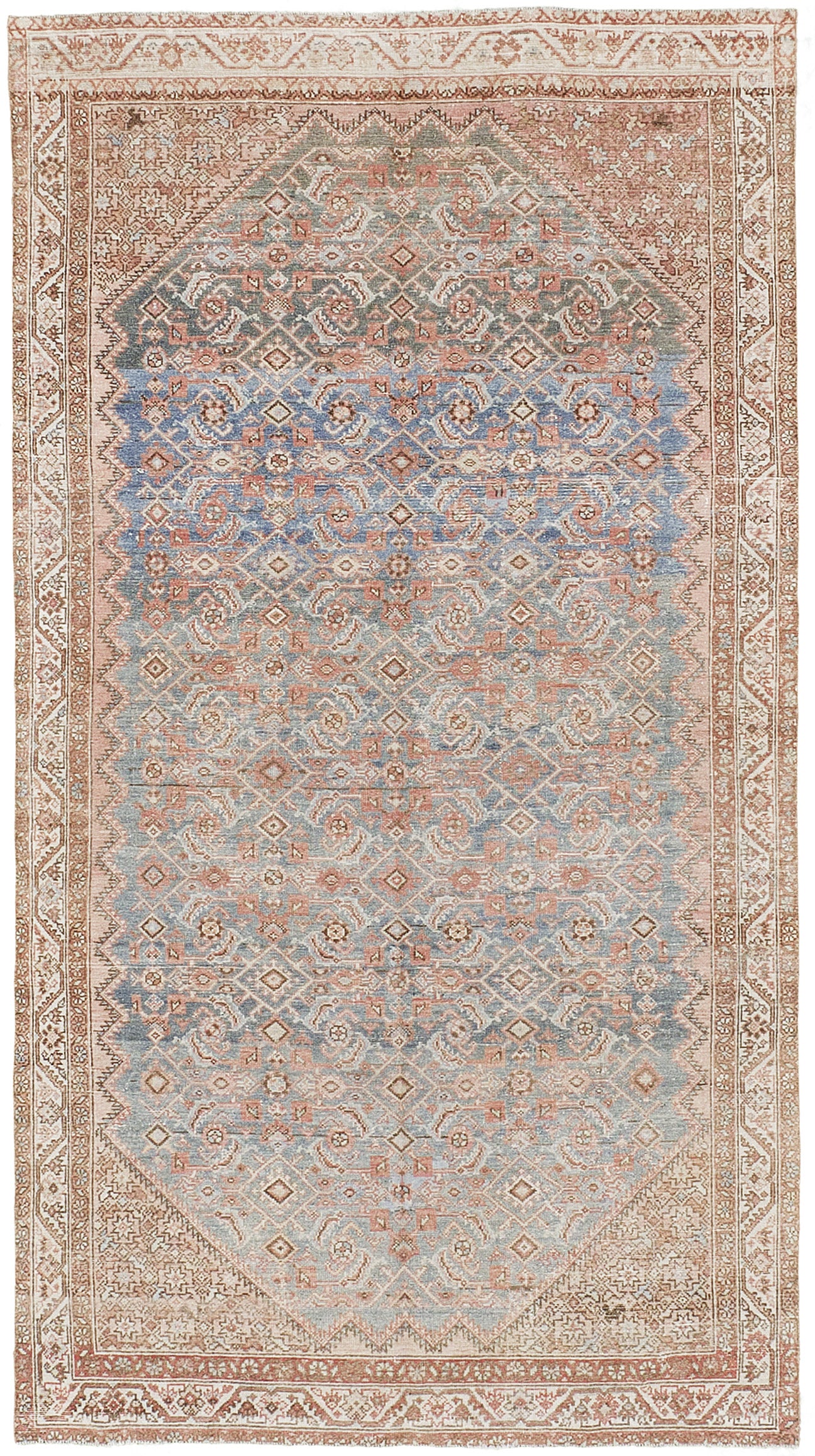
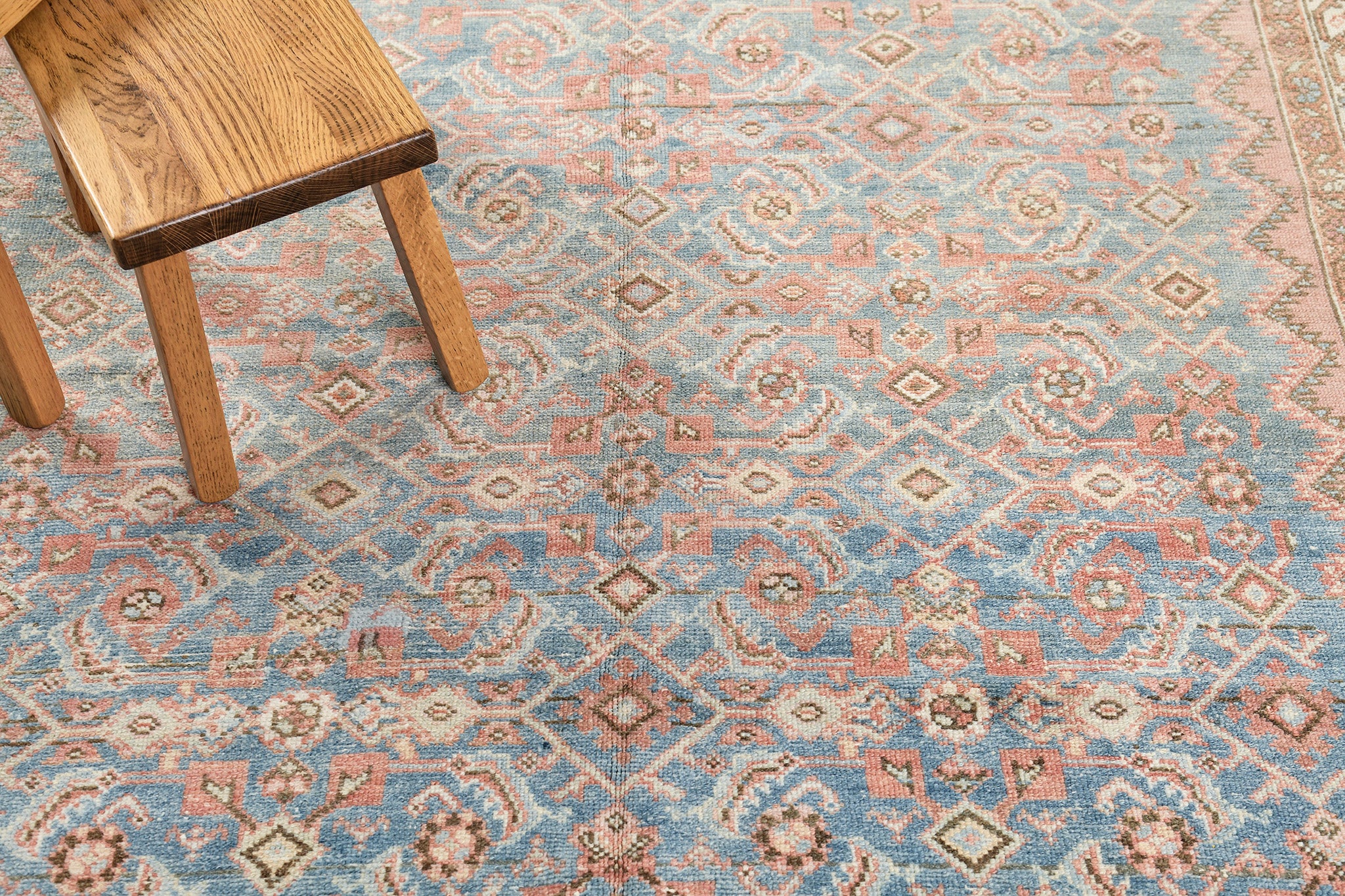
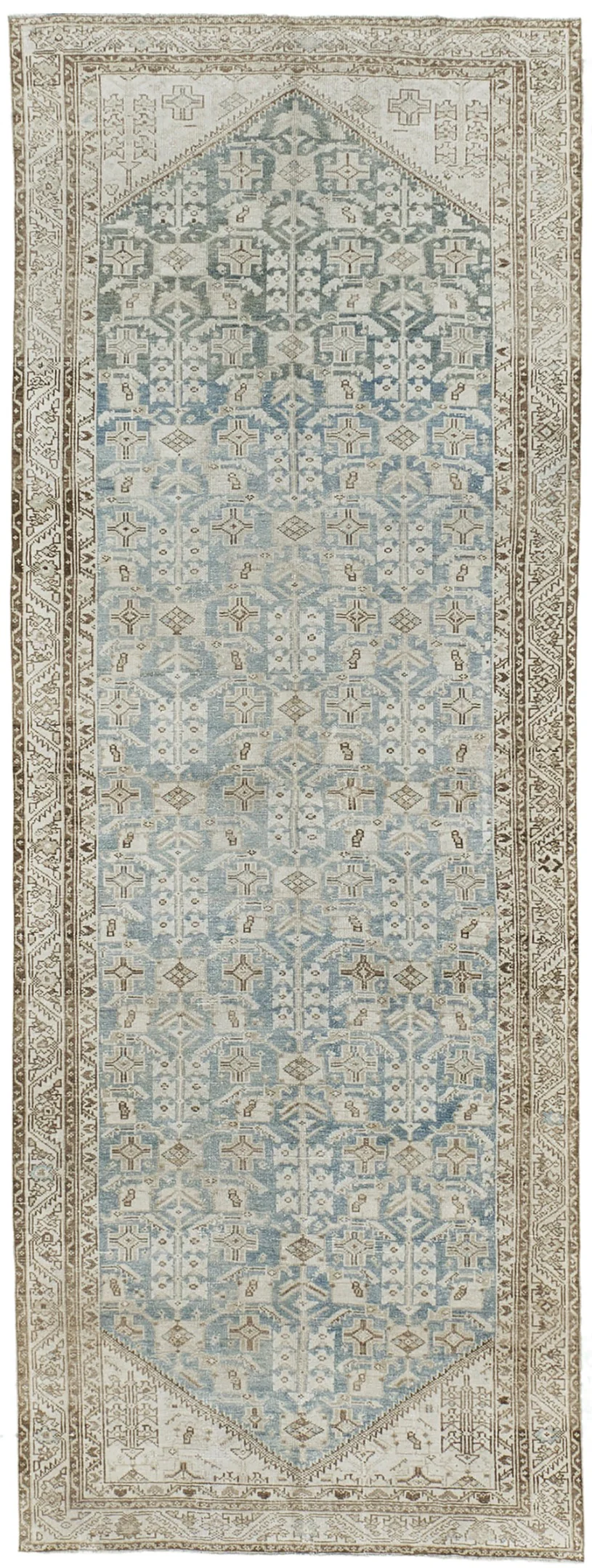
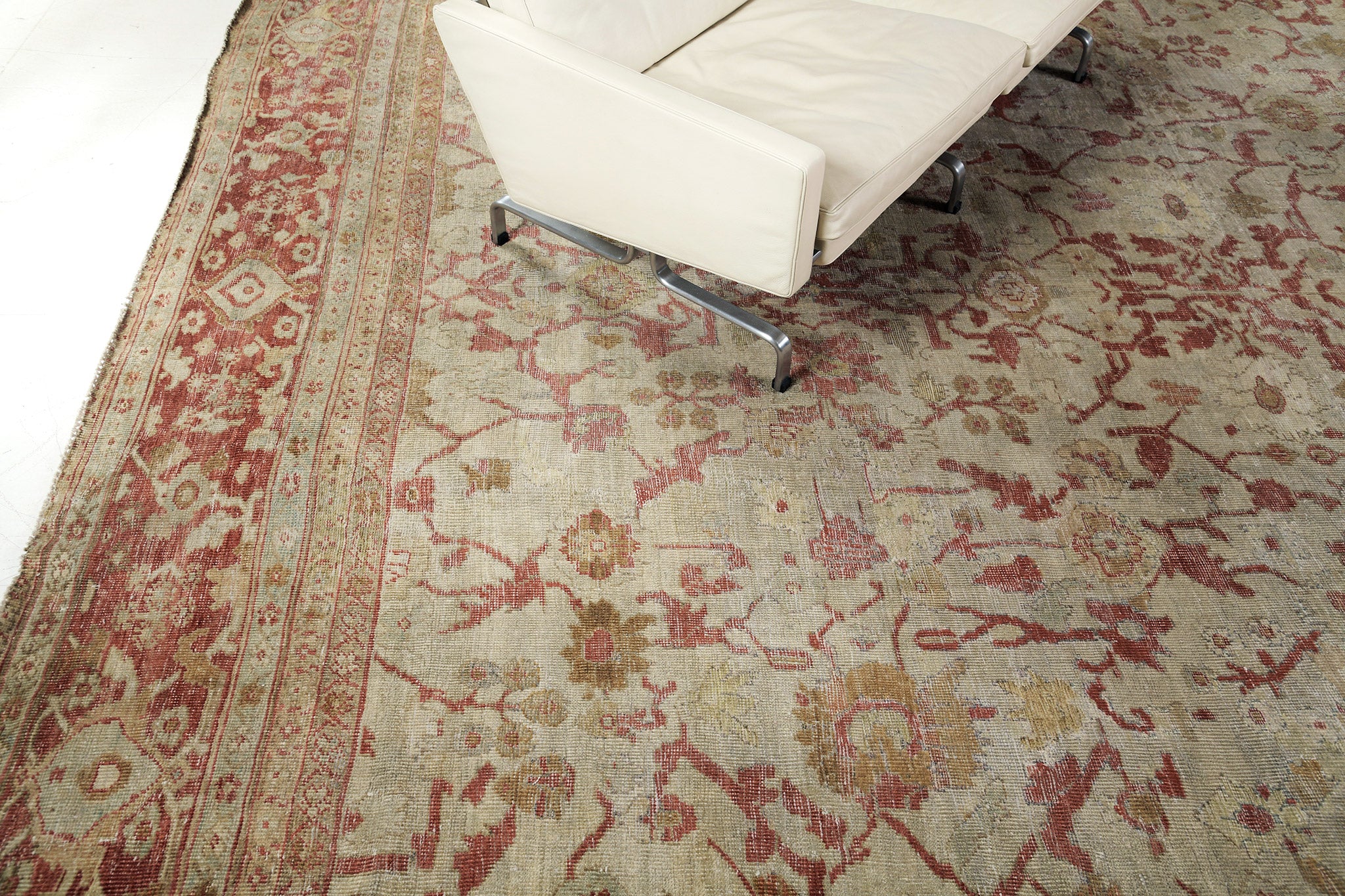
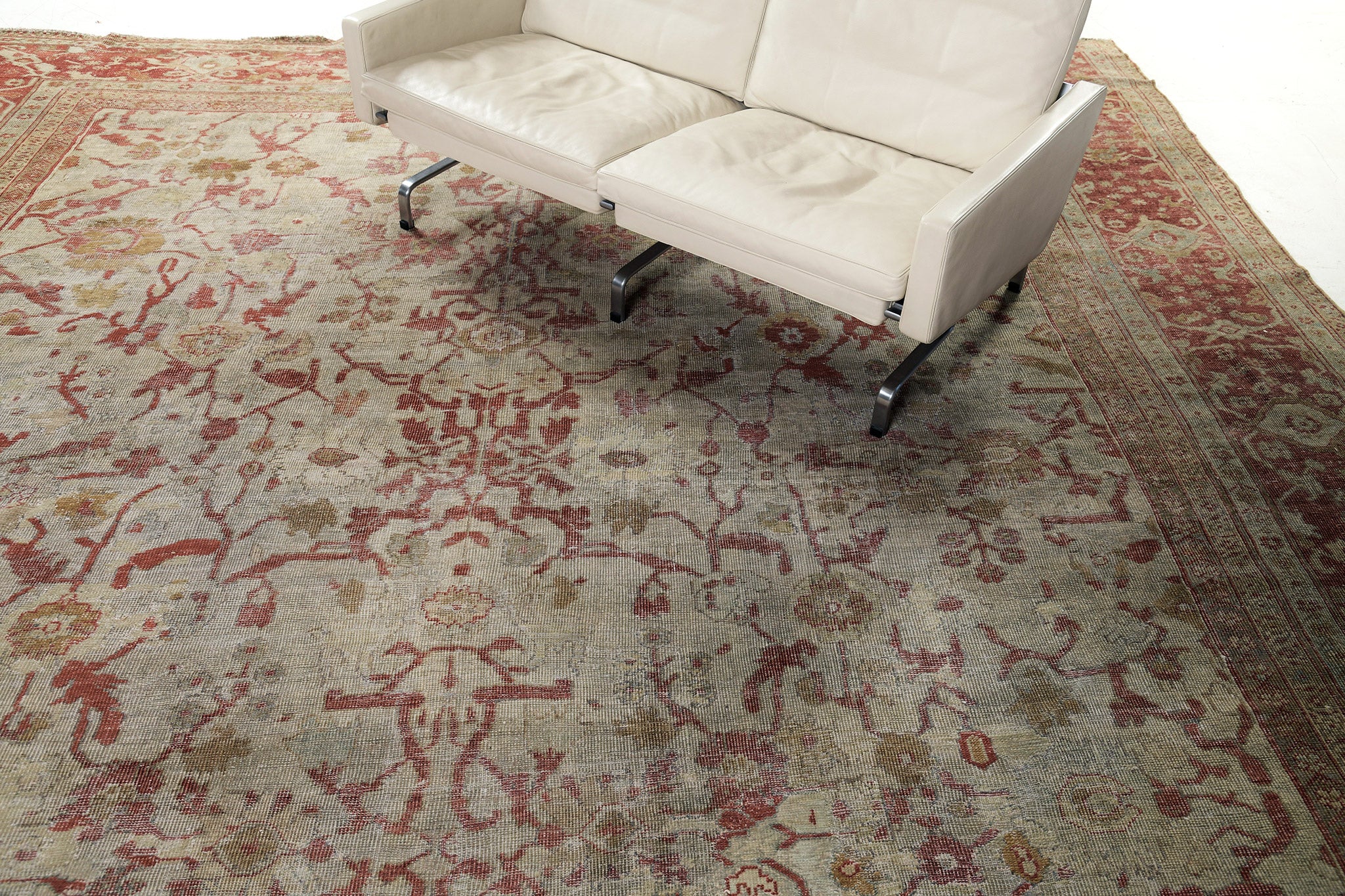
This antique rug emerges from the sophisticated weaving traditions of 19th-century Anatolia, where master craftsmen employed hand-knotted techniques to create textiles of remarkable complexity and restraint. The central field displays an intricate all-over pattern of palmettes and floral motifs rendered in muted coral and sage tones, achieved through natural dyes including madder root and walnut hulls. Multiple border systems frame the composition—the primary guard border features geometric lozenges and stylized botanical elements that echo the field's organic vocabulary.
Woven with hand-spun wool on cotton foundations, the piece demonstrates the technical mastery characteristic of Ottoman court workshops, where weavers balanced Persian-influenced floral repertoires with distinctly Anatolian geometric sensibilities. The abrash variations across the field reveal the natural irregularities inherent in vegetable dyeing processes, while areas of gentle wear speak to decades of use within domestic settings.
This textile represents a pivotal moment in Anatolian weaving history, when regional workshops synthesized centuries of nomadic traditions with urban court aesthetics. The sophisticated color palette and refined execution mark it as a product of established ateliers rather than village looms, making it a significant example for collectors focused on 19th-century Ottoman decorative arts.
Discover more Persian Rugs
Product Information
Product Information
Shipping & Returns
Shipping & Returns

Antique Persian Mahal 30021
Antique Persian Mahal 30021
This antique rug emerges from the sophisticated weaving traditions of 19th-century Anatolia, where master craftsmen employed hand-knotted techniques to create textiles of remarkable complexity and restraint. The central field displays an intricate all-over pattern of palmettes and floral motifs rendered in muted coral and sage tones, achieved through natural dyes including madder root and walnut hulls. Multiple border systems frame the composition—the primary guard border features geometric lozenges and stylized botanical elements that echo the field's organic vocabulary.
Woven with hand-spun wool on cotton foundations, the piece demonstrates the technical mastery characteristic of Ottoman court workshops, where weavers balanced Persian-influenced floral repertoires with distinctly Anatolian geometric sensibilities. The abrash variations across the field reveal the natural irregularities inherent in vegetable dyeing processes, while areas of gentle wear speak to decades of use within domestic settings.
This textile represents a pivotal moment in Anatolian weaving history, when regional workshops synthesized centuries of nomadic traditions with urban court aesthetics. The sophisticated color palette and refined execution mark it as a product of established ateliers rather than village looms, making it a significant example for collectors focused on 19th-century Ottoman decorative arts.
Discover more Persian Rugs
$11,400.00
Original: $38,000.00
-70%Antique Persian Mahal 30021—
$38,000.00
$11,400.00Product Information
Product Information
Shipping & Returns
Shipping & Returns
Description
This antique rug emerges from the sophisticated weaving traditions of 19th-century Anatolia, where master craftsmen employed hand-knotted techniques to create textiles of remarkable complexity and restraint. The central field displays an intricate all-over pattern of palmettes and floral motifs rendered in muted coral and sage tones, achieved through natural dyes including madder root and walnut hulls. Multiple border systems frame the composition—the primary guard border features geometric lozenges and stylized botanical elements that echo the field's organic vocabulary.
Woven with hand-spun wool on cotton foundations, the piece demonstrates the technical mastery characteristic of Ottoman court workshops, where weavers balanced Persian-influenced floral repertoires with distinctly Anatolian geometric sensibilities. The abrash variations across the field reveal the natural irregularities inherent in vegetable dyeing processes, while areas of gentle wear speak to decades of use within domestic settings.
This textile represents a pivotal moment in Anatolian weaving history, when regional workshops synthesized centuries of nomadic traditions with urban court aesthetics. The sophisticated color palette and refined execution mark it as a product of established ateliers rather than village looms, making it a significant example for collectors focused on 19th-century Ottoman decorative arts.
Discover more Persian Rugs