Antique Persian Malayer 29799
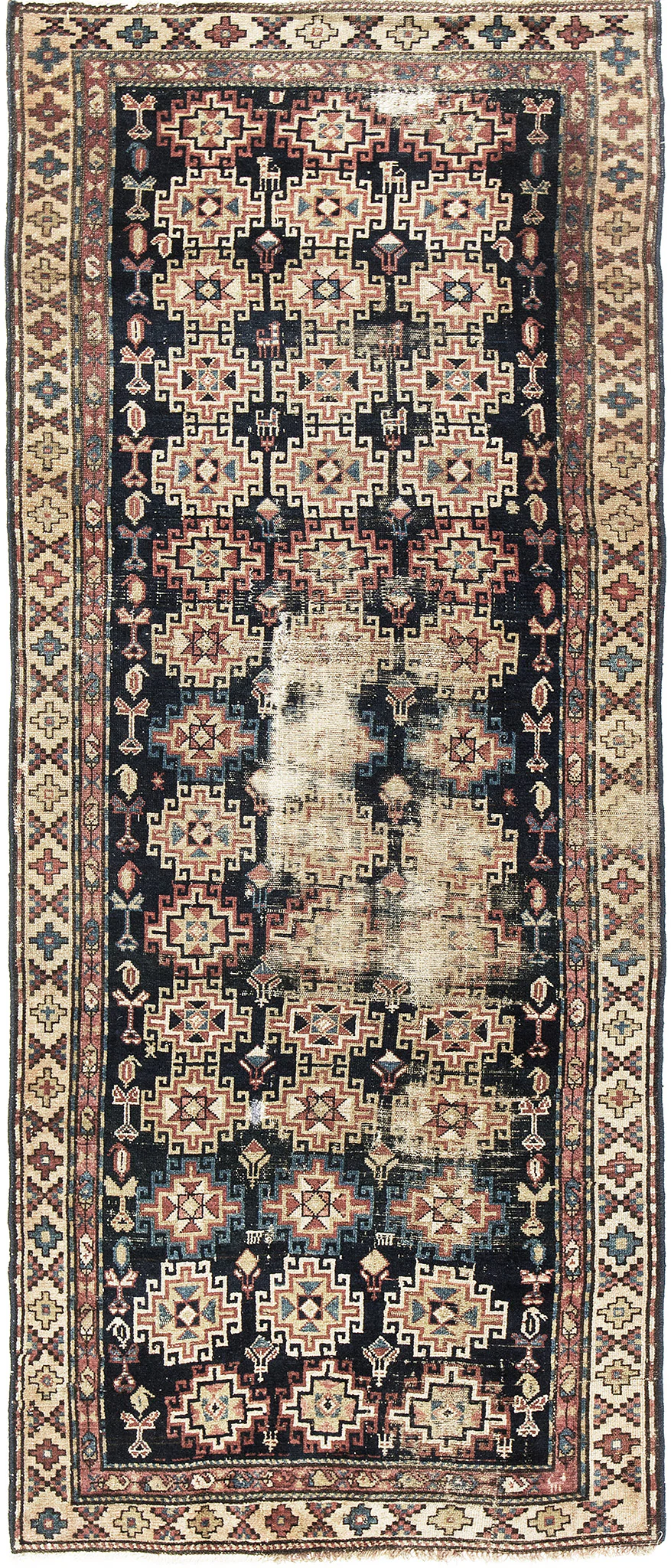
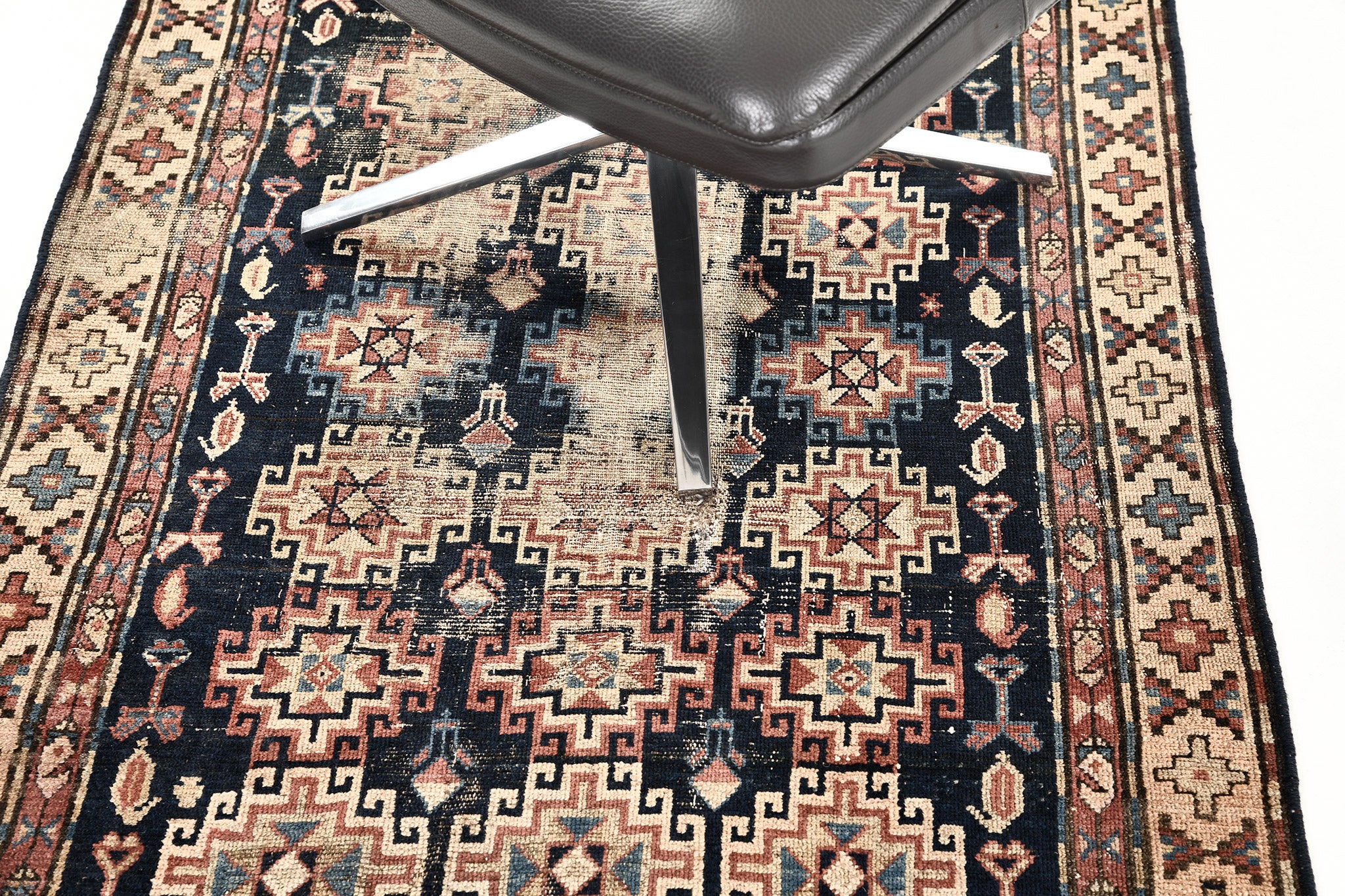
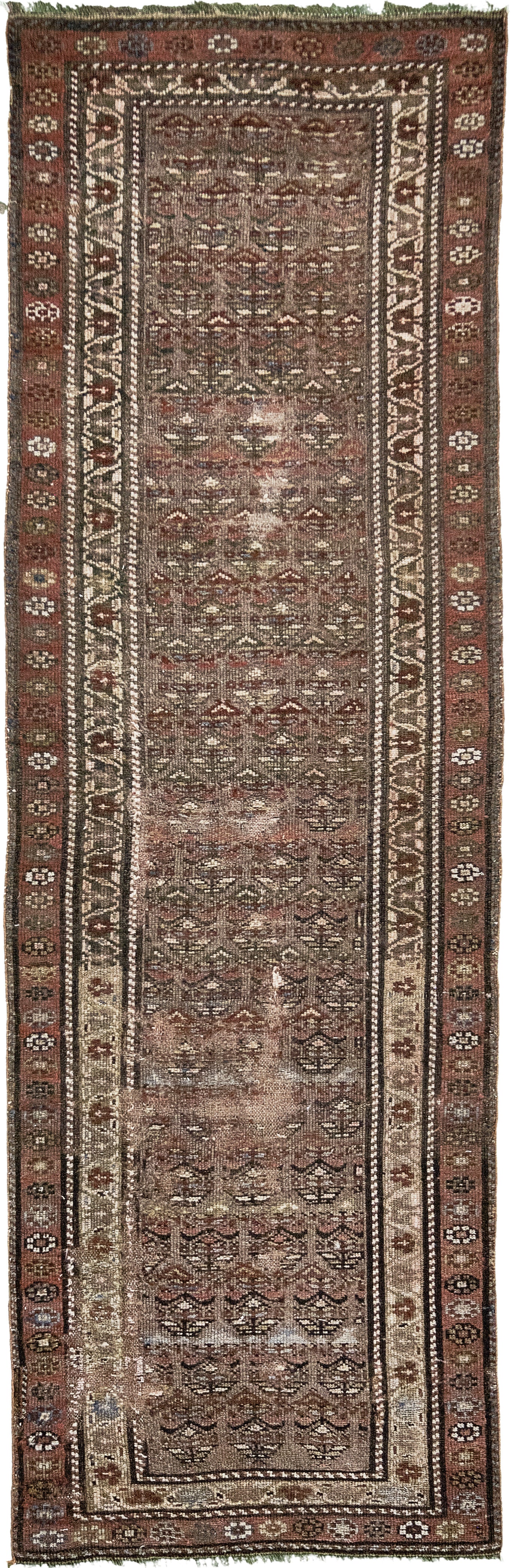
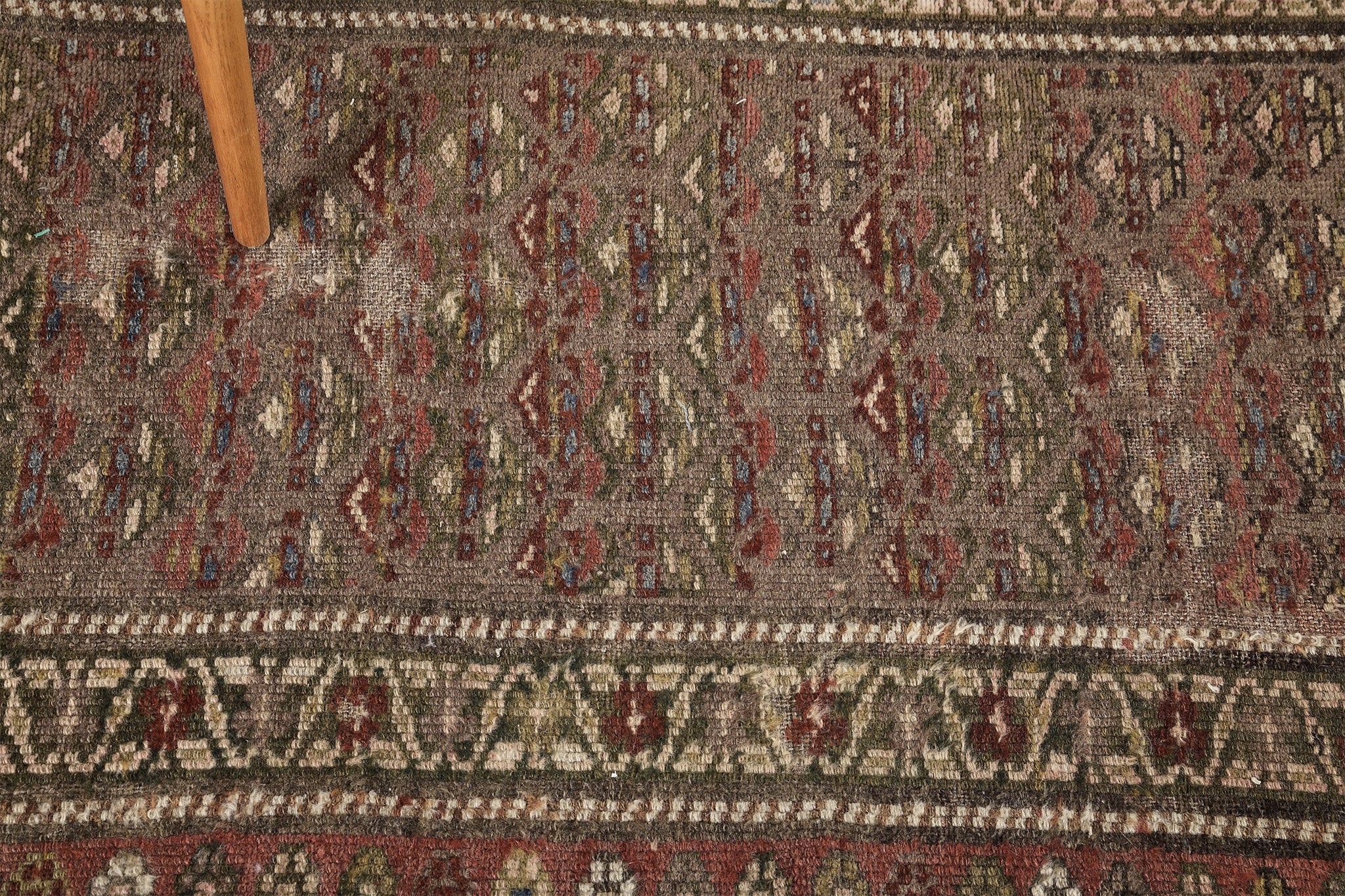
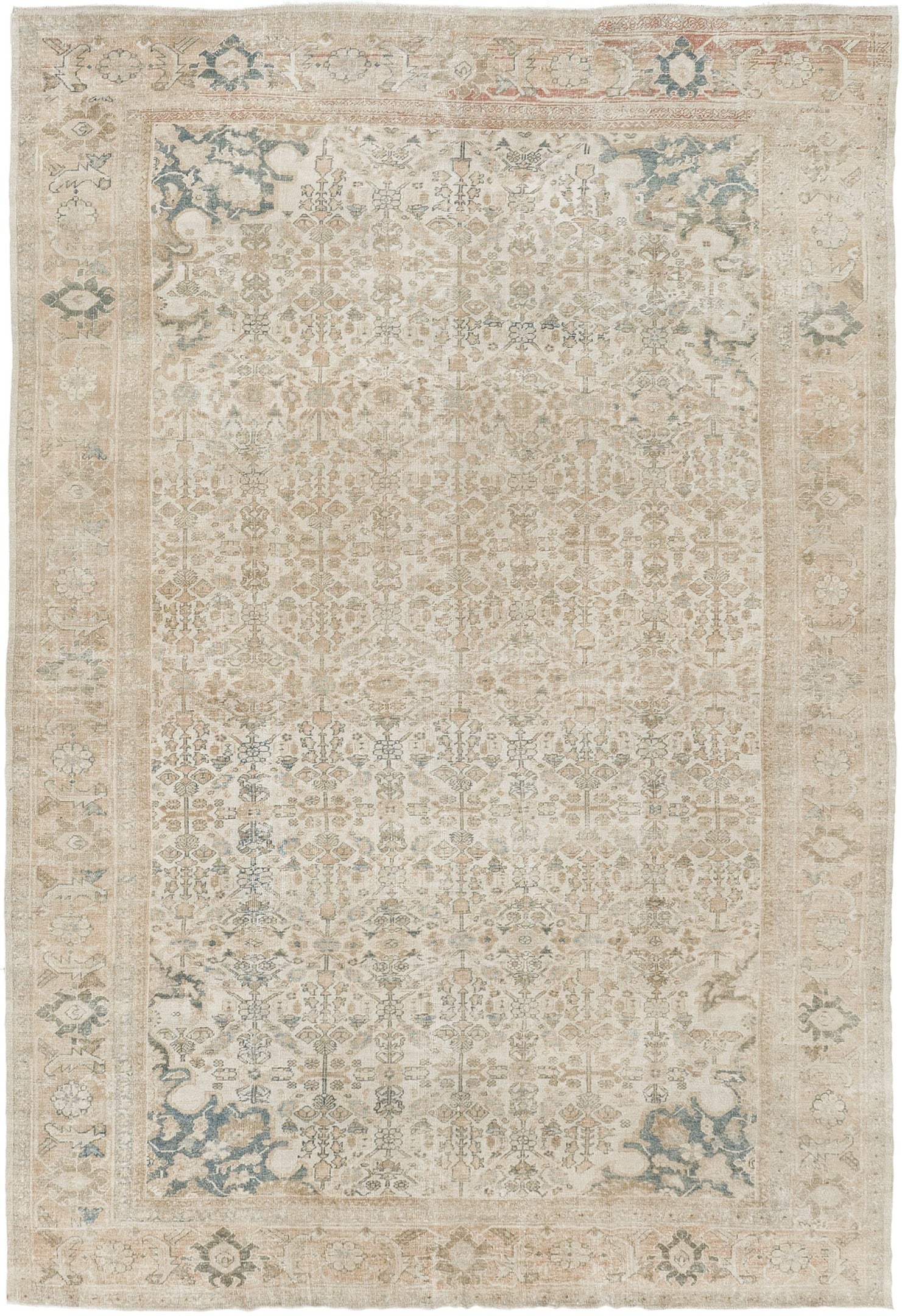
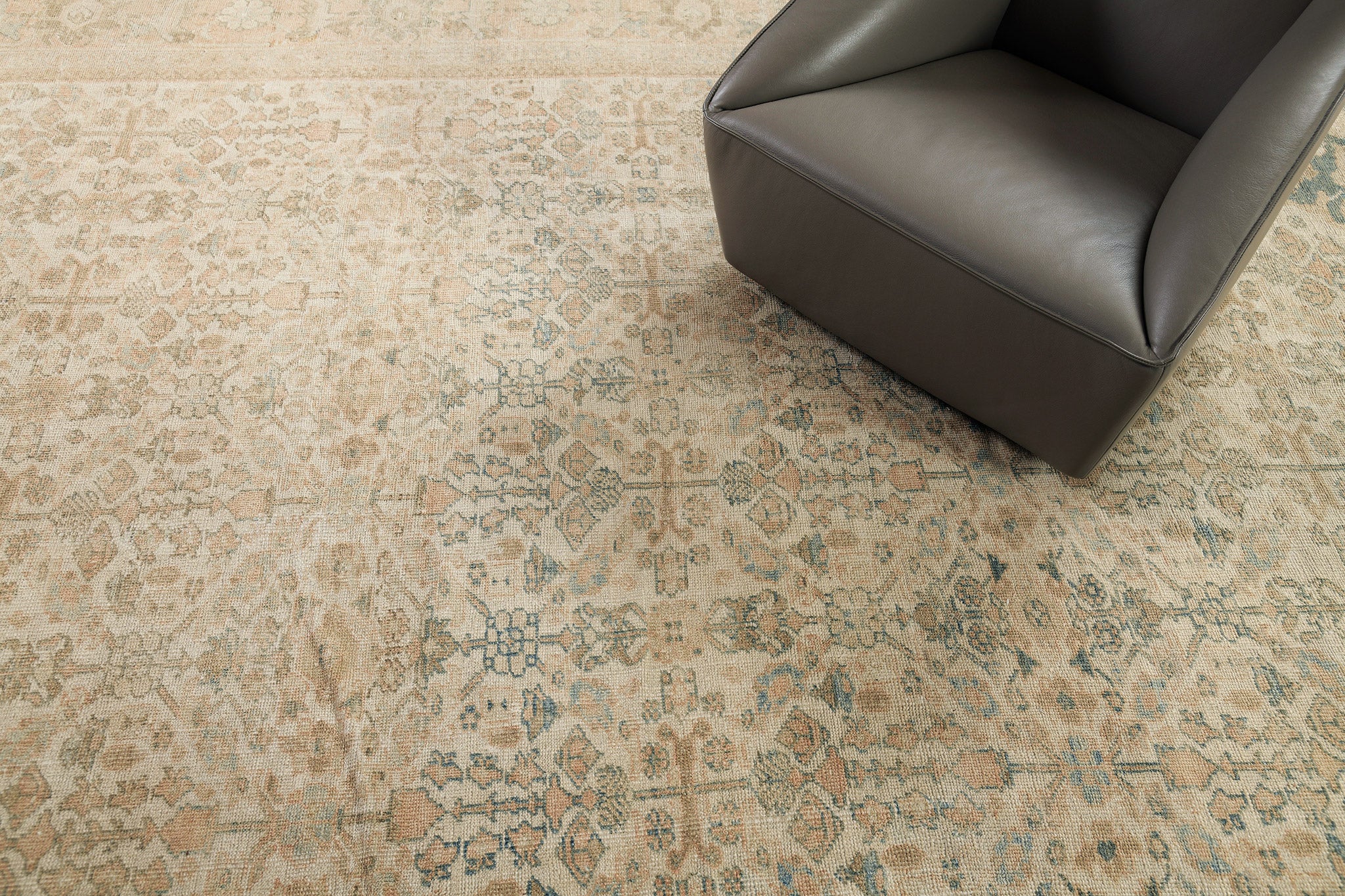
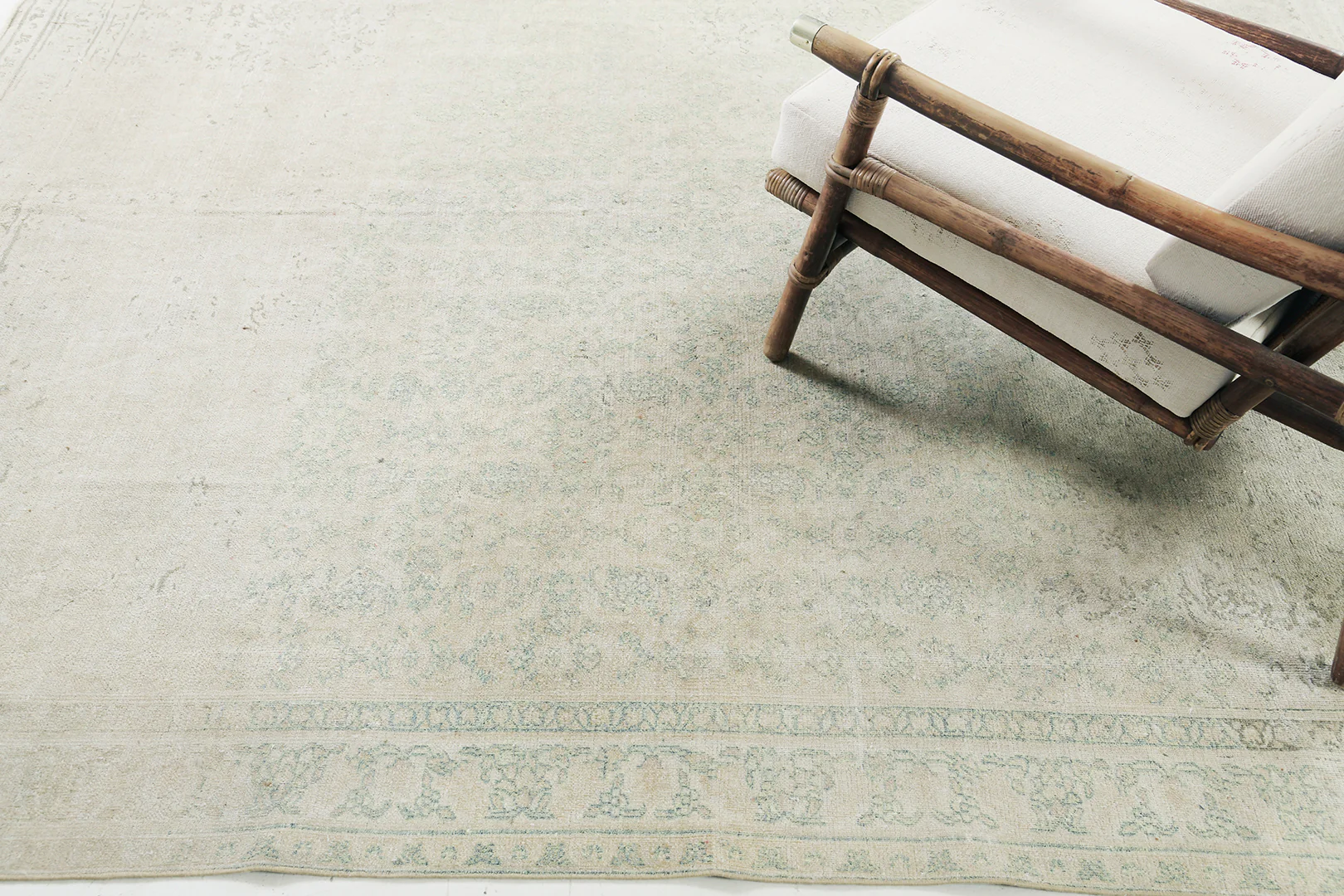
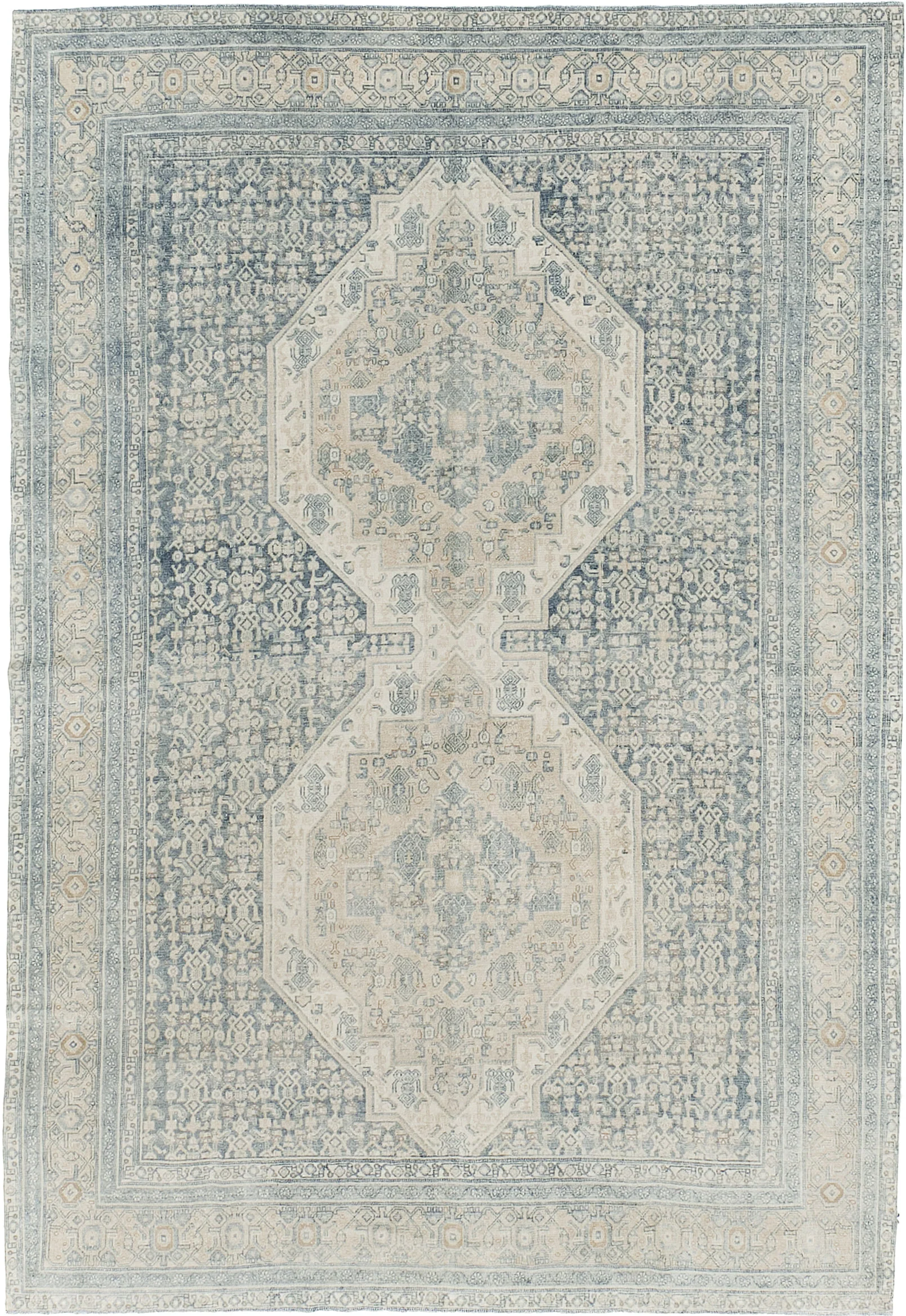
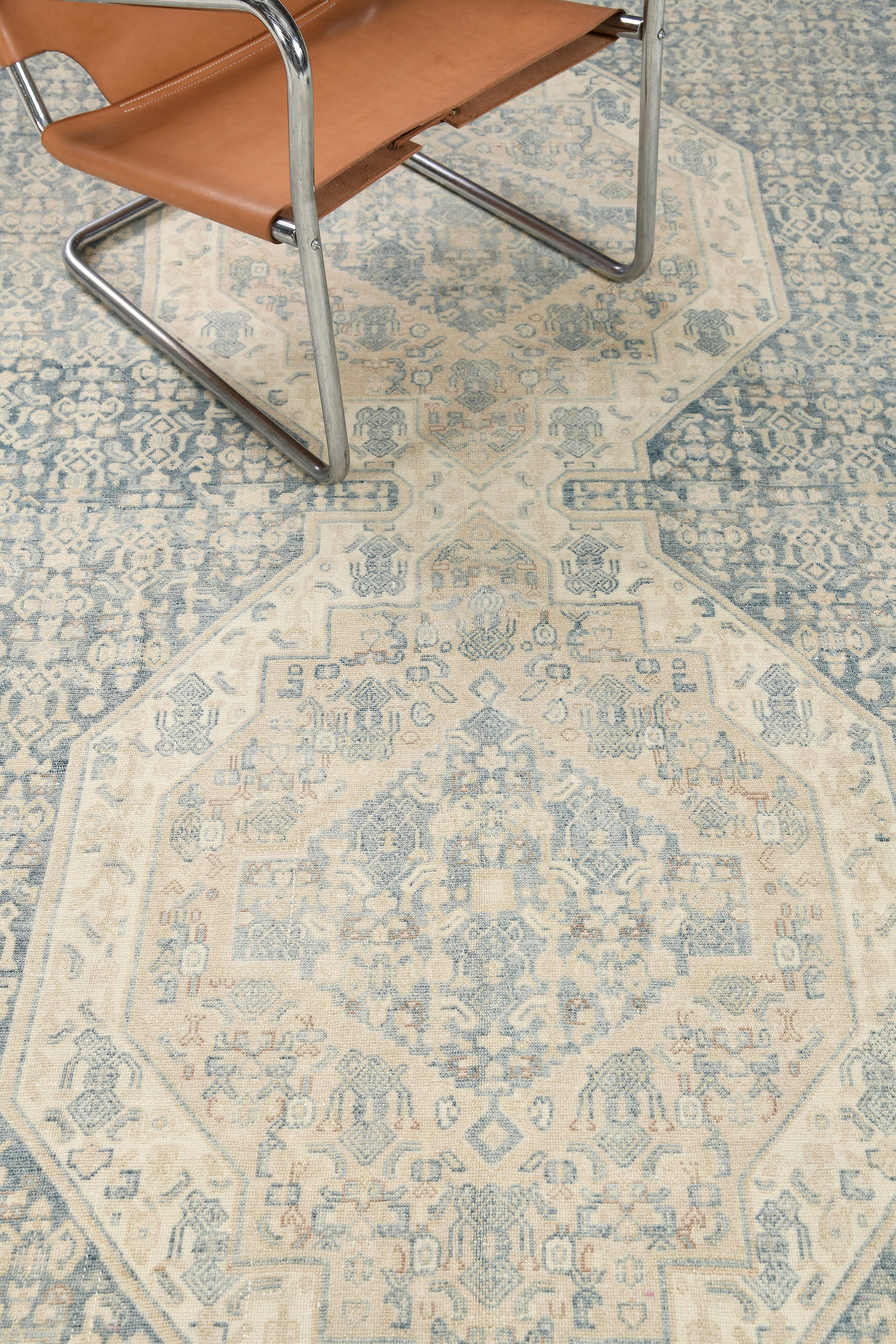
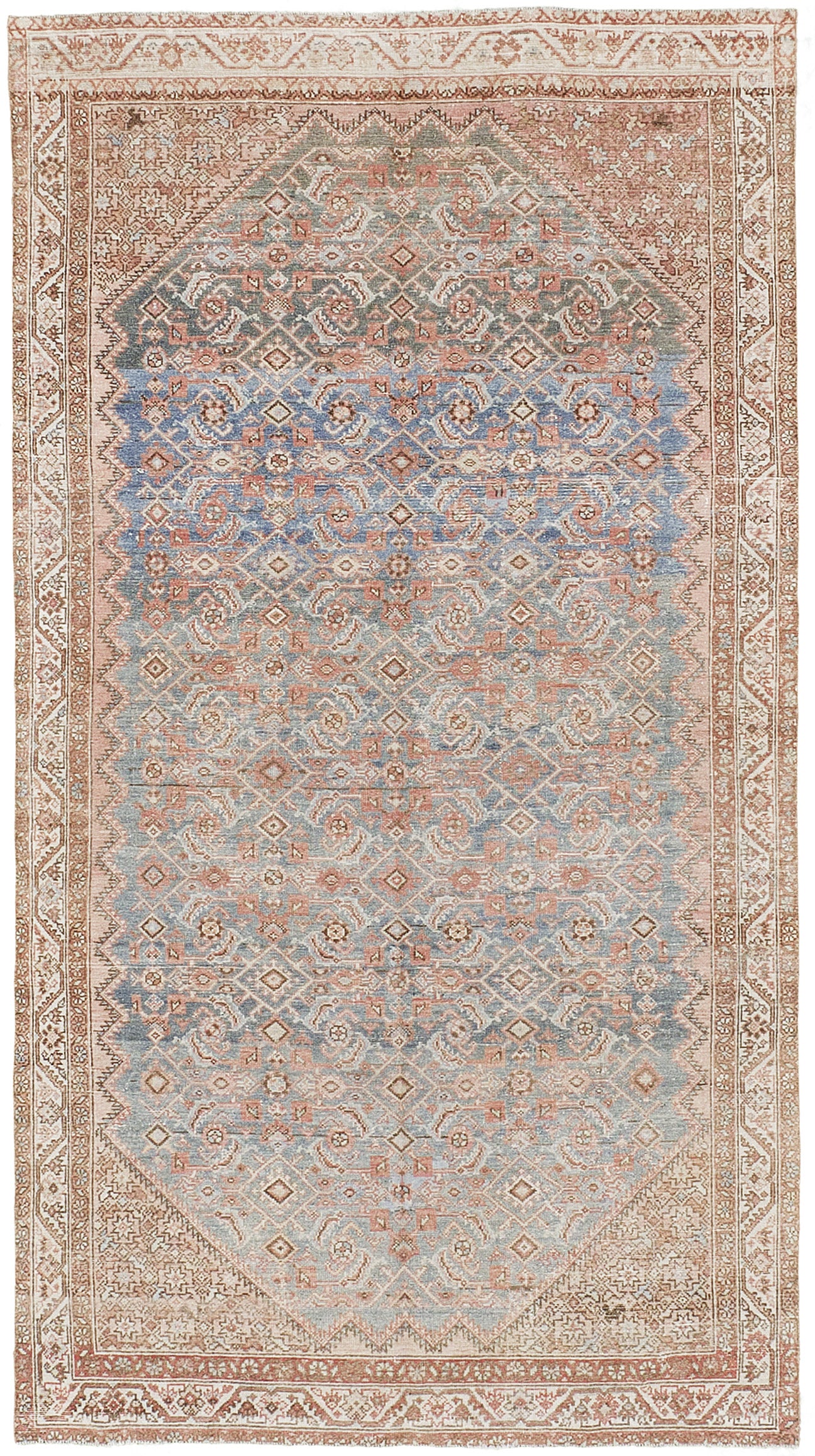
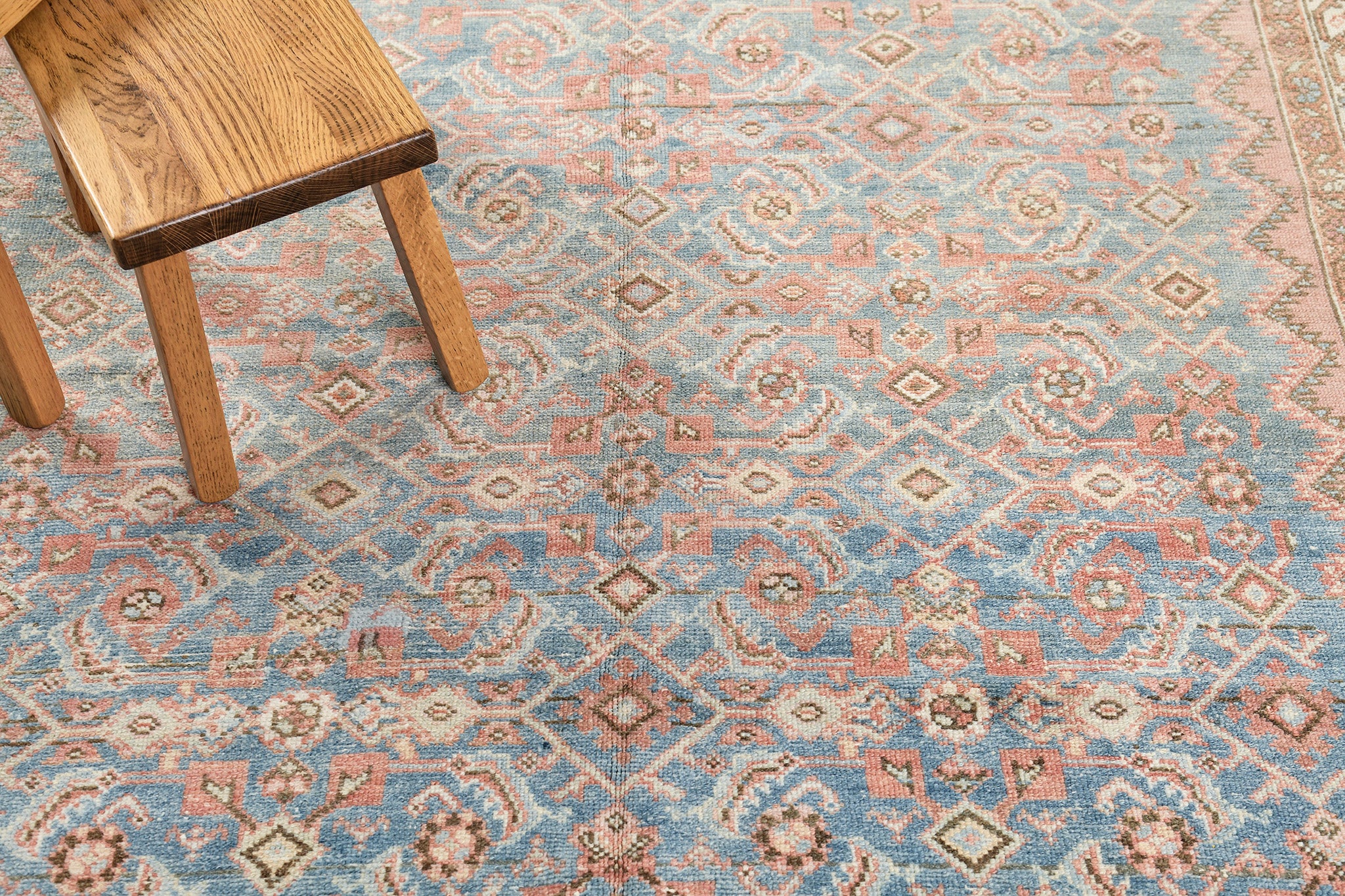
This antique rug emerges from the weaving traditions of northwest Persia, where Kurdish artisans developed distinctive interpretations of classical Persian design vocabulary during the late 19th century. Hand-knotted with hand-spun wool on cotton foundations, the piece demonstrates the regional preference for geometric abstraction over curvilinear ornament. The soft blue-gray field contains an all-over pattern of stylized crosses and diamond motifs, their forms simplified through generations of village workshop practice. Natural dyes—indigo for the blues, walnut hulls for the browns—have mellowed into the gentle patina that distinguishes authentic period textiles from contemporary reproductions. The ivory border frames the composition with reciprocal geometric patterns, each element precisely balanced within the overall design structure. Kurdish weavers working in this tradition drew from both Persian court manuscripts and local folk motifs, creating textiles that served domestic functions while maintaining sophisticated design principles. The abrash visible throughout the field reflects the hand-dyeing process, where subtle color variations occurred naturally as different batches of wool absorbed the dyes. This technical characteristic, combined with the even wear pattern and natural oxidation of the browns, confirms the rug's authenticity and workshop origins.
Discover more Persian Rugs
Product Information
Product Information
Shipping & Returns
Shipping & Returns
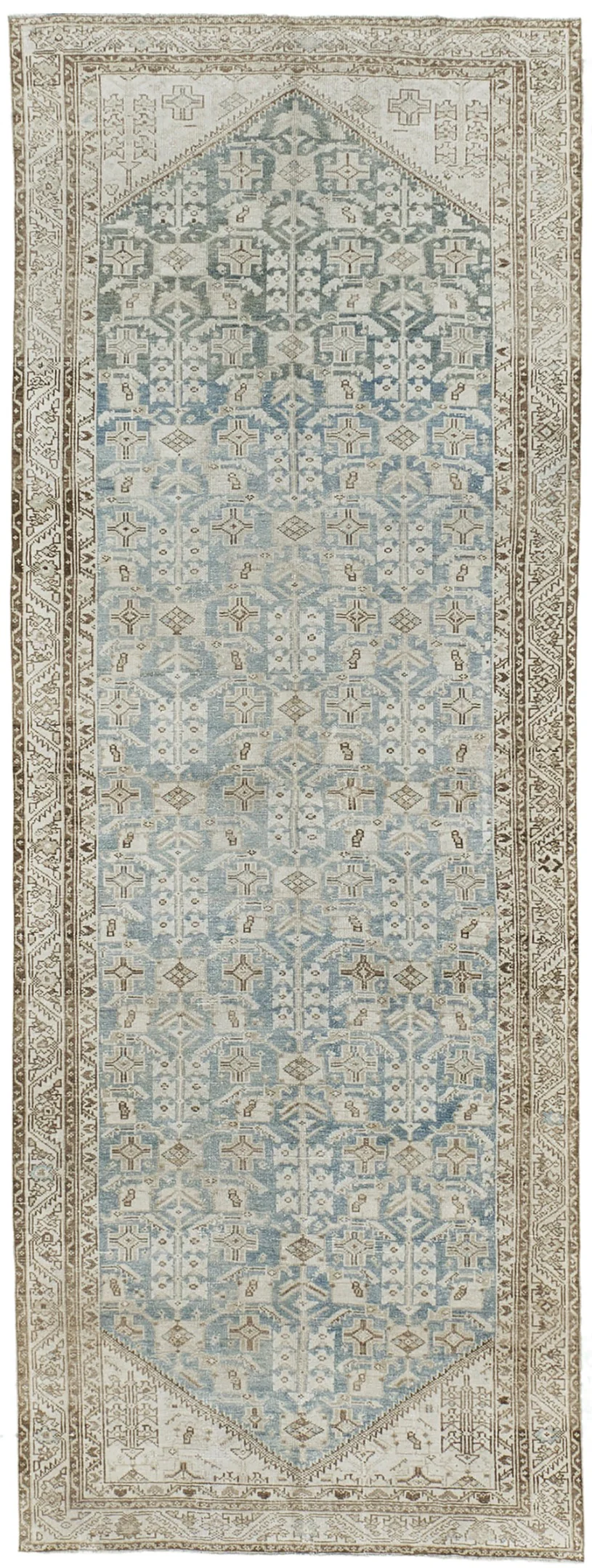


Antique Persian Malayer 29799
Antique Persian Malayer 29799
This antique rug emerges from the weaving traditions of northwest Persia, where Kurdish artisans developed distinctive interpretations of classical Persian design vocabulary during the late 19th century. Hand-knotted with hand-spun wool on cotton foundations, the piece demonstrates the regional preference for geometric abstraction over curvilinear ornament. The soft blue-gray field contains an all-over pattern of stylized crosses and diamond motifs, their forms simplified through generations of village workshop practice. Natural dyes—indigo for the blues, walnut hulls for the browns—have mellowed into the gentle patina that distinguishes authentic period textiles from contemporary reproductions. The ivory border frames the composition with reciprocal geometric patterns, each element precisely balanced within the overall design structure. Kurdish weavers working in this tradition drew from both Persian court manuscripts and local folk motifs, creating textiles that served domestic functions while maintaining sophisticated design principles. The abrash visible throughout the field reflects the hand-dyeing process, where subtle color variations occurred naturally as different batches of wool absorbed the dyes. This technical characteristic, combined with the even wear pattern and natural oxidation of the browns, confirms the rug's authenticity and workshop origins.
Discover more Persian Rugs
$2,250.00
Original: $7,500.00
-70%Antique Persian Malayer 29799—
$7,500.00
$2,250.00Product Information
Product Information
Shipping & Returns
Shipping & Returns
Description
This antique rug emerges from the weaving traditions of northwest Persia, where Kurdish artisans developed distinctive interpretations of classical Persian design vocabulary during the late 19th century. Hand-knotted with hand-spun wool on cotton foundations, the piece demonstrates the regional preference for geometric abstraction over curvilinear ornament. The soft blue-gray field contains an all-over pattern of stylized crosses and diamond motifs, their forms simplified through generations of village workshop practice. Natural dyes—indigo for the blues, walnut hulls for the browns—have mellowed into the gentle patina that distinguishes authentic period textiles from contemporary reproductions. The ivory border frames the composition with reciprocal geometric patterns, each element precisely balanced within the overall design structure. Kurdish weavers working in this tradition drew from both Persian court manuscripts and local folk motifs, creating textiles that served domestic functions while maintaining sophisticated design principles. The abrash visible throughout the field reflects the hand-dyeing process, where subtle color variations occurred naturally as different batches of wool absorbed the dyes. This technical characteristic, combined with the even wear pattern and natural oxidation of the browns, confirms the rug's authenticity and workshop origins.
Discover more Persian Rugs