Antique Persian Malayer 29792
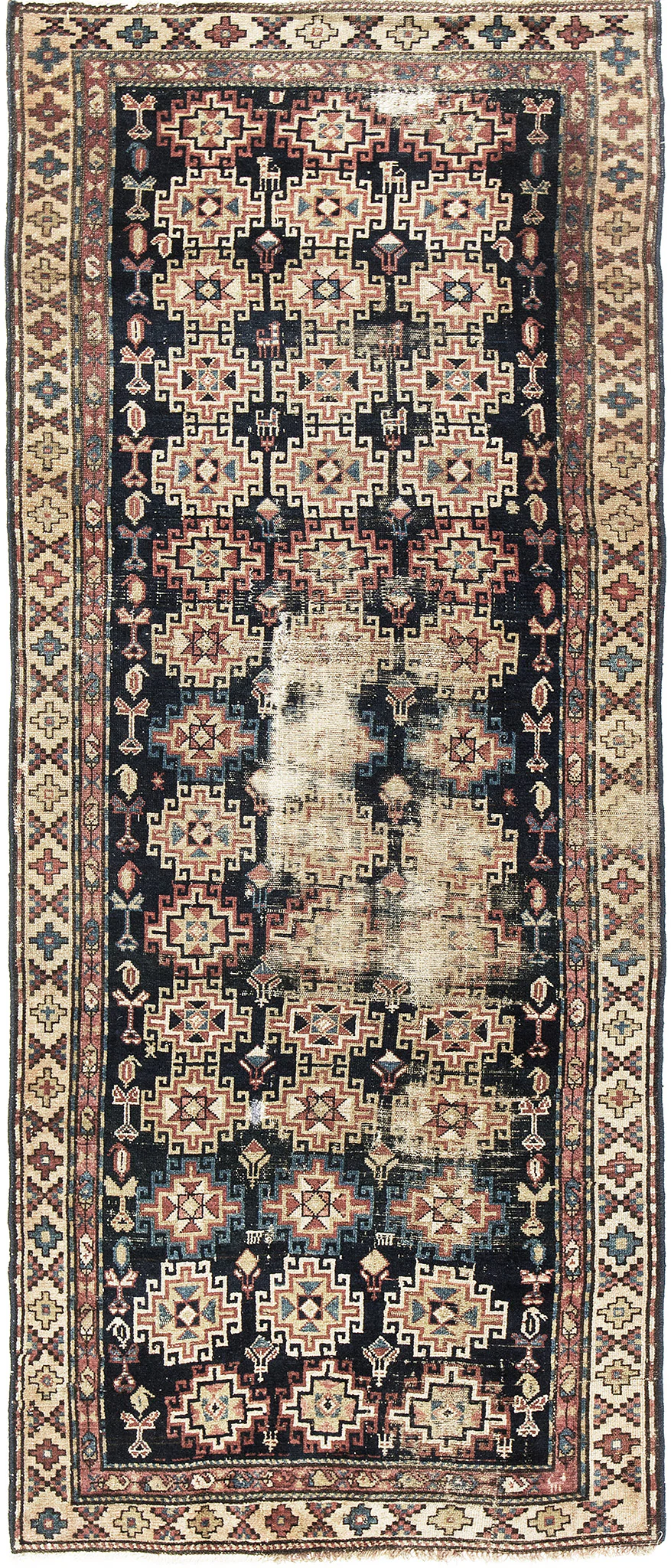
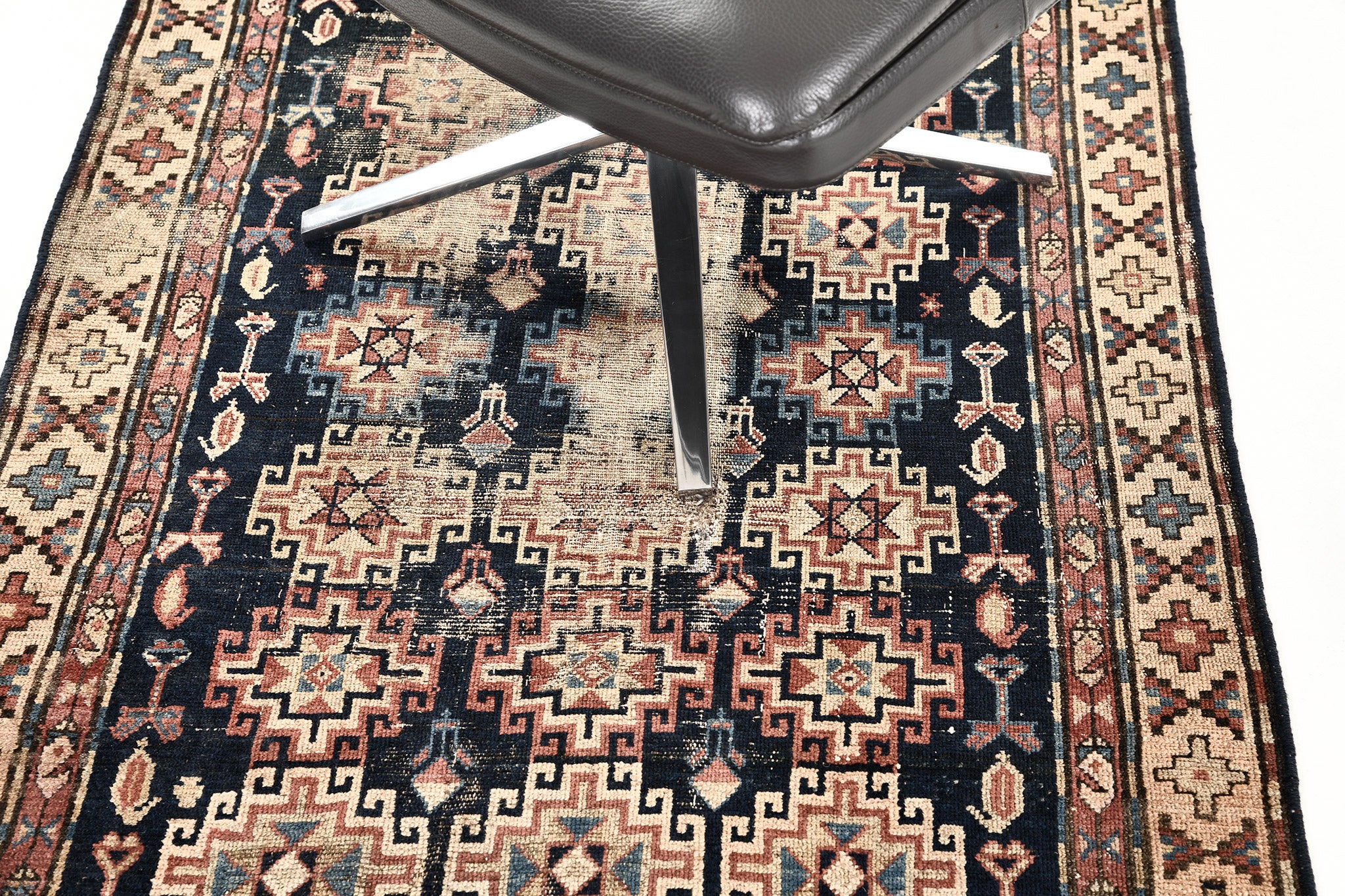
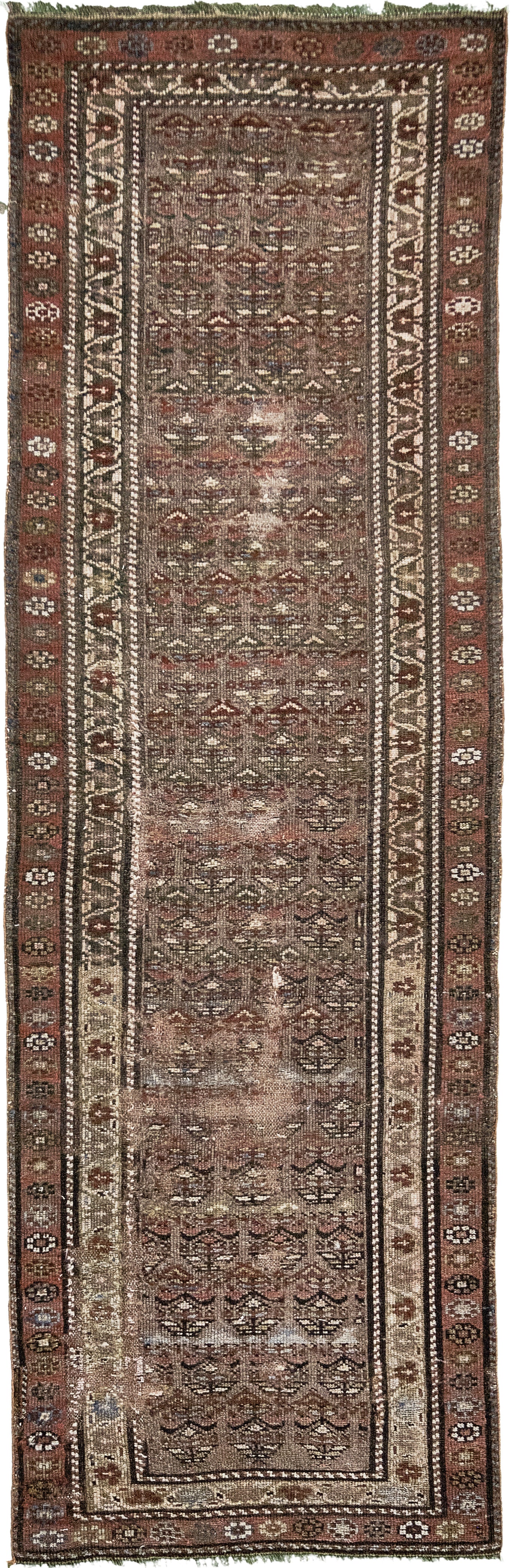
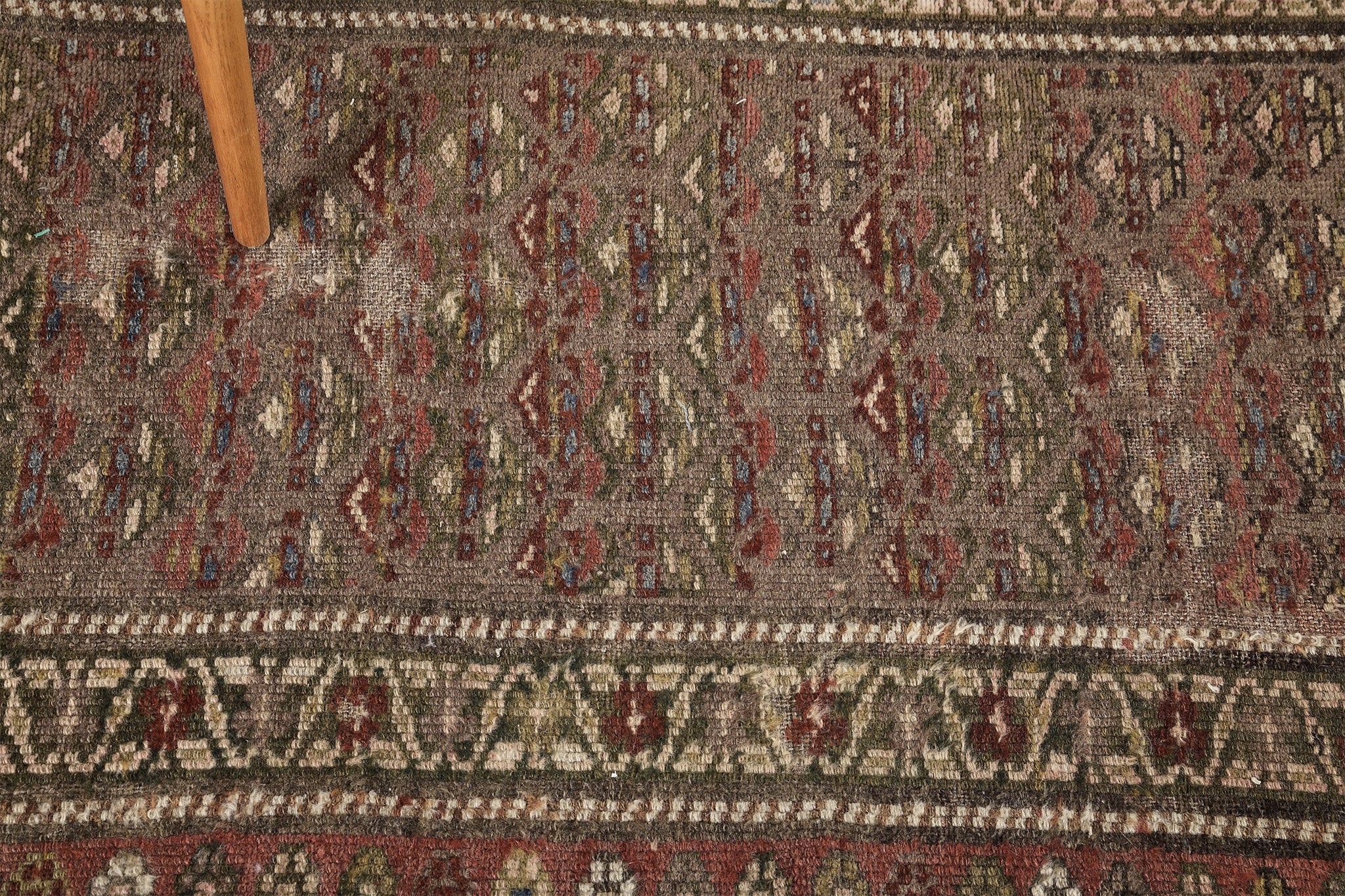
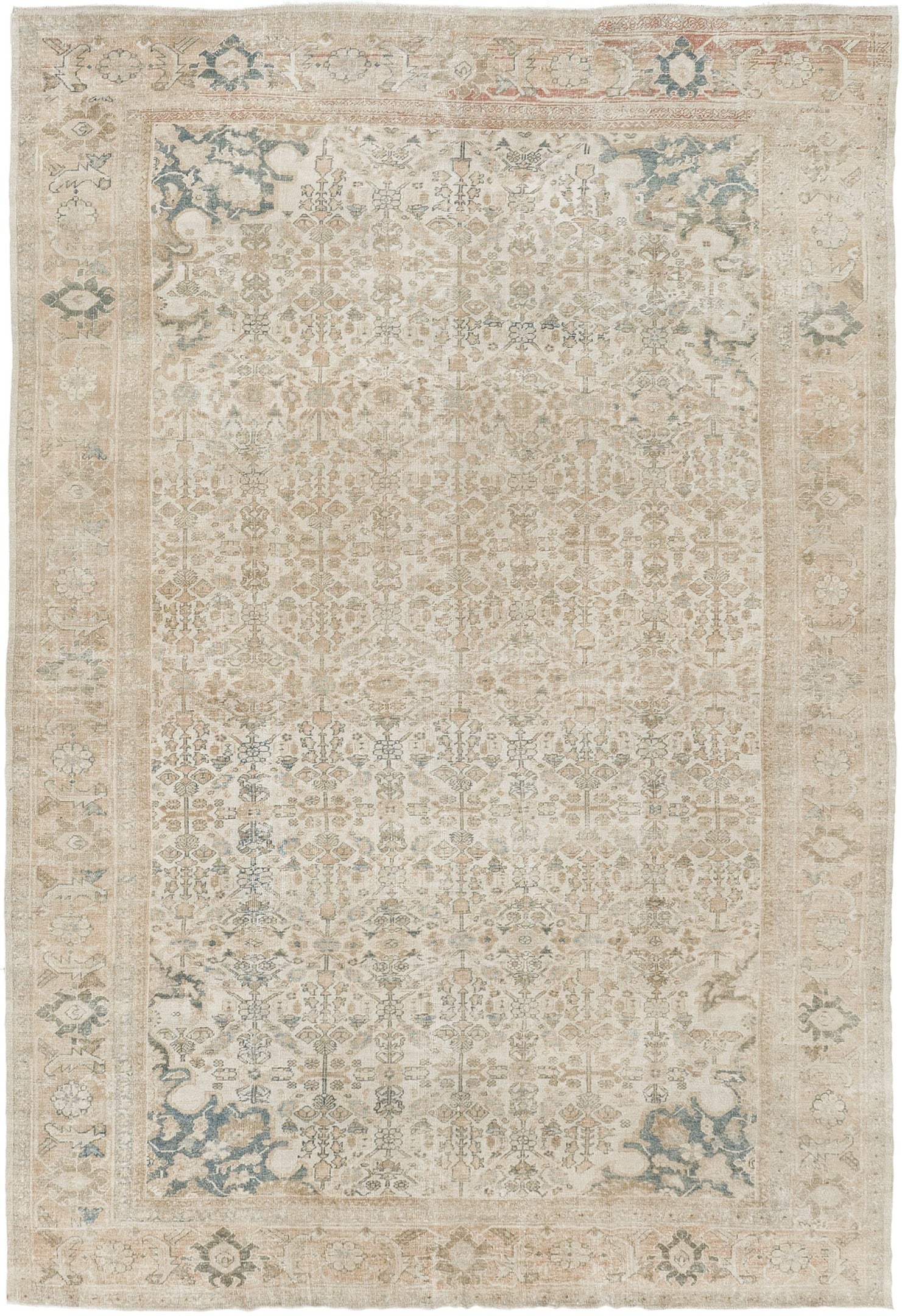
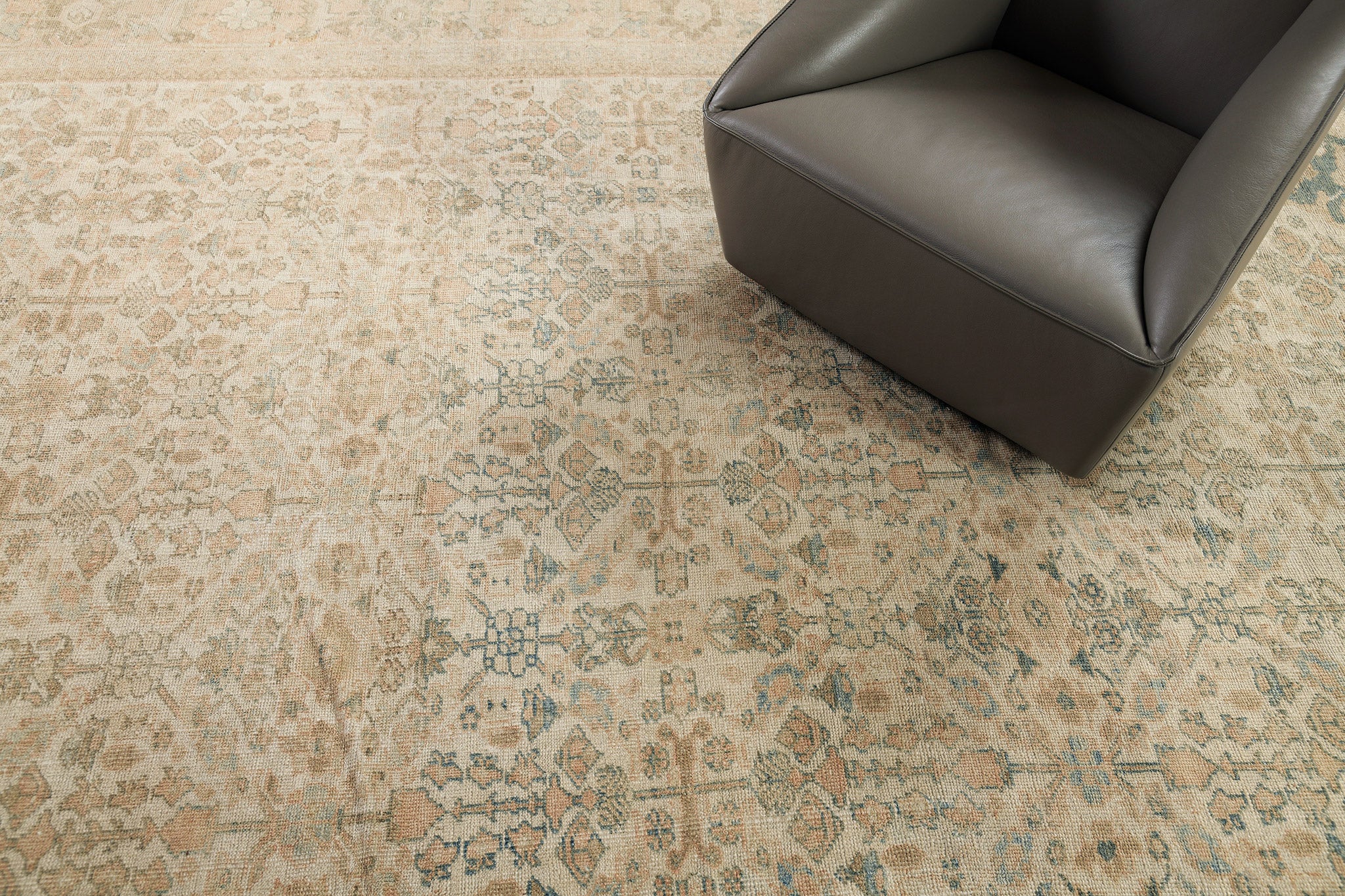
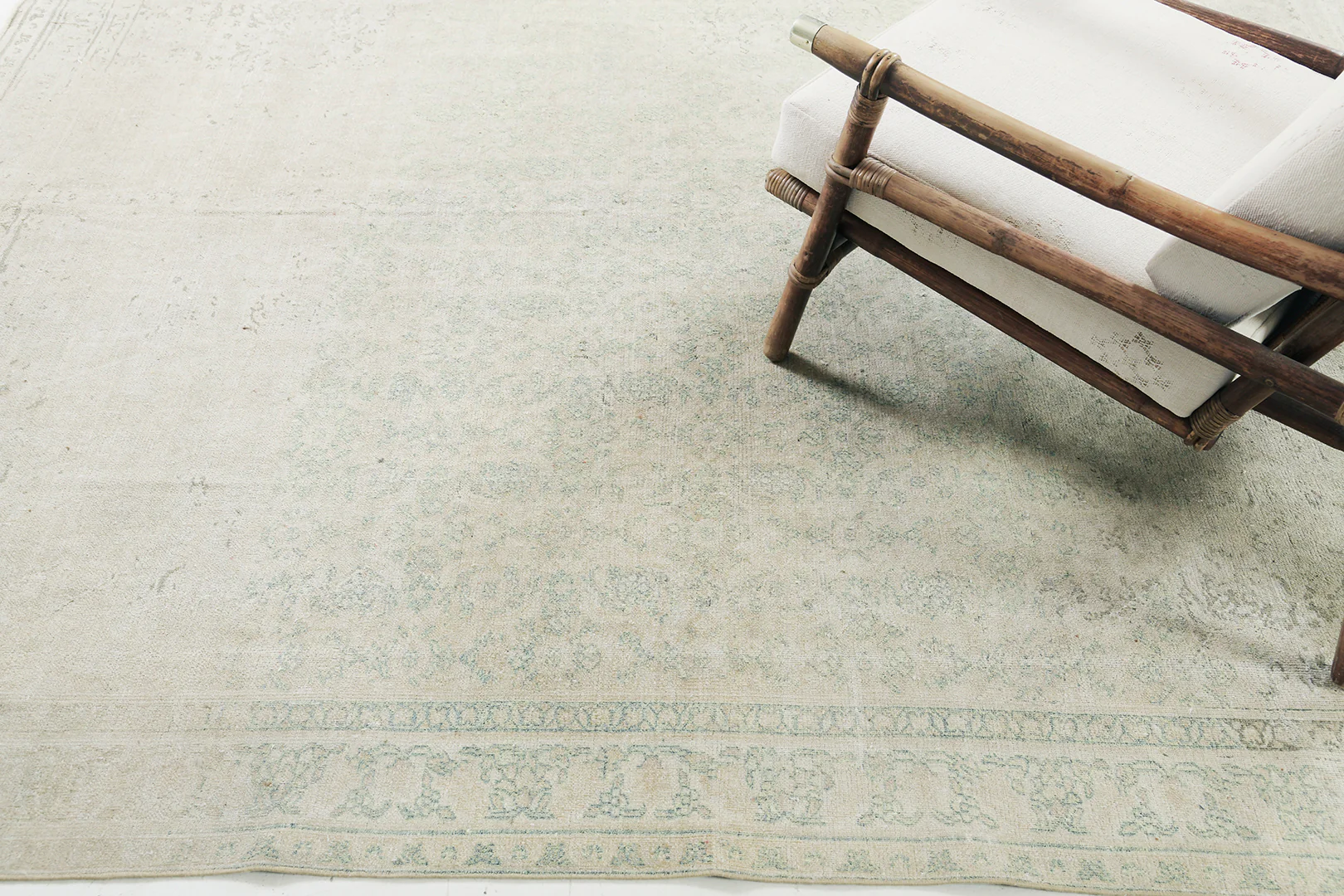
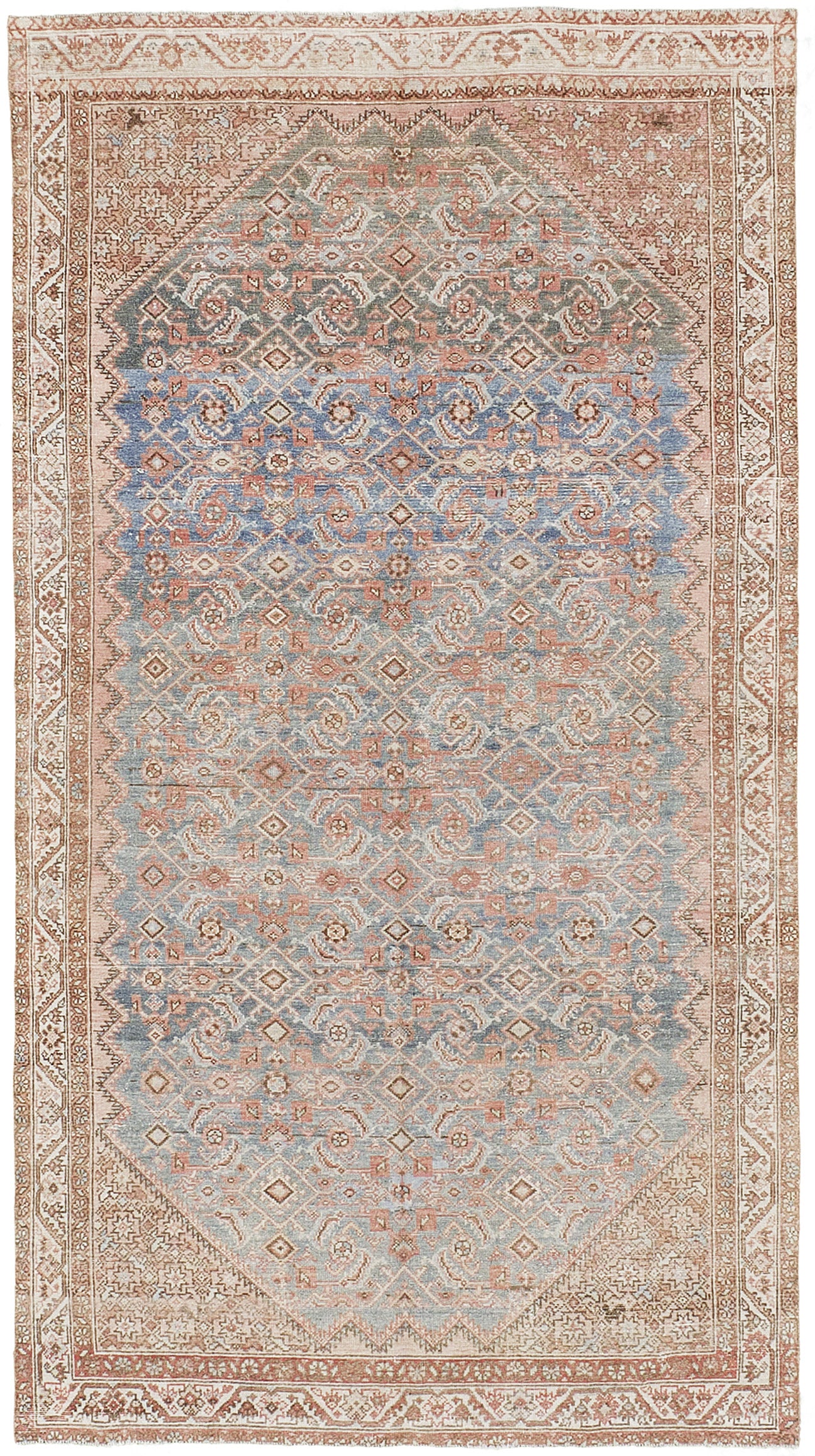
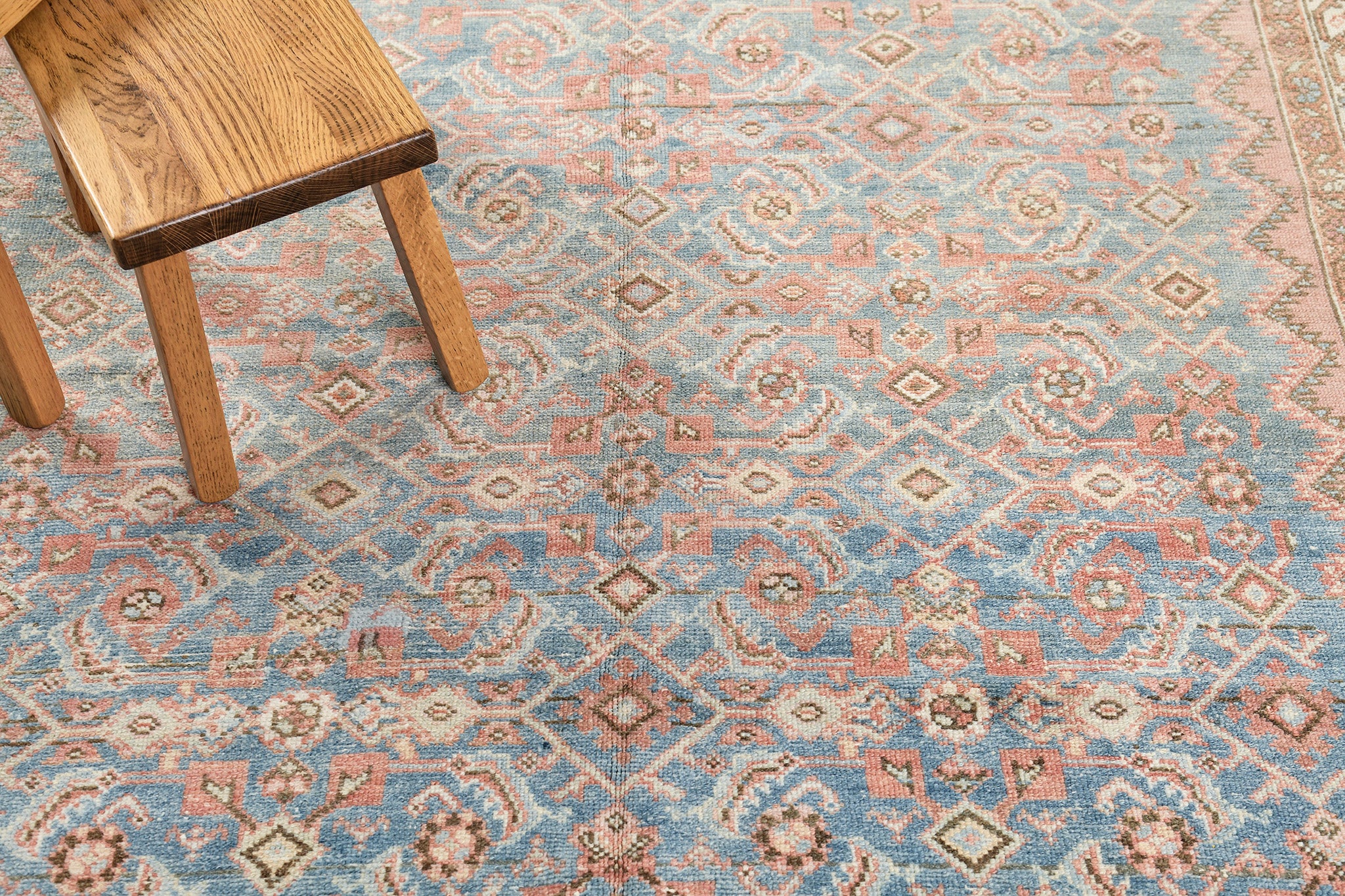
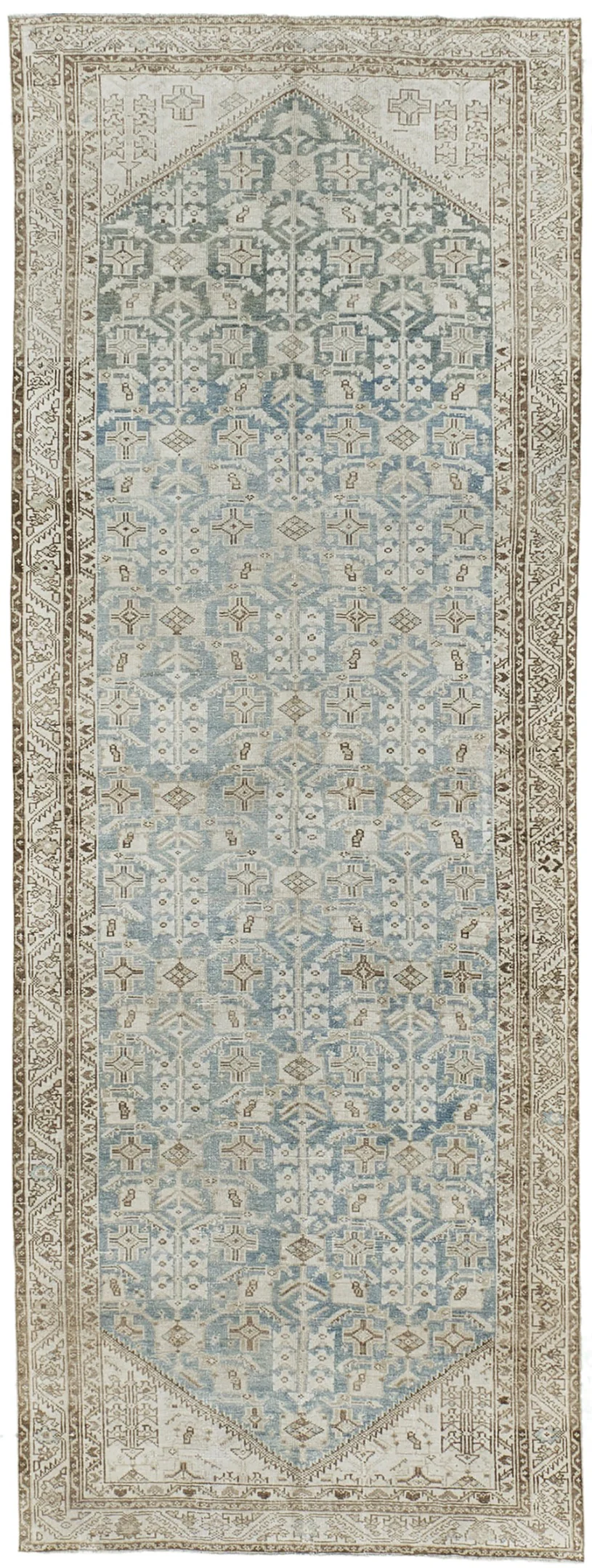
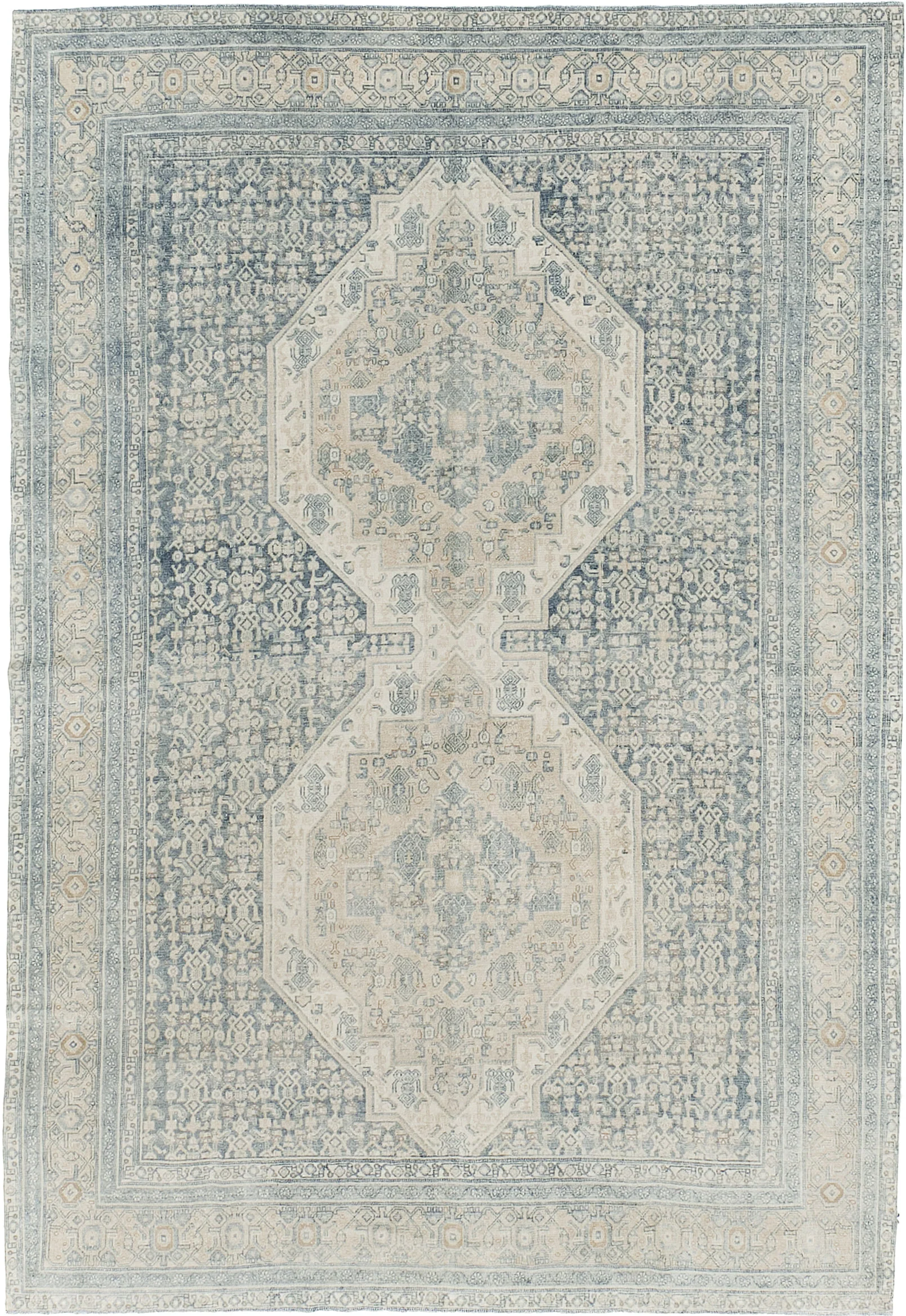
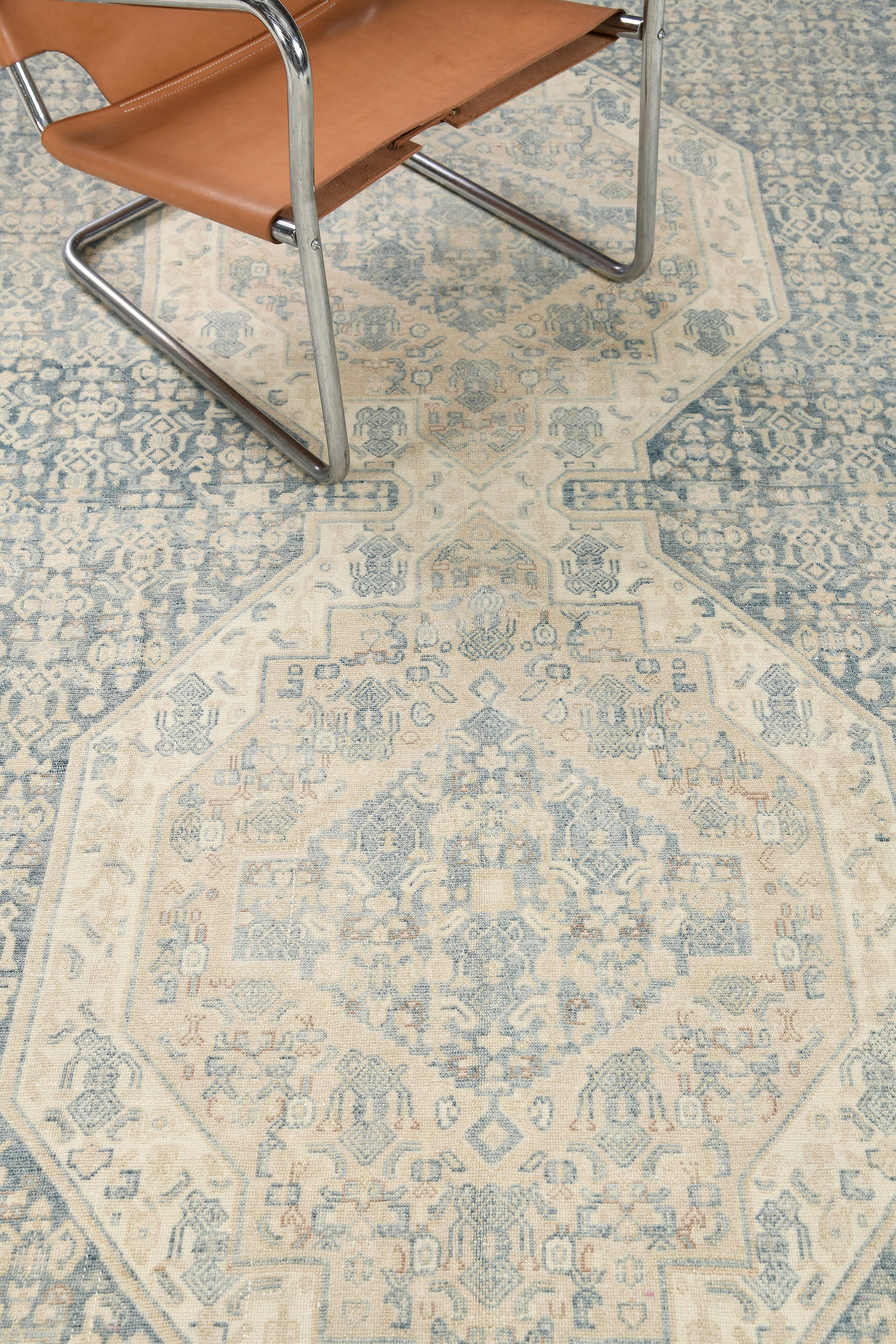
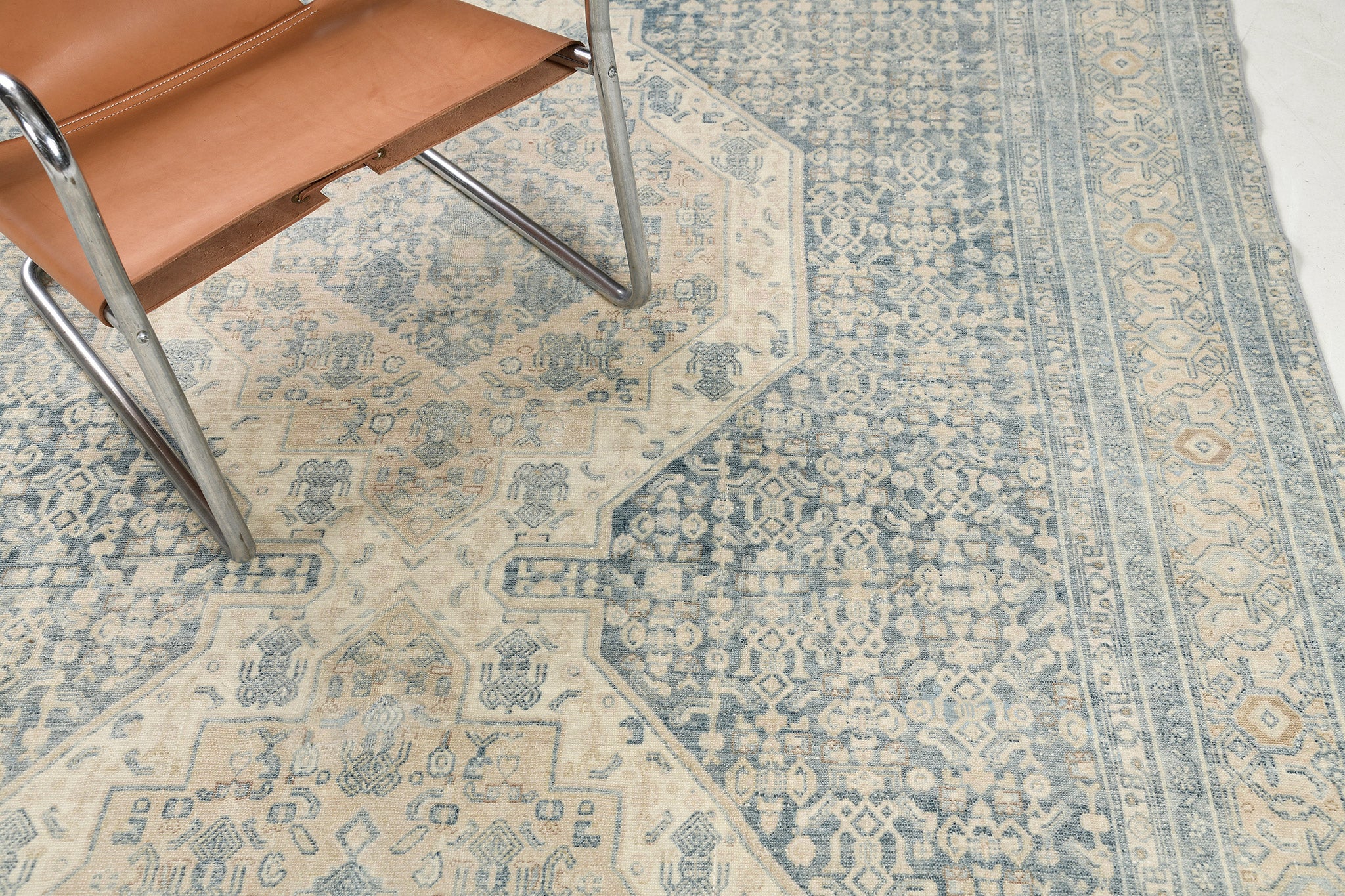
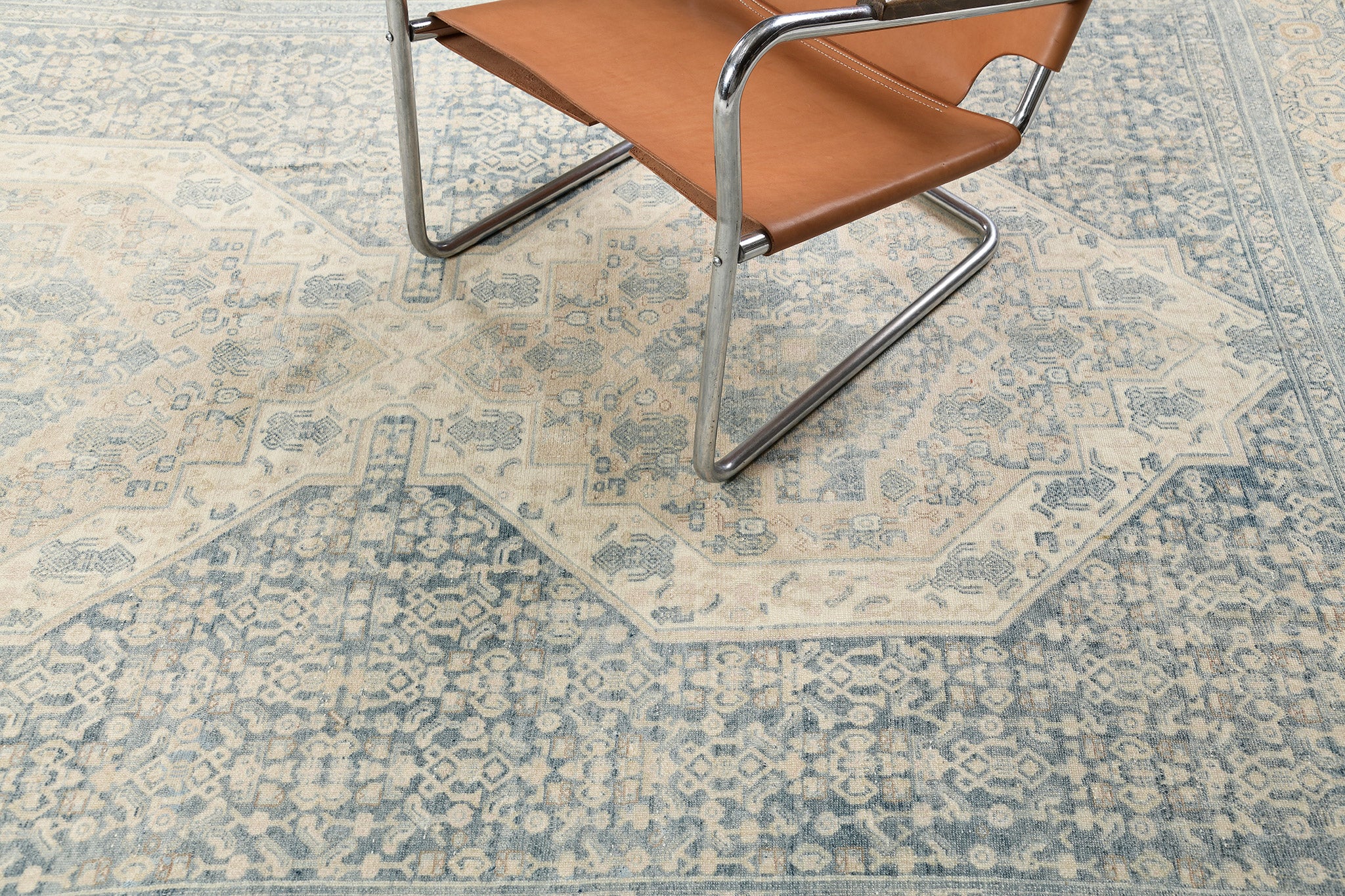
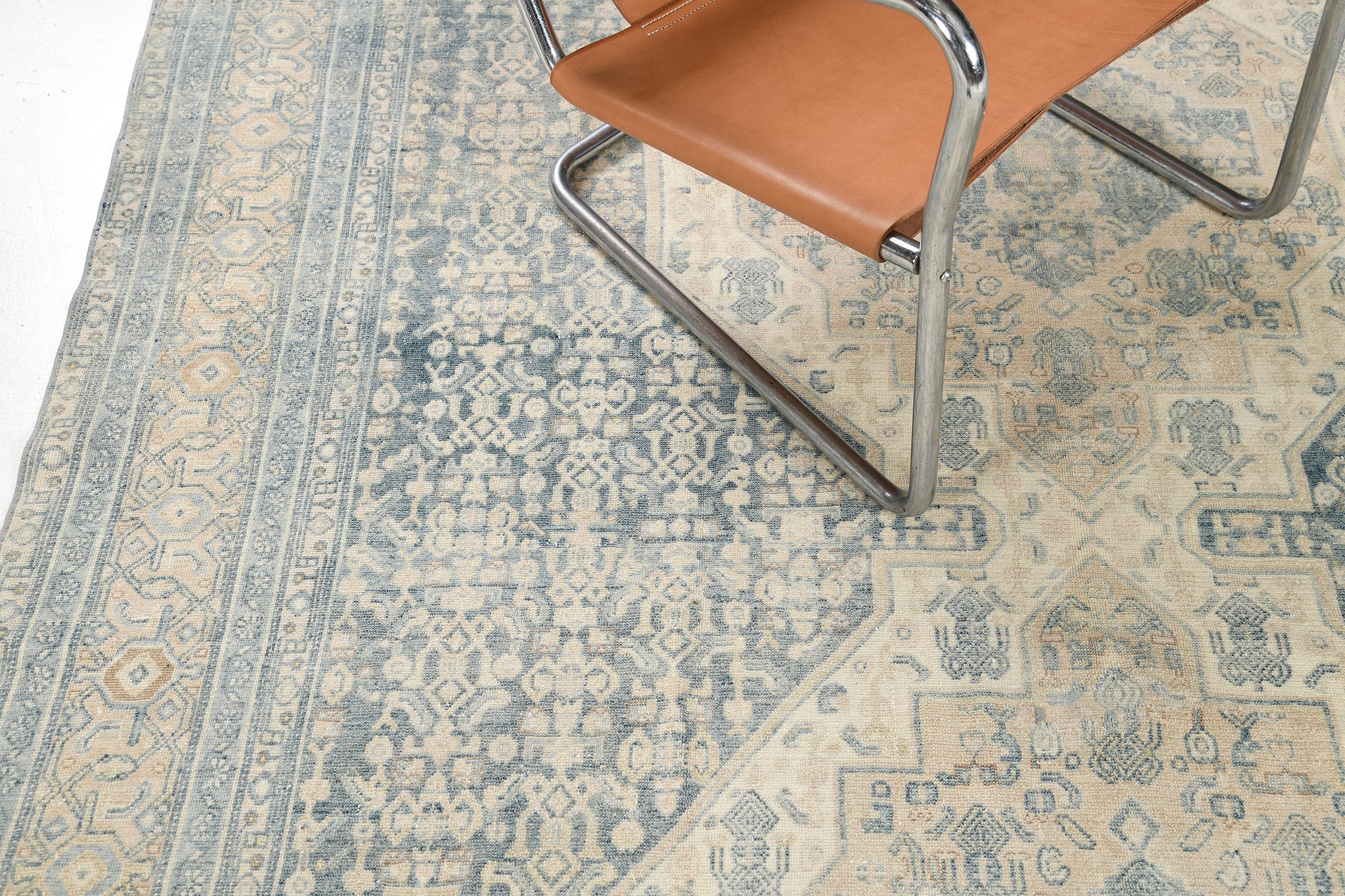
Woven in Northwest Persia during the late 19th century, this antique rug demonstrates the sophisticated geometric vocabulary of Mamluk revival workshops. Hand-knotted with hand-spun wool on cotton foundations, the composition centers on paired diamond medallions rendered in soft blue and ivory, their internal geometry echoing classical Ottoman court designs. The deep blue field carries an intricate network of secondary motifs—palmettes, rosettes, and angular vine scrolls—that create visual depth without overwhelming the central focus. Multiple guard borders frame a main border of reciprocal geometric forms, all executed in the muted palette characteristic of natural dyes: indigo for the blues, madder for subtle coral accents, walnut and pomegranate for the warm browns. The weaving displays the technical precision of urban workshops while retaining the cultural authenticity of regional Persian traditions. Gentle abrash throughout the field speaks to the hand-dyeing process, while the overall patina reflects decades of careful use. This represents a significant example of 19th-century Persian workshop production, when weavers adapted historical Mamluk designs for contemporary markets while maintaining traditional knotting techniques and natural dyeing practices.
Discover more Persian Rugs
Product Information
Product Information
Shipping & Returns
Shipping & Returns


Antique Persian Malayer 29792
Antique Persian Malayer 29792
Woven in Northwest Persia during the late 19th century, this antique rug demonstrates the sophisticated geometric vocabulary of Mamluk revival workshops. Hand-knotted with hand-spun wool on cotton foundations, the composition centers on paired diamond medallions rendered in soft blue and ivory, their internal geometry echoing classical Ottoman court designs. The deep blue field carries an intricate network of secondary motifs—palmettes, rosettes, and angular vine scrolls—that create visual depth without overwhelming the central focus. Multiple guard borders frame a main border of reciprocal geometric forms, all executed in the muted palette characteristic of natural dyes: indigo for the blues, madder for subtle coral accents, walnut and pomegranate for the warm browns. The weaving displays the technical precision of urban workshops while retaining the cultural authenticity of regional Persian traditions. Gentle abrash throughout the field speaks to the hand-dyeing process, while the overall patina reflects decades of careful use. This represents a significant example of 19th-century Persian workshop production, when weavers adapted historical Mamluk designs for contemporary markets while maintaining traditional knotting techniques and natural dyeing practices.
Discover more Persian Rugs
$2,850.00
Original: $9,500.00
-70%Antique Persian Malayer 29792—
$9,500.00
$2,850.00Product Information
Product Information
Shipping & Returns
Shipping & Returns
Description
Woven in Northwest Persia during the late 19th century, this antique rug demonstrates the sophisticated geometric vocabulary of Mamluk revival workshops. Hand-knotted with hand-spun wool on cotton foundations, the composition centers on paired diamond medallions rendered in soft blue and ivory, their internal geometry echoing classical Ottoman court designs. The deep blue field carries an intricate network of secondary motifs—palmettes, rosettes, and angular vine scrolls—that create visual depth without overwhelming the central focus. Multiple guard borders frame a main border of reciprocal geometric forms, all executed in the muted palette characteristic of natural dyes: indigo for the blues, madder for subtle coral accents, walnut and pomegranate for the warm browns. The weaving displays the technical precision of urban workshops while retaining the cultural authenticity of regional Persian traditions. Gentle abrash throughout the field speaks to the hand-dyeing process, while the overall patina reflects decades of careful use. This represents a significant example of 19th-century Persian workshop production, when weavers adapted historical Mamluk designs for contemporary markets while maintaining traditional knotting techniques and natural dyeing practices.
Discover more Persian Rugs